Sara. The phone call that starts her arc is never confirmed as a real booking — it is a solicitation, and the game-show appearance she reorganizes her life around never comes. Her diet doctor escalates her prescription without meaningful oversight; when the pills stop working she doubles the dose herself. Amphetamine psychosis follows: the refrigerator becomes an animate threat, the apartment fills with an imaginary studio audience, and Tappy Tibbons steps out of the television into her living room. She walks to the network offices in a state of collapse and is committed. In the hospital she stops eating, and — with no family able to consent otherwise, since Harry cannot be reached — she is given electroconvulsive therapy. Her final image is of a woman hollowed out, hallucinating the game show at last: she gets her dream in the only place left to have it.
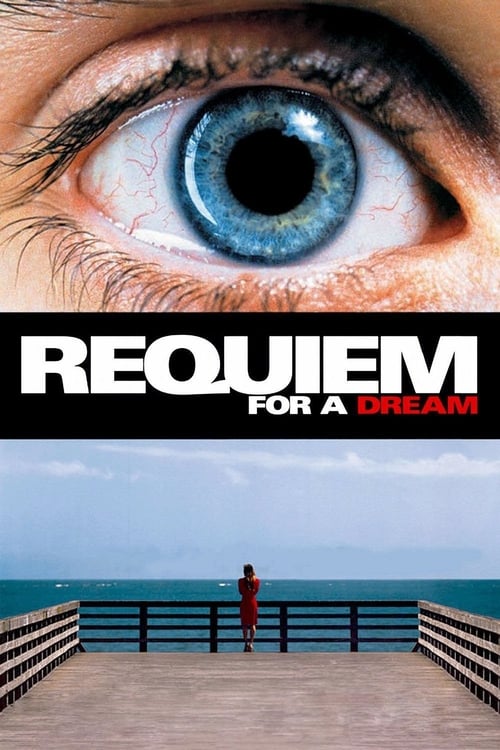
Harry. The infection in his arm, visible and worsening for the entire back half, is the payment plan for the whole film. When the supply chain collapses after a drug-war shooting in the city, he and Tyrone drive south chasing a rumored score. He deteriorates on the road, and at the hospital the doctor calls the police rather than treating an addict quietly. His arm is amputated. His last scene is the pier fantasy — Marion at the end of the Coney Island pier — now recognizable as a memory that never happened the way he remembers it, playing over a man who has lost the limb, the girl and the plan.
Marion. Her descent is the film's most transactional and most deliberate. Cut off from Harry's supply, she goes first to her therapist Arnold, then to the dealer Big Tim, and finally to a party where, for a guaranteed supply, she performs in a degrading sex show for a room of paying men. This is the sequence that drew the MPAA's NC-17. She returns to her empty apartment, curls up on the couch clutching her score, and smiles — the film's single most chilling image, because it is the only moment of satisfaction anyone receives.
Tyrone. Arrested with Harry in the South, he serves his sentence in a brutal prison work detail, enduring withdrawal under a guard's supervision and racist abuse. He retreats into the memory of his mother's arms, and the promise that he was going to be somebody.
The ending's hidden logic. The final montage cuts between all four, each curled into a fetal position — hospital bed, prison bunk, couch, operating recovery. The rhyme is the point: every one of them has been returned to infancy, stripped of adulthood, agency and dignity, each retreating into a fantasy of maternal or romantic embrace because reality offers nothing. Note what the film withholds: nobody dies. The requiem is for the dreams, not the dreamers, and the horror is that all four must go on living inside the wreckage. Retroactively, the earliest scene — Harry wheeling his mother's television out to the pawn shop while she watches, locked in the closet by her own hand — reveals itself as the whole film in miniature: a son selling his mother's dream to buy his own, and both of them agreeing not to say so.