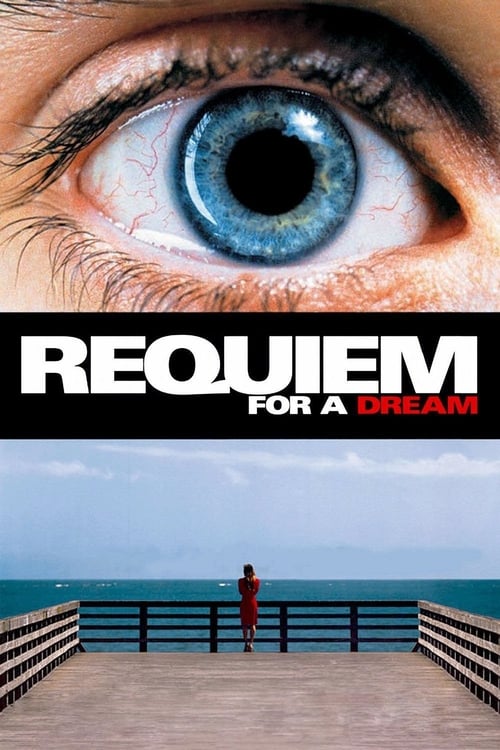
Requiem for a Dream
A visceral, psychological drama that descends into a feverish nightmare, illustrating the catastrophic erosion of hope fueled by addiction.
Requiem for a Dream

Requiem for a Dream

06 October 2000 United States of America 102 min ⭐ 8.0 (10,514)
Director: Darren Aronofsky
Cast: Ellen Burstyn, Jared Leto, Jennifer Connelly, Marlon Wayans, Christopher McDonald
Drama Crime
The Destructive Nature of Addiction The Corruption of the American Dream Loneliness and the Need for Escape Loss of Reality and Delusion
Budget: $4,500,000
Box Office: $7,390,108

Overview

"Requiem for a Dream" chronicles the lives of four interconnected individuals in Brighton Beach, Brooklyn, whose idyllic dreams are systematically dismantled by their deepening addictions. The story is structured across three seasons—Summer, Fall, and Winter—symbolizing the characters' progression from hope to utter despair.

Sara Goldfarb (Ellen Burstyn), a lonely widow, becomes obsessed with appearing on a television game show. To fit into her cherished red dress, she begins taking prescribed amphetamines, leading to a harrowing psychological decline. Her son, Harry (Jared Leto), his girlfriend Marion (Jennifer Connelly), and their friend Tyrone (M Marlon Wayans), are heroin addicts who dream of escaping their circumstances by becoming successful drug dealers. Initially, their ventures bring a fleeting sense of success and possibility, but as their addictions intensify and supply dries up, their lives spiral into a vortex of desperation, betrayal, and degradation.

The film unflinchingly portrays each character's parallel descent, culminating in a devastating climax where their dreams are irrevocably shattered by the brutal reality of their choices. Their pursuit of an idealized future ultimately leads them to their own personal hells.

Core Meaning

"Requiem for a Dream" serves as a powerful and devastating cautionary tale about addiction in its many forms—not just to drugs, but to dreams, ideals, and the desperate pursuit of happiness. Director Darren Aronofsky's core message is that the relentless, obsessive chase for an idealized version of the American Dream can become a destructive addiction itself, leading to the complete loss of self and reality.

The film's title itself signifies a lament for these lost aspirations. It argues that any dependency—be it on heroin, amphetamines, or the validation from a television audience—stems from a deep-seated loneliness and a desire to escape a painful reality. The film suggests that the very mechanisms people use to achieve their dreams can become the instruments of their destruction, turning hope into a self-consuming obsession that ultimately leaves them with nothing but the wreckage of their former selves.

Thematic DNA

The Destructive Nature of Addiction 35%
The Corruption of the American Dream 30%
Loneliness and the Need for Escape 20%
Loss of Reality and Delusion 15%

The Destructive Nature of Addiction

This is the central theme, exploring how addiction, in various forms, systematically destroys the lives of the four main characters. It's not limited to heroin; Sara's addiction to diet pills (amphetamines) and the validation she hopes to receive from television is portrayed as equally devastating. The film uses visceral, repetitive montages—dubbed "hip-hop montages"—to depict the ritualistic and mechanical nature of substance abuse, showing how the act of getting high becomes more important than the dream it was meant to fuel. The characters' physical and psychological deterioration is graphically depicted, leading to amputation, psychosis, imprisonment, and sexual degradation, illustrating addiction's absolute triumph over the human spirit.

The Corruption of the American Dream

Each character starts with a version of the American Dream: Marion wants to open a fashion boutique, Harry and Tyrone seek financial freedom, and Sara craves fame and the pride of a successful son. The film critiques the idea that happiness is a prize to be won through external validation or quick success. Their dreams become distorted, and the means to achieve them (selling drugs, losing weight unhealthily) become the end itself. The film presents a bleak, cynical view where the pursuit of these dreams, within a society that offers false promises, leads directly to ruin, suggesting the dream itself is a dangerous illusion.

Loneliness and the Need for Escape

Underlying each character's addiction is a profound sense of loneliness and isolation. Sara is a widow whose only companion is her television. Her desire to be on TV is a cry for attention and connection. Harry, Marion, and Tyrone form a small, codependent unit, but their addictions ultimately drive them apart, shattering their relationships. The split-screen technique is often used to show characters together yet emotionally isolated. Their drug use is a form of escapism from their bleak realities, a way to fill an emotional void, but it only deepens their isolation, trapping them in the prisons of their own minds.

Loss of Reality and Delusion

As their addictions intensify, the characters lose their grip on reality. Sara's amphetamine-induced psychosis causes vivid hallucinations where her television set and refrigerator come to life, taunting her. Her fantasy of being a celebrated game show contestant becomes more real to her than her squalid apartment. For Harry, Marion, and Tyrone, the initial euphoria of their drug-fueled plans gives way to paranoia and desperation. The film's visual style, with its disorienting camera angles (like the SnorriCam) and rapid cuts, immerses the viewer in the characters' subjective, fractured realities.

Character Analysis

Sara Goldfarb

Ellen Burstyn

Archetype: The Tragic Victim
Key Trait: Lonely

Motivation

Her primary motivation is to overcome her profound loneliness and feel important again. She wants to fit into her red dress to appear on television, believing this will make her son proud and give her life meaning. She craves love, attention, and a purpose beyond her empty apartment.

Character Arc

Sara begins as a lonely but relatively stable widow living a monotonous life in front of her television. A fraudulent phone call promising a TV appearance ignites a desperate hope, leading her to abuse prescribed diet pills. Her arc is a tragic descent from hopeful obsession into severe amphetamine psychosis, characterized by terrifying hallucinations and paranoia. Stripped of her agency and identity, she is ultimately institutionalized and subjected to electroconvulsive therapy, left in a catatonic state, living entirely within a fantasy world.

Harry Goldfarb

Jared Leto

Archetype: The Doomed Protagonist
Key Trait: Ambitious

Motivation

Harry is motivated by a desire to escape his bleak reality and achieve a romanticized version of success. He wants to build a legitimate life with Marion, away from petty crime, and make his mother proud by buying her a new television. However, his heroin addiction consistently undermines his aspirations.

Character Arc

Harry starts as a small-time heroin addict with big dreams of becoming a successful dealer to provide a better life for himself and Marion. His initial success fuels his ambition and his addiction. When the drug supply vanishes, his life unravels. His love for Marion corrodes into fights over money and drugs, and his health deteriorates catastrophically from injecting into the same spot. His journey ends in a Florida prison hospital where his gangrenous arm is amputated, leaving him physically and spiritually broken, having lost everything he dreamed of.

Marion Silver

Jennifer Connelly

Archetype: The Fallen Innocent
Key Trait: Creative

Motivation

Marion is motivated by her love for Harry and her dream of becoming a successful designer. Initially, she sees their drug dealing as a means to an artistic and romantic end. As her addiction takes over, her sole motivation becomes the desperate, all-consuming need to get her next fix, sacrificing her morals, dreams, and self-respect in the process.

Character Arc

Marion begins as a talented and hopeful aspiring fashion designer from a wealthy background who dreams of opening her own store. Her love for Harry draws her deeper into the world of heroin addiction. As their plans crumble and desperation sets in, her arc becomes one of horrific degradation. To support her habit, she is forced to sacrifice her body and soul, first to her sleazy therapist and ultimately to a cruel pimp, participating in humiliating sex shows for drugs. She ends up alone, clutching her score, a hollowed-out shell of the artist she once was.

Tyrone C. Love

Marlon Wayans

Archetype: The Aspiring Escapee
Key Trait: Loyal

Motivation

Tyrone's motivation is deeply rooted in his past. He yearns for a life of stability and respect, one that would honor the memory of his mother and allow him to break free from the street life he knows. He believes that dealing heroin is his one shot at achieving this escape.

Character Arc

Tyrone is Harry's loyal friend and partner in their drug-dealing scheme. His arc is defined by his desire to escape the ghetto and earn the respect and love of his deceased mother, whose memory he cherishes. He shares Harry's initial optimism, but he too is dragged down by addiction and circumstance. His journey ends in a Southern prison, where he suffers through brutal withdrawal while enduring grueling labor and racist abuse from the guards, haunted by visions of the mother he longed to make proud.

Symbols & Motifs

Television and The Tappy Tibbons Show

Meaning:

The television symbolizes both a source of crippling addiction and a purveyor of false promises and the unattainable American Dream. For Sara, it's a constant companion that feeds her loneliness but also becomes the source of her obsession. The Tappy Tibbons infomercial represents a hollow, commercialized version of self-improvement and happiness that Sara desperately clings to.

Context:

Sara is constantly watching television, especially the Tappy Tibbons show. The show's enthusiastic host and cheering audience become a recurring hallucination for her, a fantasy world she retreats into as her reality crumbles. Her final, tragic delusion is of winning the grand prize on the show: her successful, loving son.

The Red Dress

Meaning:

The red dress symbolizes Sara's longing for her past, a time when she felt beautiful, loved, and significant. It represents her youth and the happiness she associates with her son's graduation and her late husband. By trying to fit into the dress again, she is desperately trying to reclaim a lost sense of self-worth and purpose.

Context:

The dress hangs in her closet, a powerful motivator for her dangerous diet. It is the reason she seeks out diet pills, initiating her descent into amphetamine psychosis. Her entire dream of appearing on television is condensed into the singular goal of wearing this dress again.

The Pier at Coney Island

Meaning:

The pier represents an idealized future and the promise of happiness that is always just out of reach. It is a symbol of Harry and Marion's dream of a perfect life together, a dream that is ultimately an illusion they can never attain.

Context:

Harry has a recurring vision or dream of standing on a pier, with Marion waiting for him at the far end. As he runs toward her, she remains unreachable, or the pier itself falls away into darkness. This motif visually represents the central theme that their dreams are unattainable and their pursuit is leading them to oblivion.

The Fetal Position

Meaning:

The final image of each character curled in a fetal position symbolizes their complete and utter defeat, regression, and desire to escape their unbearable realities. It signifies a retreat into a womb-like state of helplessness, a surrender to their addictions and the destruction of their lives.

Context:

In the film's devastating climax, after Harry has his arm amputated, Marion has degraded herself for drugs, Tyrone is imprisoned, and Sara has undergone electroshock therapy, the final shots show each of them alone, curling into a fetal position on their respective beds, cots, or couches.

Memorable Quotes

Somebody like you can really make things all right for me.

— Marion Silver

Context:

Spoken to Harry during an intimate moment as they discuss their future plans to open a clothing store. It reflects the genuine love and optimism they feel before their addictions spiral out of control and poison their connection.

Meaning:

This quote, spoken early in the film, encapsulates the initial hope and codependency of Harry and Marion's relationship. It expresses their belief that their love can save them and help them achieve their dreams. The line becomes tragic in retrospect, as their relationship is ultimately destroyed by the very addictions they thought they could control together.

I'm walkin' across the stage, and you'll be in the audience, and you'll be proud of me.

— Sara Goldfarb

Context:

Sara says this to Harry over the phone while excitedly telling him about her potential TV appearance. She is already beginning to live in the fantasy of her future success and the reconciliation with her son that she believes it will bring.

Meaning:

This line reveals Sara's core motivation: it's not just about being on television, but about regaining a sense of purpose and, most importantly, earning her son's pride. It highlights her loneliness and her desire to be seen as more than just an old woman in an apartment. Her dream is fundamentally about reconnecting with Harry and feeling validated.

Eventually we all have to accept full and total responsibility for our actions, everything we have done, and have not done.

— Narrator (from the novel)

Context:

This line is not in the film's dialogue but is a central theme of Hubert Selby Jr.'s novel. It hangs over the entire narrative, acting as a philosophical statement on the nature of fate, choice, and consequence that the film powerfully visualizes.

Meaning:

While not spoken by a character in the film, this quote from the source novel perfectly captures the film's moral core. It underscores the idea that while the characters are victims of their addictions, their downfall is ultimately a result of the choices they make. The film serves as a brutal illustration of the consequences of evading this responsibility.

Be excited, be, be excited.

— Tappy Tibbons

Context:

This phrase is repeated throughout the Tappy Tibbons infomercial that Sara watches obsessively. It is also chanted by the hallucinated studio audience that haunts Sara in her apartment, representing the immense pressure she feels to be happy and successful.

Meaning:

This is the mantra of the television host Tappy Tibbons. It's a hollow, repetitive command that satirizes the shallow and manufactured nature of happiness sold by media and self-help culture. For Sara, it becomes a desperate incantation as she tries to force herself to believe in the dream that is actively destroying her mind and body.

Philosophical Questions

What is the true nature of happiness and where does it come from?

The film relentlessly explores the characters' pursuit of happiness through external means: drugs, money, fame, and physical appearance. It asks whether true fulfillment can ever be achieved through these avenues. By showing how their desperate search for a 'win' leads to their complete destruction, the film suggests that these external goals are illusions. It forces the viewer to question what constitutes a meaningful life and whether the modern conception of the 'American Dream' is a recipe for despair rather than happiness.

At what point does a dream become a destructive obsession?

Each character begins with a seemingly positive dream, but their dedication to it becomes an all-consuming obsession that justifies any action. Sara's dream of fitting into her dress leads her to abuse amphetamines; Harry's dream of providing for Marion leads him deeper into the drug world. The film examines the fine line between ambition and addiction, questioning the very nature of hope. It asks if unwavering hope, when detached from reality, can be as dangerous as any chemical substance.

Can we ever truly escape our loneliness?

The film posits that the root of all the characters' addictions is a profound sense of isolation. They use drugs and chase dreams as a way to connect with others or to numb the pain of being alone. However, their actions only serve to deepen their isolation, ultimately severing their relationships and leaving them trapped within themselves. The film raises the question of whether genuine human connection is possible in a world that encourages selfish pursuits, and whether the escape from loneliness is the most potent and elusive drug of all.

Alternative Interpretations

While the primary interpretation of "Requiem for a Dream" is a straightforward cautionary tale about drug addiction, some alternative readings focus on broader societal critiques.

One interpretation frames the film as a critique of the failings of the American Dream and consumer culture. In this view, the characters' addictions are not just to substances, but to the hollow promises of fame, fortune, and happiness peddled by society. Sara's obsession with television, Harry and Tyrone's pursuit of easy money, and Marion's desire for artistic success are all symptoms of a culture that values superficial achievement over genuine human connection. Their descent is a metaphor for the spiritual emptiness that results from chasing these illusory goals.

Another perspective interprets the ending for Sara Goldfarb not as a complete tragedy, but as a form of release. Trapped in her own mind, she finally achieves her dream: she is on TV, beautiful in her red dress, and embraced by a successful, loving son. Although this reality is a hallucination born from psychosis and electroshock therapy, it is the only place where she finds the peace and validation she desperately craved. This reading poses the disturbing question of whether a perfect, self-contained fantasy is preferable to a painful, lonely reality.

Cultural Impact

"Requiem for a Dream" left an indelible mark on cinema and popular culture, renowned for its unflinching and stylistically innovative portrayal of addiction. Upon its release in 2000, it was met with critical acclaim for its powerful performances—earning Ellen Burstyn an Academy Award nomination—and its audacious direction, though its bleak and graphic content proved polarizing for audiences. The film's challenging nature led to a controversial NC-17 rating, which sparked debates about censorship and artistic expression; the decision to release it unrated was a significant move for an independent film.

Aronofsky's use of the "hip-hop montage"—a rapid-fire sequence of short shots with accompanying sound effects—became a widely recognized and influential editing technique. Similarly, Clint Mansell's score, especially the track "Lux Aeterna," became iconic, lending a sense of epic tragedy to countless movie trailers and other media, often divorced from its original, harrowing context.

The film has had a lasting impact on how addiction is depicted on screen, moving beyond moralizing to create a visceral, subjective experience of dependency. It remains a cultural touchstone for its brutal honesty and is frequently used in educational contexts to discuss the consequences of substance abuse. Two decades after its release, "Requiem for a Dream" is regarded as a modern classic, a harrowing but essential piece of filmmaking that continues to resonate for its powerful themes and unforgettable, traumatizing finale.

Audience Reception

Audience reception for "Requiem for a Dream" has been intensely polarized since its release, with viewers often describing it as both a masterpiece and a film they would never watch again. On aggregate sites, it holds high scores, but user reviews reveal a deep divide.

Praised aspects: Viewers almost universally praise Ellen Burstyn's performance as a tour de force of acting, along with the powerful work from the entire main cast. The film's unique and innovative visual style, including its rapid-fire editing and disorienting cinematography, is frequently cited as groundbreaking and incredibly effective at immersing the viewer in the characters' psychological states. Clint Mansell's haunting score is consistently highlighted as one of the greatest and most impactful in modern cinema.

Main points of criticism: The primary criticism revolves around the film's unrelenting bleakness and graphic nature. Many viewers find it to be emotionally overwhelming, gratuitously depressing, and excessively disturbing. Some critics felt the film's powerful style sometimes overshadowed its substance, characterizing it as an exercise in cinematic brutality that could be seen as manipulative or emotionally exhausting without offering deeper insight.

Controversial moments: The final montage, which depicts each character hitting rock bottom in graphic detail—including electroshock therapy, an arm amputation, and the humiliating "ass to ass" scene—is profoundly disturbing for most viewers and is the sequence most often cited as the reason the film is so difficult to watch.

Overall verdict: The consensus among audiences is that "Requiem for a Dream" is an unforgettable and powerful work of art, a brilliant but brutal cautionary tale. It is widely respected as a cinematic achievement, but its status as a grueling, feel-bad experience means it is often recommended with a strong warning.

Interesting Facts

  • Jared Leto lost 28 pounds for his role as Harry Goldfarb and lived on the streets of New York to prepare. He also abstained from sex and sugar for 30 days at the director's request to better understand the nature of craving.
  • Ellen Burstyn wore various prosthetics, including four different necks and two fat suits (weighing 20 and 40 pounds), to portray Sara's weight changes. The makeup process often took four hours a day.
  • The film features over 2,000 cuts, whereas a typical 100-minute film has about 600-700. This rapid editing style, especially in the "hip-hop montages," was used to convey the frenetic state of the characters.
  • Director Darren Aronofsky and the novel's author, Hubert Selby Jr., co-wrote the screenplay. They discovered that a script Selby had written years prior was about 80% identical to Aronofsky's initial draft.
  • None of the main cast were Aronofsky's first choices for their roles. Faye Dunaway was considered for Sara, Neve Campbell for Marion, and Dave Chappelle for Tyrone.
  • Hubert Selby Jr. makes a cameo appearance as a racist prison guard who taunts Tyrone.
  • The unsettling scene where Sara's refrigerator comes alive was operated by a puppeteer.
  • The film was given an NC-17 rating by the MPAA for its graphic content. Aronofsky and the distributor, Artisan Entertainment, chose to release the film unrated rather than cut any scenes, believing it would compromise the film's message.
  • Clint Mansell's iconic and haunting score, particularly the track "Lux Aeterna," was performed by the Kronos Quartet and has since been widely used in movie trailers and other media.

Easter Eggs

A character from Darren Aronofsky's previous film, "Pi" (1998), makes a subtle appearance.

The character of "King Neptune," who appears on the beach with a metal detector in "Pi," can also be seen briefly in "Requiem for a Dream." He appears in the background on the beach at Coney Island when Harry and Marion are talking on the rocks. This creates a small, shared universe between Aronofsky's first two films.

A "Pi" symbol appears on a clipboard.

Near the end of the film, when people are clearing out Sara's apartment after she is institutionalized, an employee walks by holding a clipboard with the Pi symbol (π) on it. This is a direct visual nod to Aronofsky's debut feature film, "Pi."

⚠️ Spoiler Analysis

Click to reveal detailed analysis with spoilers

Frequently Asked Questions

Explore More About This Movie

Dive deeper into specific aspects of the movie with our detailed analysis pages

Comments (0)

Leave a comment

No comments yet. Be the first to share your thoughts!