Full spoilers follow.
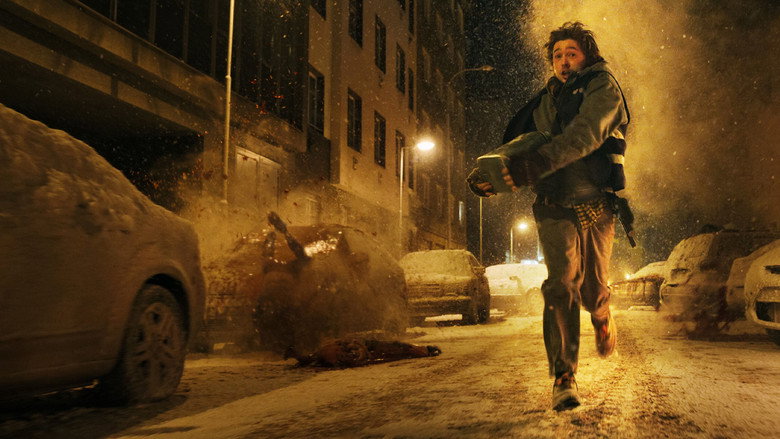
The mechanism of the tragedy is established early and quietly: Bryan is bitten by an infected girl in a campervan. From that point the film is no longer a story about whether Bryan can escape Raccoon City — it is a story about a man who has already lost, conducting himself as though he hasn't. Every subsequent act of competence and survival is, in retrospect, a countdown.
By the time Bryan reaches the hospital laboratory, his condition is visibly worsening. The scientists there succeed in preparing a cure — the film explicitly grants that the solution exists and is achievable. But his transformation accelerates past the window in which it can be administered. The cure is not withheld by villainy or corporate malice; it is simply outpaced. That is the film's cruelest structural choice: it removes the comforting logic of a villain to blame and replaces it with timing.
Bryan becomes an amalgamation monster, the film's grotesque culmination of the infection. National Guard helicopters arrive — the arm of the state showing up not to rescue but to contain. In the final image, the transformed Bryan does not flee them. He turns toward them and roars, and the film cuts to black. There is no mid-credits or post-credits scene extending or qualifying the ending.
What becomes clear only afterward. The entire film has been about a man running from what frightens him — from the infected, but more fundamentally from Michelle, from home, and from becoming a father. His job as a medical courier, endlessly in transit between destinations, is the perfect expression of that evasion. The ending detonates the theme on both levels at once: the future he was avoiding is erased, and in the same instant he stops running for the first time in the film. Read that way, the closing roar is either the final annihilation of Bryan's personhood or the only moment he ever turned and faced something — and the film refuses to tell you which.
For a franchise built on the premise that human beings endure against impossible odds, the film's structure is a deliberate inversion: it presents a protagonist who does everything right, grants him an achievable cure and a functioning rescue apparatus, and still lets both arrive on the wrong side of the clock.