
Skip to content
Runner
A sun-drenched, propulsive chase thriller steeped in grief and redemption, where a battered guardian navigates a neon labyrinth of asphalt and gunfire to deliver a fragile spark of life before time expires.
Runner

Runner

"Next-day delivery isn't an option."

07 September 2026 United States of America 97 min 8.2 (234)

Director: Scott Waugh

Cast: Alan Ritchson, Owen Wilson, Rodrigo Santoro, Leila George, Kate Box

Action Comedy Grief, Sobriety, and Personal Redemption The Commodification of Human Life Unexpected Camaraderie and Shared Vulnerability The Tyranny of the Ticking Clock
Box Office: $6,432,956

Overview

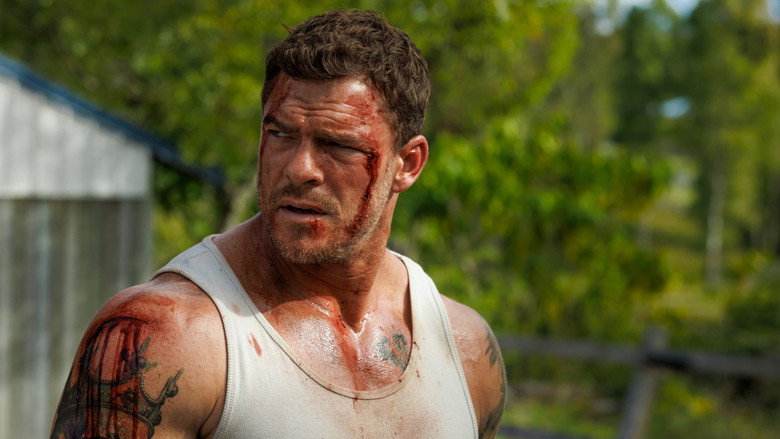
In the humid urban sprawl of Brisbane, Australia, Hank Malone (Alan Ritchson), a stoic former Army Special Forces operative haunted by the tragic loss of his daughter to illness, seeks quiet atonement. Maintaining his hard-won sobriety while living in solitude on a river houseboat, Hank earns an unassuming living as an elite independent courier—a specialized "runner" hired to transport delicate packages across the region with zero questions asked.

His routine takes a perilous turn when a high-priority dispatch assignment from his handler connects him at the airport with Ben Bishop (Owen Wilson), an affable and chatterbox medical courier. Hank discovers that Ben's strictly climate-controlled cargo is an extraordinarily rare donor liver needed for an emergency transplant to save the life of seven-year-old Ellie Baker (Scarlett Crabtree), who is hospitalized nearby under the care of Dr. Meredith Ainsley (Kate Box) and her desperate mother, Kate (Leila George).

The straightforward mercy mission quickly disintegrates into a violent, high-speed siege when heavily armed cartel mercenaries, led by the ruthless Damián Zaldívar (Rodrigo Santoro), ambush the pair. Desperate to secure the rare organ for his own syndicate's dying matriarch, Damián initiates a relentless citywide manhunt across Queensland, forcing Hank to reignite his lethal tactical skills and work alongside Ben to deliver the fragile package before the biological clock runs out.
Core Meaning

At its heart, Runner examines the redemptive power of selfless responsibility in the face of profound grief. The narrative posits that running away from past tragedies into isolation cannot heal unresolved guilt; true emotional resurrection demands stepping back into the line of fire for the sake of another human being. Scott Waugh highlights the stark contrast between viewing life-saving medical resources as black-market commodities versus treating every single human life as intrinsically priceless, asserting that compassion and community supersede cynical detachment.

Thematic DNA

Grief, Sobriety, and Personal Redemption 30%
The Commodification of Human Life 25%
Unexpected Camaraderie and Shared Vulnerability 25%
The Tyranny of the Ticking Clock 20%

Grief, Sobriety, and Personal Redemption

Hank Malone's arc centers on processing the profound void left by his late daughter's battle with leukaemia. His fragile sobriety and refusal to use violence represent self-imposed penance, but his defense of young Ellie allows him to transform paralyzing sorrow into focused protective action, achieving true moral restoration.

The Commodification of Human Life

The story contrasts the pure medical necessity of saving an innocent child against the cutthroat greed of the international black market. The syndicate led by Damián Zaldívar treats rare biological components as purchasable leverage for underworld aristocracy, forcing Hank and Ben to safeguard humanity against transactional cruelty.

Unexpected Camaraderie and Shared Vulnerability

The dynamic between the brooding, hyper-competent Hank and the nervous, overly talkative Ben mirrors classic buddy-action traditions. By opening up about their individual regrets and frailties, both men forge a brotherhood grounded in mutual respect and shared sacrifice.

The Tyranny of the Ticking Clock

Mortal urgency permeates every narrative beat through the strict organ viability window. The ticking clock serves as both a literal physical barrier and a thematic metaphor for the fragility and finite nature of human existence.

Character Analysis

Hank Malone

Alan Ritchson

Archetype: The Reluctant Protector Key Trait: Imposing physicality combined with deep internal sorrow

Motivation

Driven by an innate moral instinct to protect life and atone for the inability to save his own young daughter from fatal illness.

Character Arc

Transitions from an emotionally guarded, self-isolated veteran maintaining tenuous sobriety into a fiercely dedicated savior who finds purpose and spiritual healing by defending an innocent child.

Ben Bishop

Owen Wilson

Archetype: The Conversational Moral Anchor Key Trait: Persistent optimism and nervous, disarming humor

Motivation

Committed professionally and morally to ensuring the donor organ safely reaches the operating table on time.

Character Arc

Begins as an anxious, loquacious medical courier out of his depth in violent combat, evolving into an unhesitating hero willing to lay down his own life for the delivery mission.

All 5 characters and cast

Symbols & Motifs

Spirit the Conure Parrot

Meaning:

Symbolizes unwanted domestic baggage turned into a catalyst for emotional connection and whimsy amid trauma.

Context:

Rescued by Hank during a disastrous domestic peace-offering delivery, the bird accompanies the duo in their getaway vehicle and is playfully named Spirit by Ben Bishop.

The Biometric Organ Cooler

Meaning:

Represents the fragile boundary separating life from death, as well as the heavy burden of stewardship.

Context:

The password-protected, temperature-regulated case containing the donor liver remains central to every physical altercation, pursuit, and standoff in the film.

The French Language Mobile App

Meaning:

Signifies Hank's lingering connection to his late daughter's unrealized dreams and his distant hope for a future beyond grief.

Context:

Hank regularly studies French flashcards between courier assignments, honoring his deceased daughter's lifelong fascination with Paris.

The Brisbane River Houseboat

Meaning:

Embodies Hank's detachment from society and his refusal to put down permanent emotional roots.

Context:

The secluded floating home functions as Hank's safe retreat where he isolates himself from interpersonal connections prior to meeting Ben.

The One-Year Recovery Chip

Meaning:

Serves as a tangible badge of discipline, vulnerability, and Hank's continuous battle against destructive despair.

Context:

Shown during an Alcoholics Anonymous meeting early in the film and later acknowledged warmly by his ex-wife Monica when she assists him.

Memorable Quotes

I don't hurt people anymore.
— Hank Malone

Context

Spoken to his dispatcher while explaining the strict operational boundaries he has set to protect his mental health and sobriety.

Meaning

Encapsulates Hank's initial commitment to peaceful rehabilitation and his reluctance to awaken the lethal military skills of his past.

We're a package deal.
— Ben Bishop

Context

Delivered at Brisbane Airport when Hank expects only to retrieve an inanimate container rather than an escort passenger.

Meaning

Emphasizes Ben's refusal to abandon his medical charge and initiates the odd-couple dynamic between the two protagonists.

All 4 quotes

Philosophical Questions

Does moral obligation supersede lawful obedience when innocent life is at stake?

The film investigates this dilemma through Hank and Ben breaking transport laws, requisitioning vehicles, and engaging armed threats to honor a moral duty that institutional channels cannot preserve in time.

Can past helplessness in the face of loss be redeemed by future protective action?

Explored through Hank's psychological healing: while he cannot reverse the tragic death of his daughter, choosing to stand between death and another child restores his capacity for emotional connection and purpose.

What is the boundary between commodified utility and the sanctity of individual life?

Reflected in the conflicting values placed upon the donor liver, where the criminal underworld assesses the organ purely as monetary capital, while the medical team and protagonists defend it as an irreplaceable gift of life.

How It Ends

Alternative Interpretations

While primarily appreciated as a fast-paced action comedy, several critics noted a compelling subtextual interpretation regarding mirroring filial grief. In this reading, Damián's violent crusade to preserve his mother Donna Zaldívar acts as a sinister inverse of Hank's fight to save young Ellie. Both men are driven by intense family attachments, but where the cartel leader engages in predatory destruction to bend fate, Hank embraces selfless sacrifice to preserve an innocent life, illustrating how trauma can either warp humanity into tyranny or elevate it toward grace.

Full ending explanation

Cultural Impact

Runner represents a pivotal milestone in mid-2020s genre cinema, showcasing the continuing expansion of Angel Studios beyond faith-centric docudramas into crowd-pleasing, mainstream action fare. Bolstered by Alan Ritchson's box-office bankability following his acclaimed turns in streaming action vehicles, the movie established a working blueprint for throwback, character-grounded buddy thrillers that rely on practical automotive stunts rather than heavy CGI spectacles.

Audience Reception

The film garnered largely enthusiastic responses from audiences and solid marks from film critics, holding a 77% Rotten Tomatoes approval rating and an A- CinemaScore. Moviegoers praised the effortless odd-couple comedic chemistry between Alan Ritchson and Owen Wilson, as well as Scott Waugh's visceral practical stunt staging and vehicular mayhem. Minor criticisms singled out the familiar genre plotting and the heavy editing required to secure a commercially accessible PG-13 rating.

Interesting Facts

  • The original spec script by Miles Hubley and Tommy White was featured on the prestigious Black List and initially set the chase during a rainy night in Los Angeles before Scott Waugh relocated it to sunlit Queensland, Australia.
  • Director Scott Waugh, the son of veteran stunt performer and original TV Spider-Man stuntman Fred Waugh, prioritized practical vehicle choreography and minimal green-screen effects.
  • Alan Ritchson collaborated extensively on the fight choreography with supervising stunt coordinator Ryan Tarran, who had previously worked as Ritchson's stunt double.
  • The film was distributed by Angel Studios, representing a high-budget stylistic shift into mainstream action-comedy thriller territory for the company.
  • Released theatrically on September 11, 2026, the movie opened alongside another unrelated 2026 release titled 'The Runner' (starring Gal Gadot), generating lighthearted confusion among moviegoers.
  • The exotic conure parrot featured throughout the movie was played by an avian animal actor named Thyme, who made appearances during theatrical promotional tours.

Easter Eggs

High-Speed Bus and Transit Sequences

The ticking-clock transit choreography directly pays homage to Jan de Bont's 1994 action classic Speed, which director Scott Waugh cited as an architectural inspiration.

Snarky Interpersonal Buddy Dynamics

The banter between the battered, towering veteran and the chatterbox medical rep consciously echoes Shane Black's buddy script templates, specifically The Last Boy Scout.

Intrusive Duolingo Audio Notifications

Hank's smartphone loudly sounding French learning chimes during life-and-death tactical maneuvers serves as an ironic recurring comedy motif.

Frequently Asked Questions

Explore More About This Movie

Dive deeper into specific aspects of the movie with our detailed analysis pages

Comments (0)

Leave a comment

No comments yet. Be the first to share your thoughts!

Similar Movies