"Death is failure."
Samurai Jack - Ending Explained
⚠️ Spoiler Analysis
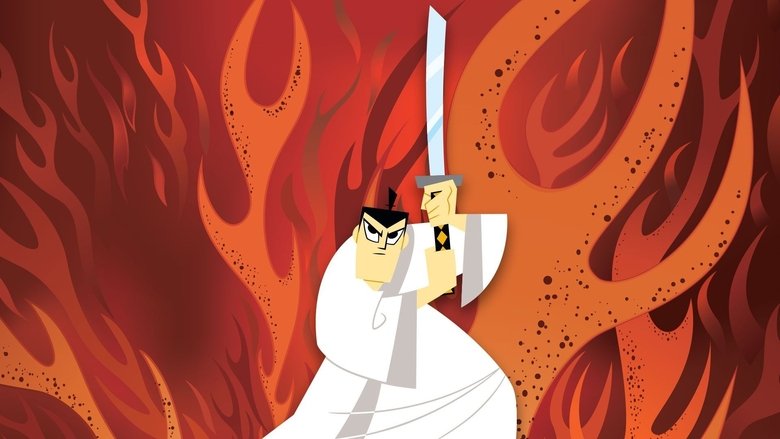
The central narrative of "Samurai Jack" culminates in the revelations and events of the final season. After 50 years of being trapped in the future, Jack has lost his sword because his despair and the guilt of killing humans (the Daughters of Aku) made him unworthy in the eyes of the gods who forged it. He is a broken man, haunted by an apparition of his angry, darker self.
The major twist of the series is the true origin of Ashi. After she and Jack fall in love, Aku reveals that she is his biological daughter, born after the High Priestess of his cult drank a cup containing his essence. This makes Ashi part-demon, allowing Aku to take control of her body and force her to fight Jack. Unwilling to harm her, Jack surrenders. In this moment, it appears Aku has finally won. However, the final battle is turned by two key factors: the arrival of all the allies Jack made over his decades-long journey, who launch a massive assault on Aku's fortress, and Jack's confession of love to Ashi, which gives her the strength to wrest back control from Aku's influence.
Upon freeing herself, Ashi realizes she has inherited Aku's full range of powers, including the ability to manipulate time. She opens a portal and transports both herself and Jack back to the moment of his initial defeat in the past. Jack, returned to his own time, quickly destroys a surprised and weaker past-Aku, finally fulfilling his quest. The victory, however, triggers the ultimate tragic consequence: with Aku erased from existence, his daughter Ashi can no longer exist. On their wedding day, she peacefully fades away in Jack's arms. The series ends with a grieving Jack finding a moment of peace, forever changed by his journey and his loss.
Alternative Interpretations
The most debated aspect of the series is its ending. The official interpretation, stated by the creators, is that Ashi's death was a necessary sacrifice to underscore the show's themes; Jack could not have a perfectly happy ending because his victory required a great personal loss. However, other interpretations exist:
- The Time Paradox Interpretation: A significant portion of the audience questioned the logic of the ending, creating a classic time travel paradox. If Ashi vanishes because Aku is killed in the past, then she never existed to send Jack back in time to kill Aku. This has led to fan theories suggesting the timeline should have split, creating a reality where Ashi could survive. The show itself doesn't adhere to a specific model of time travel, leaving it open to interpretation whether this is a plot hole or a deliberate, tragic metaphysical rule.
- The Bittersweet Hope Interpretation: Some view the ending not as purely tragic, but as a statement on memory and hope. Jack's final, quiet smile at the ladybug suggests he has found peace. He saved the world and, instead of being broken by his loss, he holds onto the memory of Ashi as a symbol of the goodness he fought for. In this reading, the ending is about moving forward and finding beauty even after immense suffering.
- The "Aku Wins" Interpretation: A darker, more cynical reading suggests that even in defeat, Aku had the last laugh. By creating Ashi, he inadvertently created the instrument of his own destruction but also ensured that Jack's victory would be forever tainted by heartbreak. This interpretation views the ending as a final, cruel joke played by the master of evil on his nemesis.