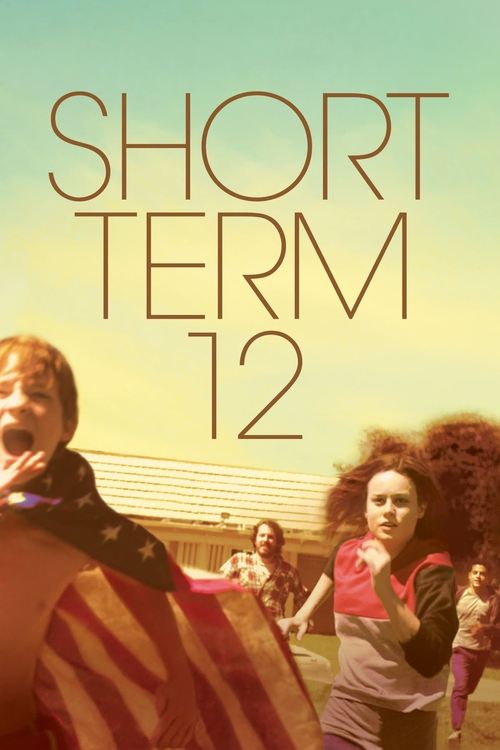
Short Term 12
Indie Drama / Intimate Realism + Melancholy Hope + Handheld camera following a bicycle. A raw, compassionate look at the foster care system where broken caretakers and troubled teens find healing through shared trauma and quiet connection.
Short Term 12

Short Term 12

"Support them. Take care of them. But don't become their friend."

23 August 2013 United States of America 96 min ⭐ 7.8 (1,373)
Director: Destin Daniel Cretton
Cast: Brie Larson, John Gallagher Jr., Kaitlyn Dever, Rami Malek, LaKeith Stanfield
Drama
Trauma and The Cycle of Abuse Healing Through Storytelling Professional Boundaries vs. Human Connection Fear of the Future
Budget: $1,000,000
Box Office: $1,645,164

Overview

Short Term 12 follows Grace (Brie Larson), a dedicated supervisor at a group home for at-risk teenagers. While she navigates the chaotic and emotional daily lives of the kids, she struggles to maintain a professional distance, particularly with a new arrival named Jayden (Kaitlyn Dever). Jayden is intelligent, artistic, and deeply guarded, mirroring the traumas of Grace's own past.

Alongside her long-term boyfriend and co-worker Mason (John Gallagher Jr.), Grace tries to help Marcus (LaKeith Stanfield), an intense young man about to age out of the system. As Grace's personal life complicates with an unexpected pregnancy and the resurfacing of her abusive father, her carefully constructed world begins to crack. She must confront her own demons to truly support the children she cares for.

Core Meaning

The film explores the universality of trauma and the necessity of vulnerability in the healing process. Director Destin Daniel Cretton argues that one cannot effectively help others while burying their own pain. The central message is that connection—shared stories and empathy—is the only way to survive a broken system, and that "saving" someone often means simply being there to witness their struggle.

Thematic DNA

Trauma and The Cycle of Abuse 30%
Healing Through Storytelling 25%
Professional Boundaries vs. Human Connection 25%
Fear of the Future 20%

Trauma and The Cycle of Abuse

The film illustrates how trauma echoes through generations. Grace's childhood abuse influences her career choice and her fear of parenting, while Jayden's situation mirrors Grace's past, showing how the cycle threatens to repeat unless confronted.

Healing Through Storytelling

Characters use stories and art to express what they cannot say directly. from Mason's humorous anecdotes to Marcus's intense rap and Jayden's metaphorical children's story about the octopus, narrative becomes a tool for survival and communication.

Professional Boundaries vs. Human Connection

The film constantly tests the line between being a staff member and a human being. The rules ("don't touch the kids") often conflict with the immediate emotional needs of the residents, highlighting the limitations of the institutional foster care system.

Fear of the Future

Represented by Marcus, who is turning 18. The film depicts the terrifying precipice of "aging out" of foster care, where the safety net vanishes and these traumatized youths are expected to instantly become functioning adults.

Character Analysis

Grace

Brie Larson

Archetype: The Wounded Healer
Key Trait: Guarded Empathy

Motivation

To provide the safety for others that she never had as a child, while desperately trying to prove she is not broken.

Character Arc

Starts as a tough, competent protector who hides her own pregnancy and past abuse. Through her connection with Jayden, she is forced to confront her abuser and her fears, eventually learning to lean on Mason and accept her own need for help.

Mason

John Gallagher Jr.

Archetype: The Stable Support / The Storyteller
Key Trait: Unconditional Patience

Motivation

To build a life with Grace and be a positive male role model for the kids, using humor to diffuse tension.

Character Arc

Remains a steady rock throughout the film. His journey is one of patience, waiting for Grace to let him in, and demonstrating that a healthy, loving family dynamic is possible despite a foster care background.

Marcus

LaKeith Stanfield

Archetype: The Tragic Artist
Key Trait: Quiet Intensity

Motivation

To be heard and understood before he is pushed out into the world alone.

Character Arc

moves from a quiet, brooding presence to an explosive expression of pain through his music, finally finding a moment of acceptance and hope before leaving the facility.

Jayden

Kaitlyn Dever

Archetype: The Mirror
Key Trait: Defensive Wit

Motivation

To protect herself from further pain by pushing everyone away.

Character Arc

Arrives as a defiant, self-harming outcast. Through Grace's intervention, she slowly reveals her abuse and takes the brave step of exposing her father, breaking her own cycle of silence.

Symbols & Motifs

The Octopus and the Shark

Meaning:

A metaphor for the grooming and abusive dynamic in toxic relationships. It symbolizes the sacrifice of one's own limbs (parts of oneself) to maintain a friendship or connection with a predator.

Context:

Jayden reads a story she wrote about an octopus who gives up its arms to be friends with a shark. It reveals the nature of her relationship with her abusive father.

Marcus's Fish

Meaning:

Symbolizes Marcus's fragility and his desire for something to care for that won't hurt him. Its death triggers his breakdown, representing the loss of the little control he has.

Context:

Marcus keeps a pet fish in his room. When it dies, he attempts to smash his room and injure himself, revealing his underlying despair about leaving the home.

Bicycles and Running

Meaning:

Represents both escapism and the release of pent-up emotion. It is a physical manifestation of the "fight or flight" response common in trauma survivors.

Context:

Grace rides her bike aggressively to clear her head; Sammy frequently sprints towards the gate in futile escape attempts that become a ritual for the staff.

Memorable Quotes

You are not their parent. You are not their therapist. You are here to create a safe environment. And that's it.

— Grace

Context:

Grace is training the new employee, Nate, on his first day, explaining the rules of the facility.

Meaning:

Sets the professional boundary that Grace herself struggles to keep. It encapsulates the impossible dichotomy of their job: caring deeply but having no legal power.

Look into my eyes so you know what it's like / to live a life not knowing what a normal life's like.

— Marcus

Context:

Marcus raps for Mason, sharing his lyrics for the first time in an intensely emotional close-up scene.

Meaning:

A raw expression of the alienation felt by foster children. It forces the listener (and the audience) to confront the reality of abuse without looking away.

I don't know what you're going through, but I can't help you if you don't let me in.

— Mason

Context:

Mason pleads with Grace after she shuts down and refuses to talk about her abortion appointment or her triggers.

Meaning:

The thematic thesis of the relationship arc. It highlights that love requires vulnerability and communication, not just co-existence.

Philosophical Questions

Can we heal others if we haven't healed ourselves?

The film uses Grace to explore this. She is excellent at her job but falling apart personally. The narrative suggests that while she can offer temporary safety to others, she cannot truly break the cycle of trauma until she addresses her own wounds.

What defines a family: blood or bond?

Grace and Mason reject their biological family traumas to create a 'chosen family' with each other and the staff. The film argues that shared vulnerability and support constitute a stronger bond than biology.

Alternative Interpretations

The Cyclical Ending: The film ends similarly to how it begins, with staff chasing a runaway kid (Sammy). Some critics interpret this as a pessimistic view that the system never changes and the chaos is endless. However, the more common interpretation is one of resilience: Grace has changed internally, even if the external world hasn't. The cycle continues, but she is now better equipped to handle it.

Grace as a Savior Complex Critique: While Grace is the hero, the film can be read as a critique of the 'Savior Complex.' Her obsession with 'saving' Jayden is initially a projection of her need to save her younger self, which nearly crosses professional lines and endangers her job. The film suggests that true help comes from boundaries and self-care, not just martyrdom.

Cultural Impact

Short Term 12 is widely regarded as a modern indie masterpiece and a crucial launchpad for a generation of A-list talent. It served as the breakout role for Brie Larson (pre-Room and Captain Marvel), LaKeith Stanfield (Atlanta, Judas and the Black Messiah), Rami Malek (Bohemian Rhapsody), and Kaitlyn Dever (Booksmart, Dopesick).

Culturally, it was praised for its authentic, non-sensationalized depiction of the foster care system, earning a 98% on Rotten Tomatoes. It shifted the narrative around troubled youth in cinema from 'criminals' to 'victims of circumstance,' influencing subsequent empathetic dramas. It remains a reference point for social workers and is often cited in discussions about trauma-informed care.

Audience Reception

Audience reception was overwhelmingly positive, with the film holding high scores on platforms like IMDB and Rotten Tomatoes. Praised: Viewers deeply connected with the raw, emotional performances (especially Larson and Stanfield) and the script's ability to balance heavy tragedy with genuine humor and warmth. The 'rap scene' is frequently cited as a standout moment. Criticized: Some viewers felt the ending was slightly too neat regarding the resolution of the abuse plotline (the car smashing scene), or found the 'shaky cam' visual style distracting. Verdict: A tear-jerker that feels earned rather than manipulative, beloved for its humanity.

Interesting Facts

  • The film is based on Destin Daniel Cretton's 2008 short film of the same name, which was his master's thesis project.
  • Destin Daniel Cretton worked in a foster care facility for two years, and many events in the film are inspired by his real experiences.
  • LaKeith Stanfield is the only actor who reprised his role (Marcus) from the original short film; it was his first feature film role.
  • Brie Larson shadowed real workers in a group home to prepare for the role, observing their body language and daily routines.
  • The script won the Nicholl Fellowship in Screenwriting, a prestigious award from the Academy of Motion Picture Arts and Sciences.
  • The film was shot in just 20 days on a very low budget.
  • Rami Malek's character, Nate, is based on the director himself when he first started working at the facility, representing the naive perspective.
  • Kaitlyn Dever's character, Jayden, was originally a male character in early drafts but was changed to female to mirror Grace's past.

Easter Eggs

Nate as the Director's Stand-in

The character of Nate (Rami Malek) is a direct reference to director Destin Daniel Cretton's own experience. His awkwardness and 'savior complex' comments at the beginning mirror Cretton's own naive mindset when he first took the job.

Marcus's Reprise

LaKeith Stanfield plays Marcus in both the 2008 short film and the 2013 feature. His casting is a direct nod to the project's origins, bridging the gap between the student film and the acclaimed feature.

⚠️ Spoiler Analysis

Click to reveal detailed analysis with spoilers

Frequently Asked Questions

Explore More About This Movie

Dive deeper into specific aspects of the movie with our detailed analysis pages

Comments (0)

Leave a comment

No comments yet. Be the first to share your thoughts!