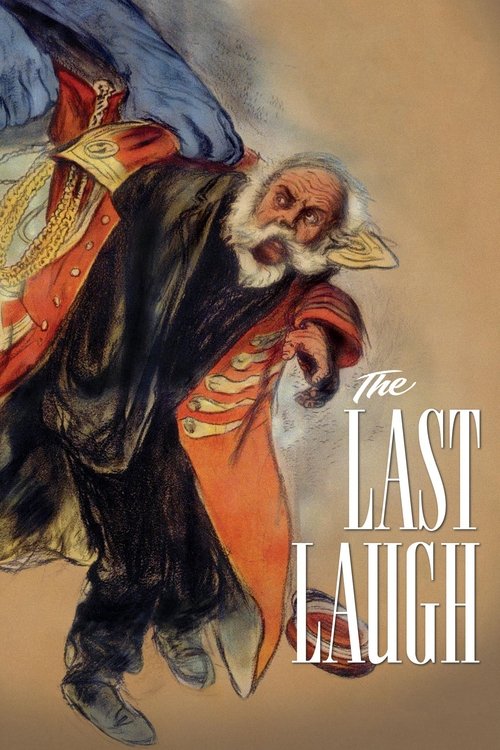
The Last Laugh
Der letzte Mann
Overview
The story follows an aging, proud doorman at the luxurious Atlantic Hotel in Berlin. Enormously joyous in his work, he defines his entire existence by his resplendent, military-style uniform, which commands the respect of his neighbors in the tenement where he lives. He greets guests with pomp and circumstance, believing himself to be a figure of great importance in the city's social hierarchy.
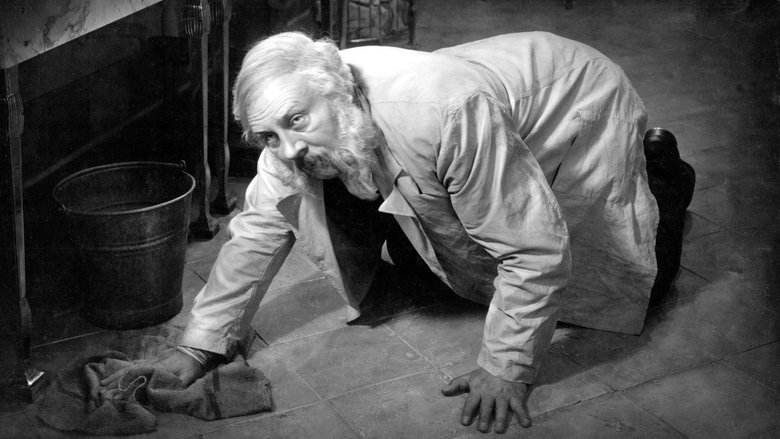
However, his world collapses when the hotel manager witnesses him taking a rest after struggling with a heavy trunk. Deeming him too old for the physical demands of the job, the manager callously demotes him to the humiliating position of a washroom attendant. Stripped of his uniform and his dignity, the old man attempts to hide his shame from his family and neighbors, leading to a psychological unraveling that exposes the cruelty of a society obsessed with status.
Core Meaning
The Last Laugh is a profound critique of social hierarchy and the fragility of human identity when it is tied solely to external status. Murnau illustrates how a man's self-worth and the respect he receives from others are entirely dependent on the uniform he wears, rather than his character.
The film also explores the tragedy of aging in a capitalist society that values utility over humanity. By contrasting the realistic tragedy of the doorman's fall with a deliberately artificial happy ending, Murnau highlights the bleak reality that, in real life, there are no miraculous saves for the discarded working class.
Thematic DNA
The Power of the Uniform
The uniform is not just clothing but a totem of authority, masculinity, and social inclusion. When the Doorman wears it, he is a 'general' in his neighborhood; without it, he becomes invisible and pathetic. The film argues that society respects the symbol, not the human being inside it.
The Cruelty of Schadenfreude
The neighbors in the tenement do not offer sympathy when the Doorman falls; they gossip and mock him. This theme reveals the pettiness of the lower-middle class, who bolster their own status by tearing down someone who has lost theirs.
Aging and Obsolescence
The film depicts the brutal corporate discarding of the elderly. The Manager sees the Doorman only as a malfunctioning tool to be replaced, highlighting a cold, utilitarian worldview that ignores years of loyal service.
Appearance vs. Reality
The entire film plays with the gap between how things look and what they are. The hotel's grandeur hides the grueling labor behind it; the Doorman's pomp hides his poverty; the happy ending hides the true tragedy.
Character Analysis
The Doorman
Emil Jannings
Motivation
To maintain his dignity and the respect of his neighbors by hiding the truth of his demotion.
Character Arc
He starts as a proud, beaming figure of authority. After his demotion, he physically collapses, his posture stooping and his face crumpling in despair. He briefly regains a false dignity by stealing the uniform, but ultimately ends in total defeat before the epilogue reverses his fortune.
The Night Watchman
Georg John
Motivation
Empathy and solidarity with a fellow worker.
Character Arc
He remains a constant, quiet presence of compassion. While others mock or ignore the Doorman, the Watchman offers him food and comfort.
The Manager
Hans Unterkircher
Motivation
Efficiency and the image of the hotel.
Character Arc
A static character representing the cold, unfeeling bureaucracy of the hotel. He makes business decisions without emotional regard for the human cost.
Symbols & Motifs
The Uniform
It symbolizes identity, social standing, and self-esteem. It is the armor that protects the Doorman from the harshness of his reality.
The scene where the Manager physically strips the heavy coat off the Doorman is filmed like a flaying; it is the death of his public self.
The Revolving Door
A symbol of the chaotic, cyclical, and indifferent nature of fate and modern city life. It spins regardless of who enters or leaves.
The film opens with a dizzying shot from inside the elevator and looking out through the revolving door, establishing the hotel as a machine that processes people.
The Washroom
Represents the underworld or social basement. It is a place of humiliation and invisibility, contrasting with the visibility of the hotel entrance.
The Doorman is forced to descend stairs to reach his new station, visually reinforcing his drop in social class.
Memorable Quotes
Here our story should really end, for in actual life, the forlorn old man would have little to look forward to but death. The author took pity on him, however, and provided quite an improbable epilogue.
— Intertitle (The Narrator)
Context:
Appears after the Doorman is shown slumped in despair in the washroom, just before the film cuts to the scene of him inheriting a fortune.
Meaning:
This is the film's famous 'apology' for its happy ending. It breaks the fourth wall to admit that the realistic outcome is tragedy, thereby preserving the film's social critique even while delivering a crowd-pleasing finale.
(No spoken dialogue)
— N/A
Context:
Throughout the entire film.
Meaning:
The film is famous for having almost no intertitles (dialogue cards), relying entirely on visual storytelling.
Philosophical Questions
Does our social role define our humanity?
The film asks whether a person has value outside of their economic function. The Doorman is treated as royalty when uniformed and as garbage when not, questioning the superficial criteria we use to judge human worth.
Is dignity internal or external?
The Doorman collapses internally when he loses his external symbols of power. The film explores whether dignity is an inner virtue or a social construct granted by others.
Alternative Interpretations
The most debated aspect is the ending. A straightforward reading sees it as a joyous triumph for the underdog. However, a critical reading—supported by the intertitle—suggests it is a biting satire. By making the ending so absurdly impossible (a random millionaire dying in his arms), Murnau emphasizes that for the working class, only a miracle can save them from destitution. The ending mocks the audience's desire for happiness in a world that offers none.
Cultural Impact
The Last Laugh is considered a watershed moment in cinema history, primarily for its liberation of the camera. Before this, cameras were mostly static; Murnau and Freund's 'unchained camera' created a visual language where the lens could fly, swoop, and follow characters, effectively inventing the modern tracking shot.
Culturally, the film captures the anxiety of the Weimar Republic, reflecting fears of social decline and inflation. It bridged the gap between German Expressionism (with its distorted sets and high contrast) and the emerging 'New Objectivity' (Neue Sachlichkeit), which focused on social realism. Its influence is visible in the work of Alfred Hitchcock, Orson Welles, and the entire film noir genre.
Audience Reception
Contemporary: The film was a massive critical success in 1924. Critics marveled at the continuous visual narrative and the absence of titles. Emil Jannings' performance was hailed as a masterpiece of physical acting.
Modern: Today, it is regarded as a masterpiece of silent cinema. While some modern viewers find the acting melodramatic (typical of the era), the camera work remains startlingly modern. The 'forced' happy ending is often discussed as the only flaw, though many appreciate its ironic intent.
Interesting Facts
- The film famously uses almost no intertitles, a rarity for silent films of that era. The story is told almost exclusively through visuals.
- Cinematographer Karl Freund invented the 'unchained camera' technique for this film, strapping the camera to his chest and riding a bicycle to achieve fluid movement.
- The happy ending was reportedly forced by UFA studio executives who feared a tragic ending would be a commercial failure, though some sources suggest Emil Jannings requested it.
- Director F.W. Murnau and screenwriter Carl Mayer considered the happy ending a satirical parody of Hollywood films.
- The hotel set was built in UFA studios using 'forced perspective'—the buildings got smaller further back to make the city look vast.
- Alfred Hitchcock was working at UFA studios during the production and was heavily influenced by Murnau's visual style.
- The street signs and advertisements in the background are written in a made-up language (sometimes called 'cod Esperanto') to make the setting universal.
- The film is an example of 'Kammerspielfilm' (chamber drama), a German genre focused on intimate character psychology and lower-middle-class life.
Easter Eggs
The Millionaire's Name
The eccentric millionaire who leaves his fortune to the doorman is named 'A.G. Monen'. This is likely a playful reference to 'Money' or the German term 'Aktiengesellschaft' (corporation), emphasizing the arbitrary nature of wealth.
Esperanto Signs
The shop signs and posters in the street scenes are not in German but in a constructed, unreadable language. This was done to ensure the film could be easily exported without translation and to give it a universal, 'any-city' feel.
⚠️ Spoiler Analysis
Click to reveal detailed analysis with spoilers
Frequently Asked Questions
Explore More About This Movie
Dive deeper into specific aspects of the movie with our detailed analysis pages
Comments (0)
No comments yet. Be the first to share your thoughts!