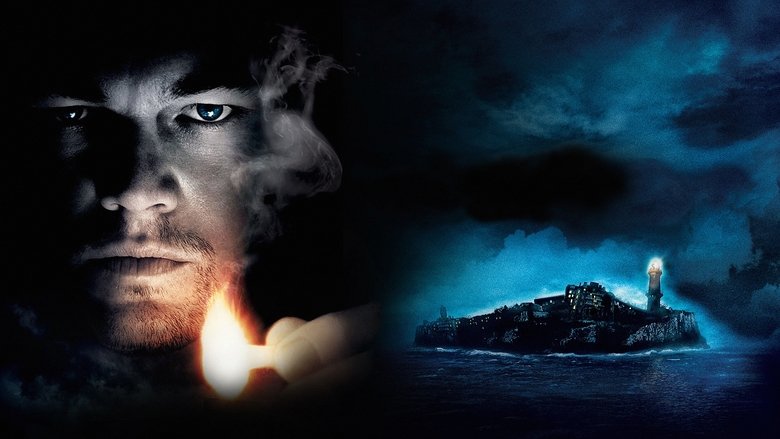
"Some places never let you go."
Shutter Island - Ending Explained
⚠️ Spoiler Analysis
The central twist of "Shutter Island" is the revelation that the protagonist is not who he appears to be. U.S. Marshal Edward "Teddy" Daniels is, in fact, Andrew Laeddis, the 67th patient at Ashecliffe Hospital. He has been a patient for two years, ever since he murdered his manic-depressive wife, Dolores Chanal, after she drowned their three children. The entire investigation into the 'missing' patient Rachel Solando is an elaborate role-playing therapy orchestrated by his psychiatrist, Dr. Sheehan (posing as his partner, Chuck Aule) and Dr. Cawley.
This radical experiment is a last-ditch effort to force Andrew to confront his trauma and break his delusion, as the alternative is to be lobotomized due to his violent tendencies. The names are anagrams: Edward Daniels is an anagram of Andrew Laeddis, and Rachel Solando is an anagram of Dolores Chanal. After being presented with the truth in the lighthouse, Andrew appears to accept his reality. However, the next morning he seemingly relapses, referring to Dr. Sheehan as 'Chuck' and talking about leaving the island. This perceived failure of the therapy leads the doctors to proceed with the lobotomy. But his final line to Sheehan, "Which would be worse: to live as a monster, or to die as a good man?", reveals that his relapse is a charade. He is lucid and aware of his horrific past, but he consciously chooses the oblivion of lobotomy over living with the unbearable guilt of being a 'monster'.
Alternative Interpretations
While the dominant interpretation is that Teddy Daniels is indeed the patient Andrew Laeddis, a less common but persistent alternative theory suggests that Teddy was sane and was telling the truth all along. In this reading, the doctors at Ashecliffe, particularly Dr. Cawley, did conspire against him to have him committed and lobotomized to cover up their inhumane experiments.
Proponents of this theory argue that the entire 'role-play' explanation was the final, successful step in gaslighting Teddy into believing he was insane. They point to details like the patient who writes 'RUN' in Teddy's notepad and the woman in the cave who claims to be the real Rachel Solando as evidence of a genuine conspiracy. According to this interpretation, Andrew's final line—"Which would be worse: to live as a monster, or to die as a good man?"—is not a choice for lobotomy, but a realization that he has been defeated. He 'dies as a good man' (the marshal who tried to expose the truth) by allowing them to take him, rather than 'living as a monster' by accepting their fabricated narrative and becoming one of their patients.
However, director Martin Scorsese and the original novel's author, Dennis Lehane, have both supported the interpretation that Andrew is delusional. The film's psychiatric consultant, Dr. James Gilligan, also confirmed that the intent was for Andrew to be choosing the lobotomy out of guilt.