Shutter Island
"Some places never let you go."
Overview
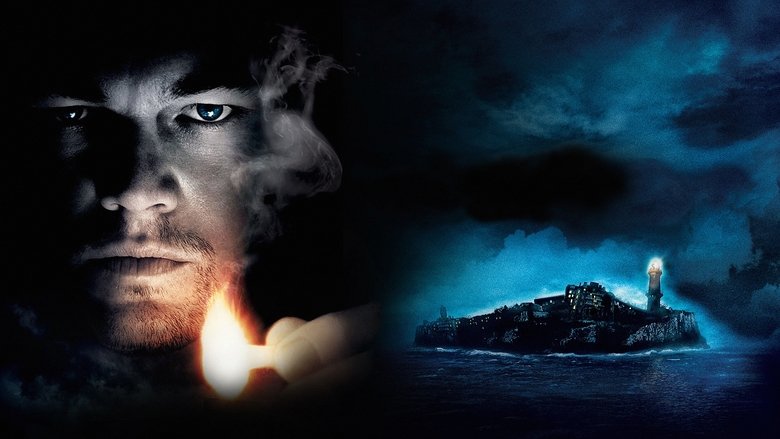
In 1954, U.S. Marshal Edward "Teddy" Daniels and his new partner, Chuck Aule, travel to the remote Ashecliffe Hospital for the Criminally Insane on Shutter Island to investigate the impossible disappearance of a patient, Rachel Solando. As a hurricane bears down on the island, cutting off communication with the mainland, the investigation becomes more complex and sinister.
Teddy finds the hospital staff, led by the enigmatic Dr. John Cawley, to be uncooperative, and he begins to suspect they are hiding something. Plagued by traumatic flashbacks from his time as a soldier in World War II and haunting dreams of his deceased wife, Dolores, Teddy's own stability is tested. He becomes convinced that a grand conspiracy is at play, involving illegal experiments and a mysterious 67th patient, leading him to question everything, including his own sanity.
Core Meaning
"Shutter Island" explores the profound impact of trauma, grief, and guilt on the human psyche. The film delves into the mind's capacity to create elaborate defense mechanisms to protect itself from unbearable truths. Director Martin Scorsese crafts a narrative that questions the nature of reality and delusion, suggesting that memory can be a fluid, unreliable construct. The central message revolves around the devastating consequences of unresolved trauma and the desperate lengths one might go to escape a painful past, ultimately posing the question of whether it's better to live with a monstrous truth or die clinging to a comforting lie.
Thematic DNA
Trauma and Guilt
The protagonist, Teddy Daniels, is haunted by his experiences as a soldier liberating the Dachau concentration camp and the tragic death of his wife. These traumas manifest as debilitating migraines, vivid hallucinations, and nightmares, blurring the line between his past and his present investigation. The entire narrative is driven by his deep-seated guilt, which his mind has constructed an elaborate fantasy to avoid confronting.
Reality vs. Delusion
The film masterfully keeps the audience questioning what is real. From the outset, the strange behavior of the hospital staff and the escalating paranoia of the protagonist create an atmosphere of uncertainty. The central plot twist reveals that the entire investigation is a complex role-playing exercise designed to treat Teddy's own profound delusion, forcing viewers to re-evaluate everything they have seen. The narrative structure itself, with its flashbacks and dream sequences, mirrors the fragmented nature of a psyche struggling to distinguish reality from illusion.
Conspiracy and Paranoia
Teddy's investigation is fueled by a growing belief in a conspiracy at Ashecliffe Hospital. He suspects the doctors are performing unethical experiments on patients, echoing Cold War-era fears about mind control. This paranoia is a key element of the neo-noir genre and serves as a manifestation of his internal conflict and his mind's attempt to externalize his own monstrous actions onto others.
The Nature of Insanity
The film explores the definitions of sanity and madness. One character notes the "Kafkaesque genius" of being labeled crazy, where any protest to the contrary only confirms the diagnosis. Dr. Cawley's progressive methods are contrasted with the looming threat of lobotomy, raising ethical questions about the treatment of mental illness in the 1950s. The film ultimately suggests that the line between sanity and insanity can be perilously thin, often blurred by trauma and guilt.
Character Analysis
Edward "Teddy" Daniels / Andrew Laeddis
Leonardo DiCaprio
Motivation
Initially, his motivation is to solve the case of the missing patient and find Andrew Laeddis, the man he blames for his wife's death. His true, underlying motivation is to suppress the unbearable guilt and trauma of his past by creating and inhabiting a heroic, alternate identity.
Character Arc
The character begins as a seemingly heroic U.S. Marshal, Teddy Daniels, investigating a missing patient. He is driven by a desire for justice and a personal vendetta against the arsonist who he believes killed his wife. As the narrative progresses, his perception of reality unravels, and it's revealed that 'Teddy' is a delusional persona created by Andrew Laeddis to escape the trauma of murdering his wife after she drowned their children. His arc is a tragic journey from a constructed reality of a hero to the devastating acceptance of his monstrous truth, culminating in a conscious choice to be lobotomized rather than live with his guilt.
Chuck Aule / Dr. Lester Sheehan
Mark Ruffalo
Motivation
As Chuck, his motivation is to assist Teddy in the investigation. As Dr. Sheehan, his motivation is to help his patient, Andrew Laeddis, break through his delusion and accept reality, thereby avoiding a lobotomy.
Character Arc
Initially presented as Teddy's new, slightly inexperienced partner, Chuck appears to be a supportive but cautious sidekick. He questions Teddy's increasingly erratic theories but follows his lead. The final reveal shows he is actually Dr. Lester Sheehan, Andrew's primary psychiatrist. His role in the elaborate charade is to guide Andrew towards reality. His arc is one of a compassionate doctor participating in a radical, high-stakes therapeutic experiment, showing concern and disappointment as Andrew's grasp on reality wavers.
Dr. John Cawley
Ben Kingsley
Motivation
To cure Andrew Laeddis through an elaborate and compassionate, albeit risky, role-playing therapy, hoping to avoid the necessity of lobotomizing him.
Character Arc
Dr. Cawley is the chief of staff at Ashecliffe Hospital. From Teddy's perspective, he is the obstructive and potentially sinister head of the conspiracy. He appears calm, intelligent, and in control, dropping cryptic hints that challenge Teddy's investigation. The reveal shows he is the architect of the entire role-play, a progressive psychiatrist attempting a radical therapy to cure his most dangerous patient. His character does not have a significant arc but is the steady force pushing for Andrew's breakthrough.
Dolores Chanal
Michelle Williams
Motivation
As a projection of Andrew's psyche, her motivation is to keep him tethered to his delusion while simultaneously dropping clues that point toward the truth he is suppressing.
Character Arc
Dolores exists only in Andrew's memories and hallucinations. In his delusion, she was a loving wife tragically killed in a fire. In his dreams, she is a cryptic figure, sometimes guiding him, sometimes warning him, often covered in ash or water. The truth reveals she was a mentally unstable woman who drowned their three children. Her arc is not her own but is the distorted representation of Andrew's guilt and grief, shifting from an idealized victim to the tragic perpetrator at the heart of his trauma.
Symbols & Motifs
Water
Water symbolizes the repressed, unbearable truth of Andrew's past. It represents the reality of his children's drowning and his wife's role in it, a memory he actively avoids.
Andrew (as Teddy) gets seasick on the ferry to the island and expresses a strong aversion to water throughout the film. The hurricane that traps him on the island is a physical manifestation of his inner turmoil. His visions of his wife, Dolores, often show her sopping wet, a direct link to the traumatic event.
Fire
Fire represents the delusional world Andrew has constructed. It is the false memory of how his wife died—in an apartment fire set by the fictional arsonist, Andrew Laeddis.
Teddy's hallucinations of Dolores are frequently accompanied by fire and ash. In one key dream sequence, she turns to ash in his arms. He sets his wife's ugly tie on fire, symbolizing an attempt to let go of the fantasy she represents. The presence of fire in scenes, like the match strikes or campfires, often indicates that what is being shown is part of Teddy's delusion.
The Lighthouse
The lighthouse symbolizes truth, revelation, and the ultimate confrontation with reality. It is the place Teddy believes the hospital's darkest secrets are hidden, but it is actually where his own secrets will be revealed to him.
Teddy is drawn to the lighthouse throughout the film, believing it to be the location of inhumane psychological experiments. The film's climax occurs in the lighthouse, where Dr. Cawley confronts Teddy with the truth about his identity as Andrew Laeddis.
Rats
Rats can symbolize the feeling of being trapped and manipulated. George Noyce explicitly tells Teddy, "You're a fucking rat in a maze," which points to the constructed nature of his reality and his role as an unwitting subject in an experiment.
During his investigation and particularly in his nightmares and hallucinations, Teddy encounters rats. The most significant reference is when fellow patient George Noyce, in Ward C, directly tells him he is being played, comparing him to a rat in a maze designed specifically for him.
Memorable Quotes
Which would be worse: To live as a monster, or to die as a good man?
— Edward "Teddy" Daniels / Andrew Laeddis
Context:
Spoken in the final scene on the steps of the hospital. After seemingly breaking through his delusion, Andrew refers to Dr. Sheehan as 'Chuck' again, suggesting a relapse. This line, however, reveals to Dr. Sheehan (and the audience) that he is aware of his reality and is making a conscious, tragic choice.
Meaning:
This is the film's most iconic and debated line. It signifies Andrew's final moment of lucidity. He is not relapsing into his delusion but is consciously choosing a lobotomy. He would rather have his mind erased ('die as a good man,' Teddy Daniels) than live with the knowledge of what he has done ('live as a monster,' Andrew Laeddis).
This is a game. All of this is for you. You're not investigating anything. You're a f**king rat in a maze.
— George Noyce
Context:
Teddy finds George Noyce, a patient he knows, being held in the high-security Ward C. Noyce, beaten and terrified, delivers this warning, trying to make Teddy understand that he is not an investigator but a subject.
Meaning:
This quote is a direct and crucial piece of foreshadowing. Noyce, another patient, explicitly tells Teddy that the entire situation is a setup centered around him. It plants the seed for both Teddy and the audience that his perception of events is being manipulated.
Sanity's not a choice, Marshall. You can't just choose to get over it.
— Dr. John Cawley
Context:
Dr. Cawley says this to Teddy during one of their interviews. He is explaining the nature of the patients' illnesses while subtly commenting on Teddy's own condition, which Teddy is oblivious to at the time.
Meaning:
This line speaks to the film's themes of mental illness and the struggle for control over one's own mind. It's an ironic statement from Dr. Cawley, whose entire experiment is based on the hope that Andrew can, in fact, choose reality over delusion.
You act like insanity is catching.
— Chuck Aule
Context:
Spoken by Chuck to Teddy early in their investigation as they are being briefed by the deputy warden. Teddy's discomfort and suspicion are palpable, and Chuck's line teases the underlying psychological truth of the story.
Meaning:
This is another piece of dialogue with a double meaning. On the surface, it's a simple observation about Teddy's unease around the patients. In hindsight, it's a poignant remark from Dr. Sheehan about Andrew's deep-seated fear of his own insanity, which he projects onto others.
Philosophical Questions
Can we choose our own reality?
The film explores the idea that the human mind can construct an alternate reality to protect itself from unbearable pain. Andrew Laeddis creates the entire persona of Teddy Daniels, complete with a backstory and a mission, to avoid confronting the truth of his family's tragedy. The film's climax and ambiguous ending force us to consider whether he ultimately chooses to retreat back into this delusion or if he consciously chooses oblivion (lobotomy) over living with a monstrous truth. This raises the question of whether a self-imposed, comforting delusion can be preferable to a devastating reality.
What is the nature of identity?
"Shutter Island" fundamentally questions whether identity is a stable, inherent quality or a narrative we construct. Andrew Laeddis's identity is completely fractured by trauma. He is both the grieving husband/father and the murderer; the war hero and the dangerous patient. The film suggests that identity can be shattered and rebuilt, and that the stories we tell ourselves about who we are are essential to our ability to function. Teddy Daniels isn't just a lie; for two years, it has been Andrew's functional identity.
Is redemption possible for monstrous acts?
Andrew's final question, "Which would be worse: to live as a monster, or to die as a good man?", is a profound inquiry into guilt and atonement. Having fully accepted that he is the 'monster' who killed his wife, he is faced with the rest of his life knowing this truth. His decision to feign a relapse and accept a lobotomy can be seen as a form of self-punishment and a tragic attempt at redemption. He cannot undo his actions, but he can erase the man who committed them, ensuring he 'dies' as the 'good man' he wishes he had been.
Alternative Interpretations
While the dominant interpretation is that Teddy Daniels is indeed the patient Andrew Laeddis, a less common but persistent alternative theory suggests that Teddy was sane and was telling the truth all along. In this reading, the doctors at Ashecliffe, particularly Dr. Cawley, did conspire against him to have him committed and lobotomized to cover up their inhumane experiments.
Proponents of this theory argue that the entire 'role-play' explanation was the final, successful step in gaslighting Teddy into believing he was insane. They point to details like the patient who writes 'RUN' in Teddy's notepad and the woman in the cave who claims to be the real Rachel Solando as evidence of a genuine conspiracy. According to this interpretation, Andrew's final line—"Which would be worse: to live as a monster, or to die as a good man?"—is not a choice for lobotomy, but a realization that he has been defeated. He 'dies as a good man' (the marshal who tried to expose the truth) by allowing them to take him, rather than 'living as a monster' by accepting their fabricated narrative and becoming one of their patients.
However, director Martin Scorsese and the original novel's author, Dennis Lehane, have both supported the interpretation that Andrew is delusional. The film's psychiatric consultant, Dr. James Gilligan, also confirmed that the intent was for Andrew to be choosing the lobotomy out of guilt.
Cultural Impact
Released in 2010, "Shutter Island" arrived at a time of renewed interest in complex psychological thrillers. Directed by the acclaimed Martin Scorsese, the film was a commercial success and received generally positive reviews, with critics praising its atmospheric tension, visual style, and DiCaprio's powerful performance. The film is a clear homage to the film noir and gothic horror genres, as well as the psychological thrillers of Alfred Hitchcock, particularly "Vertigo." Scorsese himself cited influences like "I Walked With A Zombie" and "The Wrong Man."
The movie's most significant cultural impact lies in its mind-bending twist ending and the final, ambiguous line, which sparked countless debates and analyses among audiences and critics. This ambiguity has given the film a lasting legacy, making it a popular subject for discussion and repeated viewings. It solidified its place in pop culture as a go-to example of a film with a shocking and thought-provoking conclusion. While not as influential as some of Scorsese's other masterpieces, it stands as a masterfully crafted genre piece that explores deep psychological themes and continues to captivate viewers with its intricate narrative puzzle.
Audience Reception
Audiences generally responded positively to "Shutter Island," finding it to be a gripping, atmospheric, and thought-provoking psychological thriller. Viewers widely praised Leonardo DiCaprio's intense and compelling performance, Martin Scorsese's masterful direction, and the film's haunting visual style. The primary point of discussion and fascination for audiences was the shocking twist ending, which sparked extensive debate and analysis. Many viewers found the film rewarding on a second viewing, enjoying the process of spotting the numerous clues and instances of foreshadowing they missed the first time. The main points of criticism for some viewers were that the plot twist was somewhat predictable and that the film's two-hour-plus runtime felt bloated at times. Overall, it is regarded as a high-quality, intelligent genre film that succeeds in creating a deeply unsettling and memorable experience.
Interesting Facts
- The film's setting was inspired by the real, abandoned Medfield State Hospital in Massachusetts, which provided an unsettling atmosphere for the movie.
- Mark Ruffalo won the role of Chuck Aule after sending a heartfelt fan letter to Martin Scorsese expressing his desire to work with him.
- The film's psychiatric consultant, Dr. James Gilligan, has a definitive interpretation of the ambiguous ending: he asserts that Andrew consciously chooses the lobotomy as a form of suicide to escape his guilt.
- Martin Scorsese and Leonardo DiCaprio had originally planned to make "The Wolf of Wall Street" first, but scheduling conflicts led them to make "Shutter Island" instead.
- The musical score is not original but is a curated collection of existing 20th-century classical pieces from composers like Krzysztof Penderecki and John Cage, selected to create an unsettling tone.
- The filmmakers considered renaming the movie "Ashecliffe," after the hospital, during production.
- David Fincher was once attached to direct, with Brad Pitt and Mark Wahlberg considered for the lead roles.
- The quote on a plaque in the asylum, "Remember us, for we too have lived, loved and laughed," is taken from a real cemetery in Medfield, Massachusetts.
- The dream sequences were shot on 65mm film to give them a distinct, hyper-real look compared to the rest of the movie.
Easter Eggs
Musical Homage to 'The Shining'
The music used in the film's opening sequence is a direct reference to Stanley Kubrick's "The Shining." The piece by composer György Ligeti was also used in Kubrick's film to create a sense of dread and tension. This musical choice serves as an homage and immediately sets a similar tone of psychological horror and isolation.
Subtle Clues in Early Scenes
Throughout the first act, there are numerous subtle clues that hint at the final twist. For instance, when the marshals arrive, the guards are on high alert and handle their weapons nervously around Teddy, not Chuck. Chuck also struggles to unholster his gun, suggesting he's unfamiliar with firearms. Teddy's toy gun is also a hint. These details, easily missed on a first viewing, foreshadow that Teddy is a patient and Chuck is not a real marshal.
The Disappearing Glass
In a scene where Teddy interviews a patient, Mrs. Kearns, she asks for a glass of water. As she drinks it, there is a brief cutaway where the glass is missing from her hands, then it reappears. This is not a continuity error but a deliberate visual cue representing the unreliable nature of Teddy's perception and the manufactured reality of the situation. It hints that the events are not as they seem and are part of his delusion.
⚠️ Spoiler Analysis
Click to reveal detailed analysis with spoilers
Frequently Asked Questions
Explore More About This Movie
Dive deeper into specific aspects of the movie with our detailed analysis pages
Comments (0)
No comments yet. Be the first to share your thoughts!