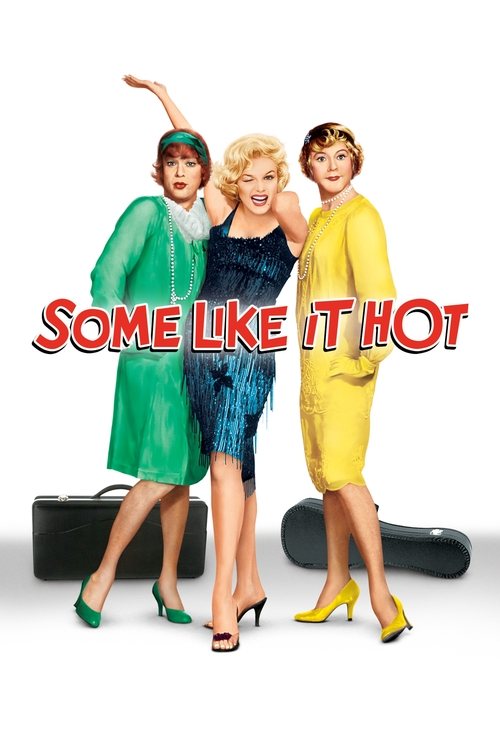
"The movie too HOT for words!"
Some Like It Hot - Symbolism & Philosophy
Symbols & Motifs
The Yacht
The yacht symbolizes the pinnacle of wealth, luxury, and the romantic ideal that Sugar Kane is desperately seeking. It represents the "sweet end of the lollipop" she dreams of. For Joe, it is the ultimate prop in his deception, a tangible representation of the power and allure of the millionaire persona he adopts to win her over. It is both a symbol of his elaborate lie and the setting for their budding, albeit complicated, romance.
Joe, disguised as the millionaire "Junior," borrows Osgood Fielding III's yacht to seduce Sugar. He pretends it's his own and feigns indifference to its luxury, a tactic to intrigue her. The scenes on the yacht are pivotal, as it's where Sugar falls for "Junior" and where Joe's conscience begins to clash with his manipulative plan.
The "Fuzzy End of the Lollipop"
This phrase, spoken by Sugar, is a recurring metaphor for her life experiences, particularly in romance. It symbolizes her perpetual bad luck, her feeling of being used and getting the short end of the stick, especially from saxophone players. It encapsulates her vulnerability and her deep-seated desire to finally find happiness and security.
Sugar first uses this expression on the train while sharing a drink with "Josephine" and the other girls. She laments her romantic history, explaining her pattern of falling for men who take advantage of her. The line instantly defines her character as both world-weary and naively hopeful.
Jazz Music
Jazz, particularly the "hot" jazz played by the all-girl band, symbolizes a departure from convention, a sense of freedom, and sexual liberation. In the context of the Prohibition era, it represents the looser, more uninhibited side of life that exists beneath a veneer of societal propriety. When "Junior" claims to prefer classical music, he is creating a contrast between his supposedly refined persona and the passionate, unrestrained world that Sugar inhabits.
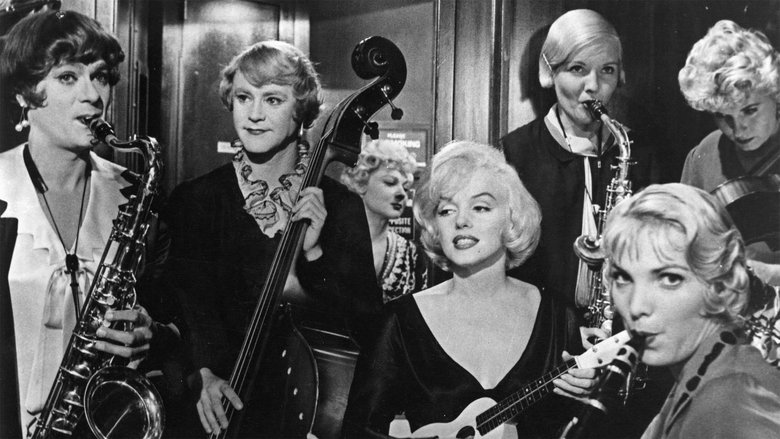
The film is set against the backdrop of the Jazz Age, opening in a speakeasy where Joe and Jerry play. Their escape leads them to join "Sweet Sue and her Society Syncopators," a jazz band. The film's title itself comes from a conversation where Sugar mentions her band plays "hot jazz," and Joe, as "Junior," replies, "I guess some like it hot."
Philosophical Questions
What is the nature of identity?
The film constantly questions whether identity is fixed or fluid. Joe and Jerry initially adopt female identities as a simple disguise, but the experience changes them. Jerry discovers a part of himself that enjoys being Daphne, while Joe learns empathy by experiencing life from a woman's perspective. The multiple layers of disguise—Joe as Josephine, who then becomes 'Junior'—suggest that identity can be a performance, consciously constructed to achieve a goal. The film playfully posits that who we are is not just about our assigned gender but also about the roles we choose to play.
Can true love exist without complete honesty?
The central romance between Joe and Sugar is built entirely on a foundation of lies. Joe manipulates Sugar by using information he learns as Josephine and by creating a false persona of a millionaire. Yet, through this deception, he develops genuine feelings. The film's resolution, where Sugar accepts Joe despite his lies, seems to suggest that the emotional connection they formed was real, even if the circumstances were fabricated. It raises the question of whether the intention and the feeling behind an action can ultimately matter more than the deceptive action itself.
What does it mean to be a 'man' or a 'woman'?
Some Like It Hot systematically deconstructs gender stereotypes. By living as women, Joe and Jerry experience the discomfort of high heels, the unwanted advances from men, and the societal expectation to be demure. They learn that femininity is a complex performance. The film satirizes masculine tropes through Joe's manipulative womanizing and the violent posturing of the gangsters. Ultimately, the film suggests that the labels of 'man' and 'woman' are insufficient and that human connection transcends these simple binaries, as exemplified by Osgood's perfect acceptance of Daphne/Jerry.
Core Meaning
At its heart, Some Like It Hot is a brilliant farce that uses comedy to explore themes of identity, gender, and acceptance. Director Billy Wilder masterfully crafts a narrative that challenges the rigid social norms of the 1950s. By placing its male protagonists in women's shoes, the film satirizes gender roles and stereotypes, forcing Joe and Jerry to experience firsthand the objectification and societal expectations that women face. Beyond the laughter, the film suggests that identity is fluid and that love and connection can transcend conventional boundaries. The famous closing line, "Well, nobody's perfect," serves as the film's ultimate message: a call for tolerance and the acceptance of individuals for who they are, regardless of societal labels.