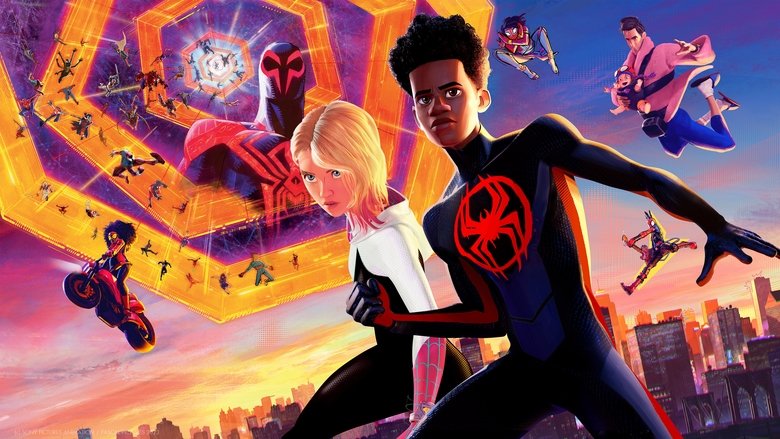
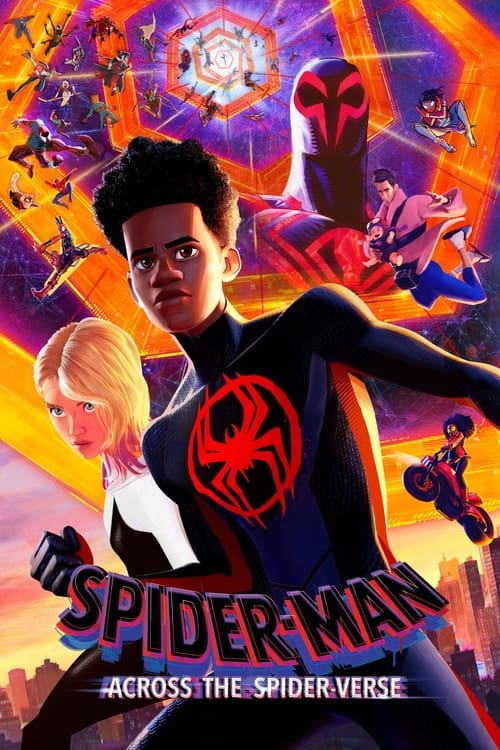
"It's how you wear the mask that matters."
Spider-Man: Across the Spider-Verse - Ending Explained
⚠️ Spoiler Analysis
The central twist of "Spider-Man: Across the Spider-Verse" is the revelation that Miles Morales is the "original anomaly." The radioactive spider that bit him was not from his universe (Earth-1610) but from another, Earth-42. It was brought to his dimension by The Spot when he was a scientist at Alchemax. This means Miles was never supposed to become Spider-Man, and his existence disrupts the multiversal canon that Miguel O'Hara is desperately trying to protect.
This revelation re-contextualizes the entire film. Miguel's hostility towards Miles is not just about his rebellious attitude; it's because he views Miles as the root of the multiverse's instability. This leads to the film's second major twist in the final act. When Miles attempts to use the Spider Society's teleporter to go home, the machine, which reads the genetic origin of the spider's bite, sends him not to Earth-1610, but to the spider's home of Earth-42.
On Earth-42, Miles discovers a grim, darker version of Brooklyn. Because the spider bit him, Earth-42 never got a Spider-Man. In this reality, his father, Jefferson Davis, is dead, and his Uncle Aaron is still alive. The final, shocking reveal is that the Miles Morales of Earth-42 has become the Prowler. The film ends on this massive cliffhanger, with Miles-1610 captured by his alternate-universe uncle and cousin, while Gwen Stacy assembles a new team of Spider-Friends (including Peter B. Parker, Spider-Ham, Spider-Man Noir, Peni Parker, Spider-Punk, and Spider-Byte) to rescue him.
Alternative Interpretations
One of the most debated aspects of the film is the true nature and validity of "canon events." While Miguel O'Hara presents them as absolute, unchangeable laws of the multiverse, some viewers have questioned if he is a reliable narrator. His entire philosophy is based on a single, traumatic experience where he caused a universe to collapse. It's possible that he misinterpreted the cause of the disaster and has since created a rigid, flawed ideology to cope with his guilt. The existence of Miles himself — an anomaly who has not caused his universe to collapse — seems to be evidence against Miguel's theory. Furthermore, Gwen's father quitting the police force seems to avert a canon event (the death of a police captain close to Spider-Gwen) without immediate negative consequences. This suggests that the "canon" might be more of a strong suggestion or a pattern rather than an unbreakable law, and that Miguel's authoritarian control is based on a flawed premise.
Another interpretation centers on the film as a meta-commentary on storytelling and fandom. The "canon" can be seen as a metaphor for rigid fan expectations and the creative constraints placed on long-running franchises. Miguel and the Spider Society represent the gatekeepers of canon who resist change and deviation from the established formula. Miles's rebellion, in this reading, is a call for creative freedom and the importance of telling new, diverse stories that break the mold, arguing that a character's identity is not defined by repeating the same tragic beats of their predecessors.