The central twist is that the security chief, Sgt. Price, is the German spy. He is a German national who lived in America and was planted in the camp. Sefton deduces this by observing the shadow of a loop in the light cord (Price's signal) and confirming it when Price knows the time of the Pearl Harbor attack in Berlin time, not American time. In the climax, Sefton exposes Price to the barracks. The prisoners then use Price as a decoy, throwing him out into the yard with tin cans tied to him to draw the guards' machine-gun fire. Amidst the distraction, Sefton cuts the wire and escapes with the wounded Dunbar, leaving the remaining prisoners to marvel at his ingenuity.
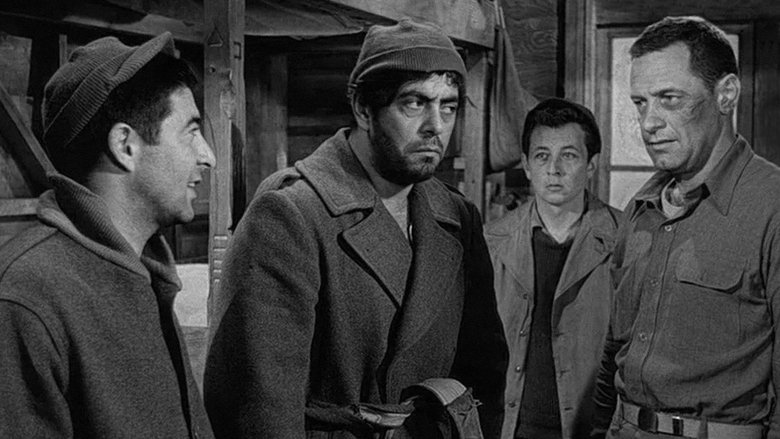
A gritty, cynical masterpiece blending dark comedy and tense wartime drama. Amidst the claustrophobic squalor of a POW camp, paranoia festers as a mercenary anti-hero becomes the scapegoat for a hidden traitor.
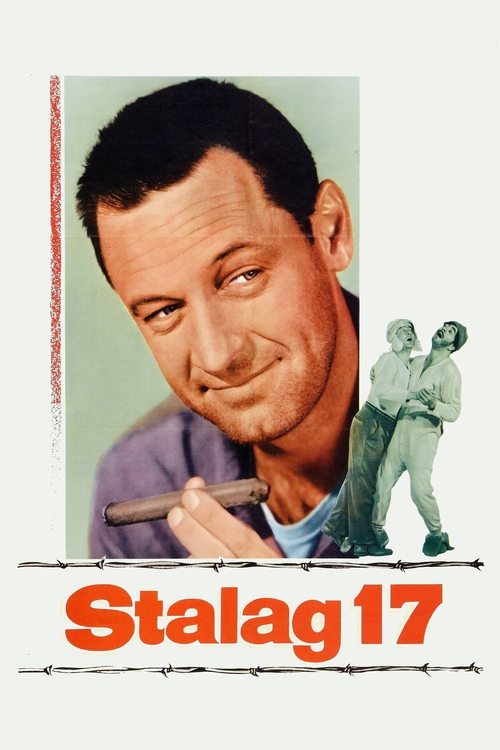
Stalag 17
"The star-spangled, laugh-loaded salute to our P.W. heroes!"
29 May 1953
United States of America
120 min
7.7
(646)
Director: Billy Wilder
Cast: William Holden, Robert Strauss, Don Taylor, Otto Preminger, Harvey Lembeck
Drama
War
Comedy
Scapegoating and Mob Mentality
Cynicism vs. Idealism
Class and Capitalism
The Absurdity of War
Budget:
$1,661,530
Box Office:
$10,000,000
Stalag 17 — Ending Explained
⚠️ Spoiler Analysis
Alternative Interpretations
Many critics view the film as an allegory for the McCarthyism and the Red Scare of the 1950s. The barracks represents a paranoid society where fear leads to witch-hunts and the persecution of the non-conformist (Sefton). In this reading, the 'mob' is the American public ready to turn on their own based on suspicion rather than evidence. Another interpretation suggests the film is a critique of unchecked capitalism vs. socialism, with Sefton's 'racket' exposing the moral ambiguities of profiting from collective misery.
Explore More About This Movie
Dive deeper into specific aspects of the movie with our detailed analysis pages