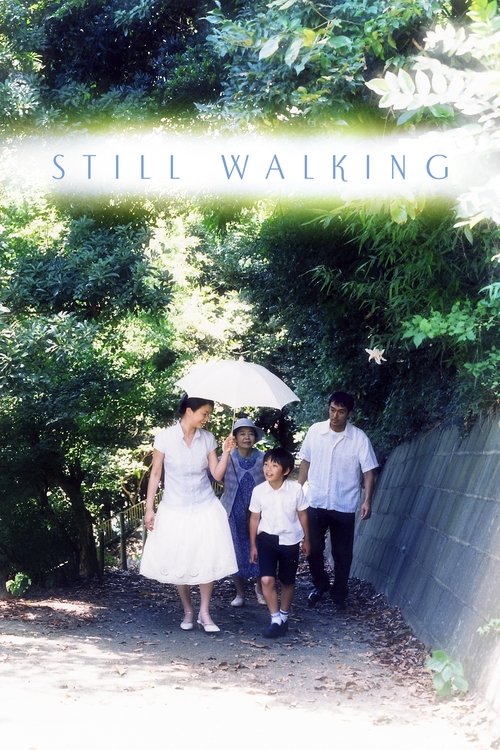
歩いても 歩いても
Still Walking - Symbolism & Philosophy
Symbols & Motifs
The Yellow Butterfly
It represents the soul of the departed and the persistence of memory. For the mother, it is literally her son Junpei returning home.
A yellow butterfly enters the house at night. The mother frantically tries to catch it, claiming it is Junpei. Ryota dismisses this superstition, but in the future, he repeats the same story to his own daughter, showing how family myths are inherited.
Corn Tempura
A sensory trigger for memory and the continuity of family ritual. The specific sound of frying represents the comfort and sensory detail of home.
The mother makes corn tempura, a favorite of the deceased son. The preparation is shown in great detail, emphasizing the tactile nature of maternal love and how food bridges the gap between the living and the dead.
The Steep Slope/Stairs
The physical burden of aging and the difficulty of the journey home (both literal and metaphorical).
The aging parents struggle to climb the steep steps to the grave and their home. It visualizes their decline and the growing distance between them and the outside world.
Myrtle Tree
The father's displaced affection and obsession with legacy.
Kyohei cares more for the tree in the garden than for his grandchildren, warning them not to break it. It symbolizes his rigid control and misplaced priorities.
Philosophical Questions
Does time truly heal all wounds?
The film suggests the answer is no. Fifteen years have passed, yet the parents' grief is as fresh as ever. The film posits that time may just calcify pain rather than resolve it, and that families often settle into a 'cold war' rather than finding true peace.
What do we owe the dead vs. the living?
The parents prioritize the memory of the dead son (Junpei) over the feelings of the living son (Ryota). The film asks whether honoring the dead justifies neglecting the living, and explores the toxicity of idealizing those who are gone.
Is honesty always the best policy in a family?
The family maintains harmony through 'polite lies' and silence. The mother hides her knowledge of the affair; Ryota hides his unemployment. The film explores whether these deceptions are necessary social lubricants that allow the family to function.
Core Meaning
At its heart, Still Walking is a meditation on the impermanence of life and the inevitability of regret. Kore-eda explores how family members can love each other deeply yet remain fundamentally unable to communicate that love before it is too late.
The title refers to the lyrics of the song "Blue Light Yokohama," but metaphorically suggests that life continues its slow, steady march despite tragedy ("still walking"), and that we are often "still walking" toward understanding our parents when they are already gone. It captures the Japanese concept of mono no aware—a wistful awareness of the transience of things.