Sunset Boulevard
A haunting film noir descent into madness, where the ghosts of Hollywood's golden age cling to the decaying glamour of the past, illuminated by the harsh light of a cynical present.
Sunset Boulevard
Sunset Boulevard

"A Hollywood Story."

10 August 1950 United States of America 110 min ⭐ 8.3 (2,757)
Director: Billy Wilder
Cast: William Holden, Gloria Swanson, Erich von Stroheim, Nancy Olson, Fred Clark
Drama
The Cruelty of Hollywood Delusion and Fantasy vs. Reality Obsession and a Corrupted American Dream Manipulation and Power Dynamics
Budget: $1,752,000
Box Office: $5,000,000

Sunset Boulevard - Ending Explained

⚠️ Spoiler Analysis

The film's narrative is framed by the death of its narrator, Joe Gillis. We see his body in the pool at the very beginning, and the rest of the film is a flashback explaining how he ended up there. The central plot twist is the gradual revelation of the true nature of Norma's world. We learn that all of her fan mail is actually written by Max to maintain her delusion that she is still famous. Max's devotion is further explained when he reveals to Joe that he was not only a prominent director who discovered Norma but also her first husband.

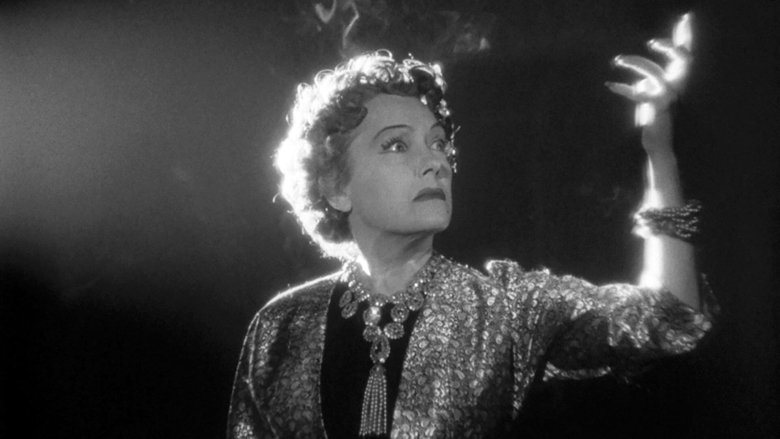
The climax is reached when Norma discovers Joe's secret collaboration and budding romance with Betty Schaefer. Joe, in a moment of brutal honesty, confronts Norma with the truth about her faded stardom and the fake fan letters. As he tries to leave her for good, Norma, unable to handle the destruction of her fantasy world, shoots him multiple times, causing him to fall into the swimming pool. The film's final scene shows Norma completely detached from reality. As the police and news cameras arrive, she believes she is on the set of her comeback film, "Salome," with Cecil B. DeMille directing. She descends her grand staircase, ready for her close-up, a chilling and unforgettable ending that cements her total break from reality.

Alternative Interpretations

While the film is widely seen as a critique of Hollywood, some interpretations view Joe Gillis as the true villain of the story. From this perspective, he knowingly takes advantage of a mentally unstable woman for his own financial gain and security. Norma, in this reading, is a tragic victim not only of the Hollywood system but also of Joe's exploitation. Her final, violent act is seen as the tragic result of his manipulation and eventual abandonment.

Another interpretation focuses on Max as the central figure driving the tragedy. His love for Norma is so possessive that he would rather keep her locked in a world of illusion than allow her to face reality or find a new life. By forging fan letters and shielding her from the truth, he enables her descent into madness. His actions, though born of love, are ultimately destructive, making him a more complex and tragic figure than a simple, devoted servant.