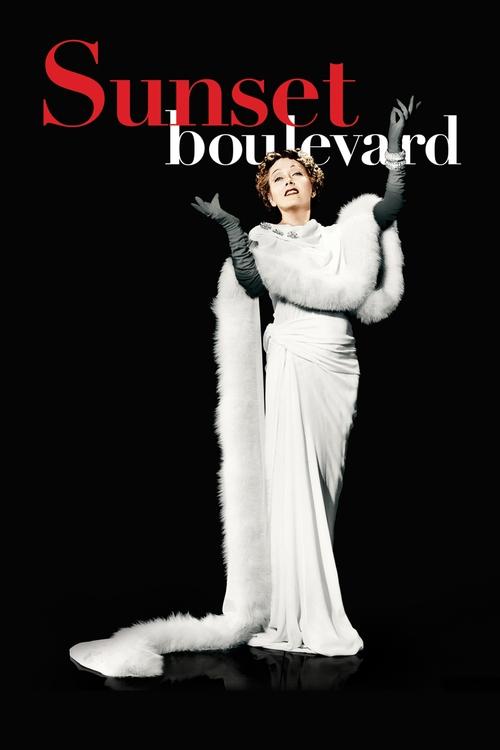
Sunset Boulevard
A haunting film noir descent into madness, where the ghosts of Hollywood's golden age cling to the decaying glamour of the past, illuminated by the harsh light of a cynical present.
Sunset Boulevard

Sunset Boulevard

"A Hollywood Story."

10 August 1950 United States of America 110 min ⭐ 8.3 (2,757)
Director: Billy Wilder
Cast: William Holden, Gloria Swanson, Erich von Stroheim, Nancy Olson, Fred Clark
Drama
The Cruelty of Hollywood Delusion and Fantasy vs. Reality Obsession and a Corrupted American Dream Manipulation and Power Dynamics
Budget: $1,752,000
Box Office: $5,000,000

Overview

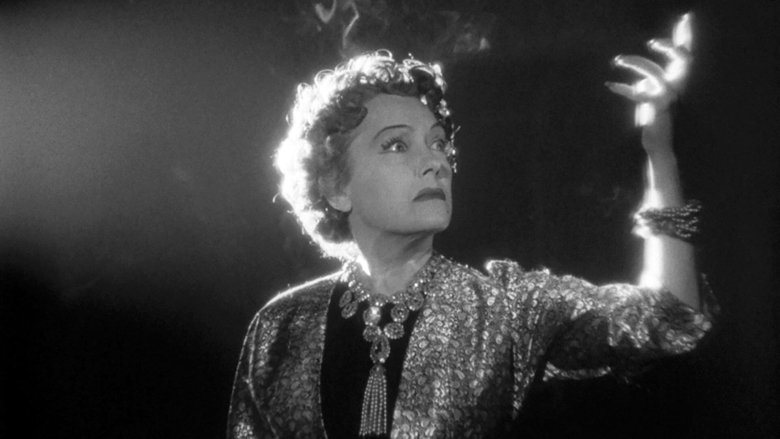
"Sunset Boulevard" tells the story of Joe Gillis, a down-on-his-luck screenwriter in 1950s Hollywood. Fleeing from repo men, he stumbles upon a decaying mansion on Sunset Boulevard inhabited by Norma Desmond, a forgotten silent film star. Norma lives in a fantasy world, believing she is still a great star, attended by her devoted butler, Max von Mayerling.

Seeing an opportunity, Joe agrees to help Norma edit her rambling screenplay for a comeback film based on Salome. He soon becomes entangled in her delusional life, becoming her kept man. As Norma's obsession with him grows, Joe finds himself trapped in her suffocating world, a gilded cage from which escape seems impossible.
Core Meaning

"Sunset Boulevard" is a cynical and critical examination of the Hollywood dream machine, exposing its cruelty and the ephemeral nature of fame. Director Billy Wilder explores the dark side of celebrity, suggesting that the pursuit of stardom can lead to self-destruction and a painful disconnect from reality. The film serves as a cautionary tale about the corrosive effects of nostalgia and the refusal to accept the passage of time, themes embodied by the tragic figure of Norma Desmond. It critiques a system that builds up idols only to discard them when they are no longer young and beautiful.

Thematic DNA

The Cruelty of Hollywood 35%
Delusion and Fantasy vs. Reality 30%
Obsession and a Corrupted American Dream 20%
Manipulation and Power Dynamics 15%

The Cruelty of Hollywood

The film portrays the Hollywood industry as a brutal and exploitative system that discards its stars once they have outlived their usefulness. Norma Desmond is a victim of this system, forgotten by the public and the studios that once profited from her fame. The film's self-referential nature, casting real-life silent film stars like Gloria Swanson and Buster Keaton, underscores the reality of this theme.

Delusion and Fantasy vs. Reality

A central theme is the conflict between illusion and reality. Norma Desmond lives in a self-created fantasy world where she is still a beloved star, a delusion maintained by her butler, Max. This is contrasted with the harsh reality of Joe Gillis's struggling career and financial desperation. The film explores how the lines between performance and real life can blur, leading to tragic consequences.

Obsession and a Corrupted American Dream

The film critiques the American Dream as personified by Hollywood. Joe Gillis comes to Hollywood seeking fame and fortune but finds himself compromising his integrity for financial security. Norma Desmond's obsession with her past glory and her desperate attempts at a comeback illustrate a dream that has soured into a nightmare.

Manipulation and Power Dynamics

The relationship between Joe and Norma is a complex web of manipulation and shifting power dynamics. Initially, Joe sees an opportunity to exploit Norma's wealth and delusions. However, Norma's possessiveness and emotional instability soon give her control over him. The film also subverts traditional gender roles, with Norma holding the economic power in the relationship.

Character Analysis

Norma Desmond

Gloria Swanson

Archetype: Femme Fatale / Tragic Figure
Key Trait: Grandiose Delusion

Motivation

Norma's primary motivation is to reclaim her lost stardom and return to the silver screen. She is driven by a desperate need for adoration and a belief in her own enduring greatness, a delusion fueled by her isolation and the actions of those around her.

Character Arc

Norma Desmond does not have a traditional character arc of growth; instead, her arc is one of descent. She begins the film in a state of delusion, which only deepens as her hopes for a comeback are falsely encouraged. Her obsession with Joe and her refusal to accept reality lead to a complete psychotic break by the film's conclusion.

Joe Gillis

William Holden

Archetype: Anti-hero / Cynic
Key Trait: Cynicism

Motivation

Joe is initially motivated by financial desperation. He is willing to compromise his artistic integrity and personal freedom for a life of comfort and luxury. He also harbors a desire for success in Hollywood, a dream that becomes twisted and ultimately destroyed.

Character Arc

Joe begins as a cynical and opportunistic screenwriter. His journey is one of moral compromise as he allows himself to be kept by Norma. While he initially sees their arrangement as a temporary solution to his financial problems, he becomes increasingly entangled and corrupted. His attempts to break free come too late, leading to his tragic demise.

Max von Mayerling

Erich von Stroheim

Archetype: The Devoted Servant / Enabler
Key Trait: Unwavering Devotion

Motivation

Max is motivated by a deep and abiding love for Norma. He sacrifices his own identity to protect her from the harsh realities of her faded stardom, believing that shielding her from the truth is an act of kindness, even as it contributes to her insanity.

Character Arc

Max's character is largely static, defined by his unwavering devotion to Norma. The significant revelation of his past as her first husband and a respected director adds depth to his character but does not change his actions. He remains her protector and the architect of her fantasy world until the very end.

Betty Schaefer

Nancy Olson

Archetype: The Ingénue / Voice of Hope
Key Trait: Optimism

Motivation

Betty is motivated by a genuine passion for storytelling and a desire to create meaningful films. She is ambitious but not corrupted by the cynicism of Hollywood. Her belief in Joe's talent and her growing affection for him drive her to help him.

Character Arc

Betty represents a more optimistic and wholesome side of Hollywood. She begins as a script reader who is critical of Joe's work but sees his potential. She develops into a collaborative partner and a romantic interest for Joe, offering him a chance at a normal life and a more fulfilling career.

Symbols & Motifs

Norma's Mansion

Meaning:

The decaying, grandiose mansion symbolizes Norma Desmond's inner state: a crumbling relic of a bygone era, filled with memories of past glory but isolated from the present world. It represents the decaying state of silent film fame and Norma's fierce attachment to the past.

Context:

The mansion is the primary setting of the film. Its dark, dusty interiors and gothic atmosphere create a sense of claustrophobia and decay, mirroring Norma's psychological state.

The Swimming Pool

Meaning:

The swimming pool is a symbol of Hollywood success and the glamorous lifestyle that Joe Gillis desires. His death in the pool is ironic, as he finally achieves this symbol of success, but at the cost of his life.

Context:

The film opens and closes with the image of Joe's body floating in the pool. It is a constant presence at the mansion, representing the dream that ultimately consumes him.

Mirrors and Photographs

Meaning:

The numerous mirrors and photographs of Norma in her mansion symbolize her narcissism and obsession with her own image and past. They reflect her inability to see herself as she is and her constant need to relive her glory days.

Context:

Throughout the film, Norma is often seen gazing at her own reflection or surrounded by portraits from her youth. This visual motif emphasizes her self-absorption and disconnection from reality.

Joe's Car

Meaning:

Joe's car represents his independence and his connection to the outside world. Losing his car is what leads him to Norma's mansion, and his inability to leave symbolizes his entrapment.

Context:

The film begins with Joe fleeing from repo men trying to take his car. His desperation to keep it highlights his desire for freedom, which he ultimately sacrifices.

The Dead Chimpanzee

Meaning:

The elaborate funeral for Norma's pet chimpanzee at the beginning of Joe's stay symbolizes Norma's excessive wealth and her profound loneliness. It also foreshadows Joe's own fate as another of Norma's 'pets' who will meet a tragic end.

Context:

When Joe first enters the mansion, he is mistaken for the undertaker for the chimpanzee. This strange and somber event sets the tone for the bizarre and ultimately tragic world he has entered.

Memorable Quotes

All right, Mr. DeMille, I'm ready for my close-up.

— Norma Desmond

Context:

After murdering Joe, Norma is confronted by police and reporters. Believing she is finally filming her comeback role in "Salome," she descends her grand staircase and delivers this line to the news cameras, fully immersed in her fantasy.

Meaning:

This is the iconic final line of the film. It signifies Norma's complete descent into madness, as she mistakes the newsreel cameras filming her arrest for the cameras of a movie set. It's a chilling and tragic culmination of her delusions of grandeur.

I am big. It's the pictures that got small.

— Norma Desmond

Context:

When Joe first meets Norma, he recognizes her and says, "You used to be big." Norma's defiant response illustrates her deluded perception of her own stardom.

Meaning:

This quote perfectly encapsulates Norma's refusal to accept that her fame has faded. She blames the changing film industry for her obscurity rather than her own inability to adapt. It reflects her immense ego and her belief that the era of silent films, and her stardom, was superior.

We didn't need dialogue. We had faces!

— Norma Desmond

Context:

While watching one of her old silent films with Joe, Norma passionately defends the artistry of silent cinema, emphasizing the power of facial expression over spoken words.

Meaning:

This line is a lament for the silent film era, which Norma believes was a more expressive and artistic form of cinema. It highlights her disdain for the talkies that rendered her style of acting obsolete and underscores her inability to move on from the past.

The poor dope—he always wanted a pool. Well, in the end, he got himself a pool, only the price turned out to be a little high.

— Joe Gillis

Context:

The film opens with a shot of Joe's body floating in Norma's swimming pool. His posthumous narration begins with this ironic commentary on his fate.

Meaning:

Spoken in the opening narration by the deceased Joe, this quote establishes the film's cynical tone and foreshadows the tragic outcome of Joe's pursuit of the Hollywood dream. The pool, a symbol of success, becomes his grave, highlighting the deadly cost of his ambitions.

Philosophical Questions

What is the true cost of fame and the pursuit of the American Dream?

The film explores this question through the characters of Norma and Joe. Norma's story suggests that fame can be a destructive force, leading to a loss of identity and a crippling inability to live in the present. Joe's journey illustrates how the desire for success can lead to moral decay and ultimately, self-destruction. The film posits that the Hollywood version of the American Dream is an illusion that often demands a high, and sometimes fatal, price.

At what point does nostalgia become a destructive force?

Norma Desmond's character is a powerful exploration of this question. Her obsession with her past prevents her from adapting to the present, trapping her in a cycle of delusion and despair. The film suggests that while memory and past achievements can be a source of pride, an inability to move forward can lead to a tragic disconnect from reality.

Is it more compassionate to protect someone with a comforting lie or to confront them with a painful truth?

This is explored through the character of Max, who believes he is protecting Norma by maintaining her delusions. Joe initially plays along for his own benefit but eventually tries to force Norma to face the truth. The film's tragic ending leaves the question open, suggesting that in extreme cases, both paths can lead to destruction, and that perhaps there are no easy answers when dealing with profound self-deception.

Alternative Interpretations

While the film is widely seen as a critique of Hollywood, some interpretations view Joe Gillis as the true villain of the story. From this perspective, he knowingly takes advantage of a mentally unstable woman for his own financial gain and security. Norma, in this reading, is a tragic victim not only of the Hollywood system but also of Joe's exploitation. Her final, violent act is seen as the tragic result of his manipulation and eventual abandonment.

Another interpretation focuses on Max as the central figure driving the tragedy. His love for Norma is so possessive that he would rather keep her locked in a world of illusion than allow her to face reality or find a new life. By forging fan letters and shielding her from the truth, he enables her descent into madness. His actions, though born of love, are ultimately destructive, making him a more complex and tragic figure than a simple, devoted servant.

Cultural Impact

"Sunset Boulevard" was praised by many critics upon its release and is now considered one of the greatest films ever made. It was nominated for eleven Academy Awards and won three. The film's cynical portrayal of Hollywood was controversial at the time, with some in the industry despising it for its unflattering depiction. However, its influence on cinema has been profound. It is a landmark of film noir, notable for its dark themes, complex characters, and innovative narrative structure, including the use of a dead narrator.

The film's exploration of celebrity, delusion, and the dark side of the American Dream has resonated with audiences for decades. Its famous lines, particularly "I am big. It's the pictures that got small," and "All right, Mr. DeMille, I'm ready for my close-up," have become iconic and are frequently quoted and parodied in popular culture. The character of Norma Desmond has become an archetype of the tragic, aging star. The film's themes and style have influenced numerous other works about Hollywood, and it was adapted into a successful Andrew Lloyd Webber musical in 1993.

Audience Reception

Upon its release, "Sunset Boulevard" received mixed reactions. While many critics praised the film, and it was popular with the general public, many Hollywood insiders were reportedly appalled by its dark and cynical portrayal of the film industry. Over time, its reputation has grown immensely, and it is now widely regarded by audiences and critics as a masterpiece. Viewers often praise the brilliant performances of Gloria Swanson and William Holden, Billy Wilder's sharp direction and writing, and the film's haunting atmosphere. The main points of criticism at the time of its release were centered on its bleak and unflattering depiction of Hollywood. The film's ending is considered one of the most iconic and chilling in cinema history, leaving a lasting impression on audiences.

Interesting Facts

  • The film originally opened with a scene in a morgue where the corpses, including Joe Gillis, talk to each other. Test audiences found it unintentionally hilarious, so it was replaced with the now-famous poolside opening.
  • Gloria Swanson, a real-life silent film star, had not been in a successful film for many years before "Sunset Boulevard," adding a layer of authenticity to her portrayal of Norma Desmond.
  • The film Norma and Joe watch is "Queen Kelly" (1929), which starred Gloria Swanson and was directed by Erich von Stroheim, who plays Max. The film's troubled production damaged both of their careers.
  • Erich von Stroheim, who plays the butler Max, was a celebrated silent film director in his own right, much like the character he portrays.
  • The name Norma Desmond is a combination of silent film actress Norma Talmadge and director William Desmond Taylor, who was the victim of a famous unsolved Hollywood murder.
  • The mansion used for the exterior shots was located on Irving Boulevard, not Sunset, and was owned by the J. Paul Getty family. Paramount paid to have the swimming pool installed for the film.
  • Several real-life Hollywood figures play themselves, including director Cecil B. DeMille and gossip columnist Hedda Hopper.
  • Silent film stars Buster Keaton, H.B. Warner, and Anna Q. Nilsson have cameos as Norma's bridge-playing friends, referred to by Joe as "the waxworks."

Easter Eggs

Cameos by silent film stars Buster Keaton, H.B. Warner, and Anna Q. Nilsson.

These actors, who were huge stars in the silent era, play themselves as Norma's friends. Their presence adds a layer of poignant reality to the film's theme of faded stardom, as they too had been largely forgotten by contemporary audiences.

The use of the film "Queen Kelly" (1929).

The film that Norma screens for Joe is a real movie that starred Gloria Swanson and was directed by Erich von Stroheim. The film was a notorious flop that damaged both of their careers, creating a powerful parallel between art and life within the narrative of "Sunset Boulevard."

Cecil B. DeMille addressing Norma Desmond.

When Cecil B. DeMille greets Norma on the Paramount lot, he calls her "young fellow." This was DeMille's real-life pet name for Gloria Swanson.

Schwab's Pharmacy.

The drugstore where Joe meets with other writers was a real and famous Hollywood hangout for industry professionals. Its inclusion grounds the film in a specific, authentic Hollywood reality.

⚠️ Spoiler Analysis

Click to reveal detailed analysis with spoilers

Frequently Asked Questions

Explore More About This Movie

Dive deeper into specific aspects of the movie with our detailed analysis pages

Comments (0)

Leave a comment

No comments yet. Be the first to share your thoughts!