"On every street in every city in this country, there's a nobody who dreams of being a somebody. He's a lonely forgotten man desperate to prove that he's alive."
Taxi Driver - Symbolism & Philosophy
Symbols & Motifs
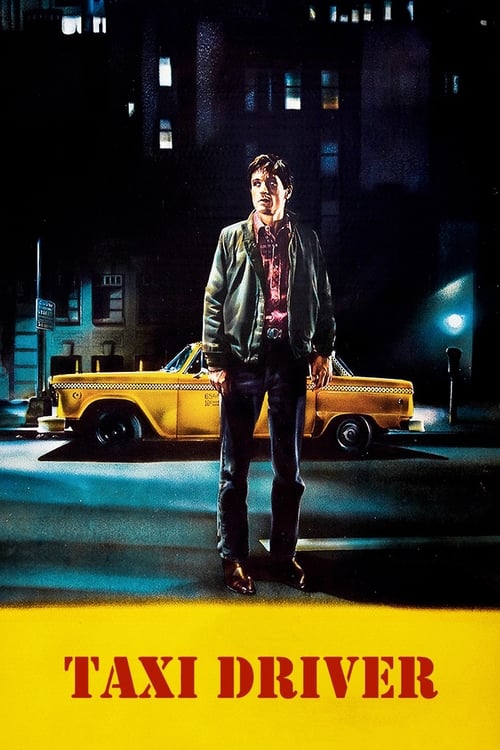
The Taxi Cab
The taxi symbolizes Travis's isolation and his role as a detached observer of society. It is his coffin-like sanctuary, a mobile prison that both protects him from and separates him from the world he despises. The windshield and mirrors frame his distorted view of reality.
Throughout the film, we see Travis confined within his cab, watching the city's nightlife unfold. The opening shots peer through his rain-streaked windshield at the blurred, hellish cityscape. He spends his life moving through the city but never truly being a part of it.
Mirrors
Mirrors represent Travis's fractured identity and his attempts at self-definition. They are a space for introspection, but also for the creation of a more powerful, aggressive persona. His reflection is the only one who truly listens to him.
The most iconic use of a mirror is in the "You talkin' to me?" scene, where Travis confronts his own reflection, practicing a tough-guy persona. This scene signifies his complete break from reality and his immersion into a fantasy of violent confrontation.
Rain and Water
Water symbolizes Travis's obsessive desire for purification and cleansing, both for the city and for himself. He wishes for a "real rain" to wash away the moral filth he sees everywhere. This desire for a baptismal cleansing drives his violent crusade.
Travis's opening monologue expresses his wish for a cleansing rain. Later, after a passenger soils his cab, he meticulously washes it, both inside and out, attempting to purge the corruption he feels has contaminated his space.
Guns
The guns Travis purchases are symbols of power and masculinity. They represent his attempt to regain the potency and control he lacks in his social interactions. They are the tools through which he plans to enact his violent judgment on the world.
After being rejected by Betsy, Travis purchases a collection of handguns. The film fetishizes the weapons with slow, deliberate shots, mirroring Travis's own reverence for them. They become extensions of his rage and his primary means of interacting with the world.
Philosophical Questions
Does society create its own monsters through alienation and neglect?
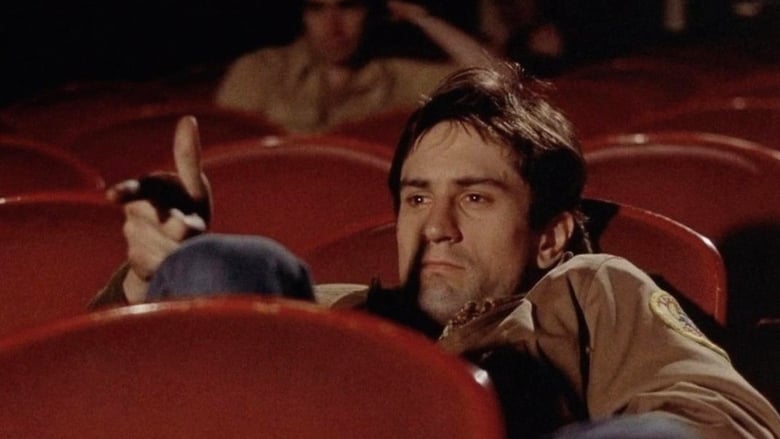
The film explores how Travis Bickle's isolation is a key factor in his psychological breakdown. He is a veteran cast aside, a lonely man in a crowded city, ignored by those he tries to connect with. "Taxi Driver" forces us to consider whether Travis's violent actions are solely the product of his own damaged psyche or if they are an inevitable eruption from a society that offers no support, connection, or meaning to its most vulnerable members. The film poses the unsettling question of collective responsibility for individual pathology.
What is the nature of good and evil in a morally ambiguous world?
Travis sees the world in stark, binary terms of good versus evil, purity versus filth. However, the film itself presents a far more complex moral landscape. Travis, who sees himself as a righteous avenger, is also a deeply disturbed and violent man. The film challenges the viewer's moral compass by making this unstable figure the protagonist. Is his violent act of "saving" Iris a good deed if it comes from a place of rage and delusion? The film's ending, where he is celebrated as a hero, further complicates this question, suggesting that morality is often a matter of perception and narrative rather than absolute truth.
Can one find purpose and meaning in a seemingly meaningless existence?
Drawing on existentialist themes, "Taxi Driver" portrays a character grappling with a profound sense of meaninglessness. Travis is desperately searching for a purpose, a direction for his life. In the absence of healthy connections or societal roles, he latches onto a violent mission as his reason for being. The film explores the dangerous human tendency to invent a purpose, no matter how destructive, to escape the anxiety of an empty existence. It asks whether any self-created purpose is valid, even one that leads to bloodshed.
Core Meaning
"Taxi Driver" is a profound exploration of urban alienation and the psychological disintegration of an individual in a decaying society. Director Martin Scorsese and writer Paul Schrader delve into the psyche of a man, Travis Bickle, who feels invisible and disconnected from the world around him. The film suggests that when society fails to address the trauma and loneliness of individuals, particularly veterans, it can breed a dangerous form of vigilantism born from a desperate need for purpose and recognition. It serves as a critique of a society that is both the cause of Travis's illness and, in a twisted turn of events, the entity that ultimately lauds his violent actions as heroic. The core message is a cautionary tale about the consequences of societal neglect and the disturbing ease with which a lonely man's cry for help can curdle into violence.