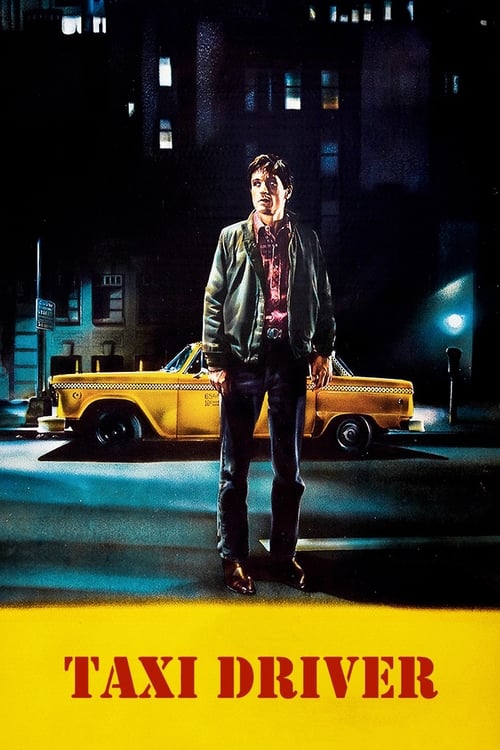
Taxi Driver
"On every street in every city in this country, there's a nobody who dreams of being a somebody. He's a lonely forgotten man desperate to prove that he's alive."
Overview
"Taxi Driver" chronicles the life of Travis Bickle, a 26-year-old honorably discharged Marine living in New York City. Suffering from chronic insomnia, he takes a job as a night-shift taxi driver, which exposes him to the city's seedy underbelly. Travis becomes increasingly disgusted by the crime and moral decay he witnesses, developing a Messianic desire to "clean the scum off the streets."
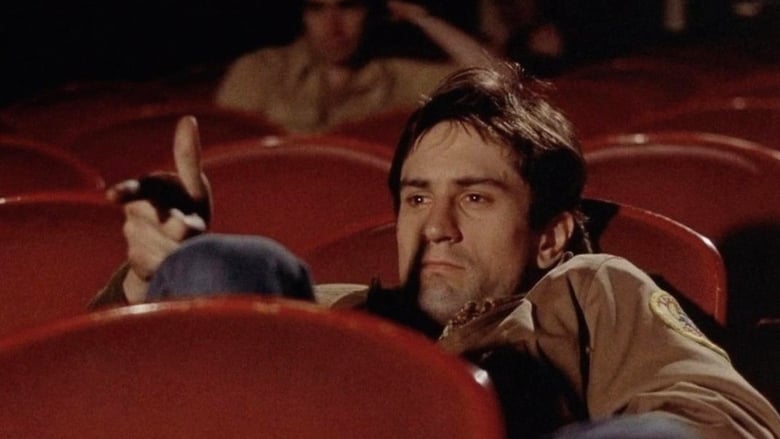
His attempts to connect with the world are fraught with failure. He becomes infatuated with Betsy, a sophisticated campaign worker for a presidential candidate, but his social ineptitude drives her away after he takes her to a pornographic film on their first date. This rejection fuels his alienation and pushes him further into a vortex of paranoia and rage. His focus then shifts to a 12-year-old prostitute named Iris, whom he feels compelled to "save" from her exploitative pimp, Sport.
Travis begins a rigorous physical and mental preparation for a violent confrontation, purchasing an arsenal of firearms and adopting a mohawk haircut. His simmering rage and distorted sense of justice lead him down a bloody and self-destructive path, culminating in a violent rampage that forces the audience to question the nature of heroism and the fine line between a savior and a psychopath.
Core Meaning
"Taxi Driver" is a profound exploration of urban alienation and the psychological disintegration of an individual in a decaying society. Director Martin Scorsese and writer Paul Schrader delve into the psyche of a man, Travis Bickle, who feels invisible and disconnected from the world around him. The film suggests that when society fails to address the trauma and loneliness of individuals, particularly veterans, it can breed a dangerous form of vigilantism born from a desperate need for purpose and recognition. It serves as a critique of a society that is both the cause of Travis's illness and, in a twisted turn of events, the entity that ultimately lauds his violent actions as heroic. The core message is a cautionary tale about the consequences of societal neglect and the disturbing ease with which a lonely man's cry for help can curdle into violence.
Thematic DNA
Alienation and Loneliness
Travis Bickle is the embodiment of urban loneliness. Despite being surrounded by millions of people in New York City, he is profoundly isolated. His job as a taxi driver serves as a metaphor for his detachment; he is a constant observer, separated from the world by the glass of his cab. His diary entries, narrated in voice-over, reveal his deep-seated feelings of being an outsider, stating, "Loneliness has followed me my whole life, everywhere... I'm God's lonely man." His failed attempts to connect with Betsy and even the concession stand girl highlight his inability to form meaningful relationships, further fueling his descent into psychosis.
Violence and Masculinity
The film explores a toxic form of masculinity, where violence becomes the only outlet for Travis's frustration and feelings of impotence. Haunted by his experiences in the Vietnam War, he perceives the city as another battlefield. After being rejected by Betsy, he channels his energy into a violent fantasy, acquiring guns and training his body for a deadly confrontation. His actions are a misguided attempt to assert a traditional form of heroism and control in a world where he feels powerless. The film critiques the glorification of violence, showing it as a destructive force born from deep-seated psychological trauma.
Urban Decay and Moral Corruption
The film is set against the backdrop of a 1970s New York City grappling with economic decline, crime, and a perceived moral collapse. Through Travis's eyes, the city is a hellscape populated by "whores, skunk pussies, buggers, queens, fairies, dopers, junkies, sick, venal." He yearns for a "real rain" to wash the scum off the streets, a desire that reflects his obsessive need for purity in a corrupt world. The grimy, neon-lit streets and seedy locations are not just a setting but a character in themselves, mirroring Travis's internal turmoil and moral disgust.
The Ambiguity of Heroism
One of the film's most provocative themes is its questioning of what constitutes a hero. Travis's violent rampage, which results in the deaths of several people, is ultimately framed by the media as a heroic act of rescuing a child prostitute. This ironic twist forces the audience to confront uncomfortable questions about how society perceives and creates heroes. Had his initial plan to assassinate the presidential candidate succeeded, he would have been vilified. The film suggests that the line between hero and villain is often a matter of circumstance and public perception, and that society can be just as sick as the individuals it sometimes celebrates.
Character Analysis
Travis Bickle
Robert De Niro
Motivation
Travis is motivated by a desperate search for purpose and connection in a world that he perceives as morally bankrupt. His primary drive is to cleanse the "filth" of the city and to find a way to matter. This manifests as a distorted desire to save women—first Betsy, then Iris—whom he places on pedestals of purity, seeing their rescue as his mission and a path to his own redemption.
Character Arc
Travis begins as a deeply lonely and alienated Vietnam veteran struggling with insomnia and disgust for the society around him. His attempts at normal interaction fail, leading to a psychological decline into paranoia and obsession. He transforms from a passive observer into an active, violent agent, channeling his rage first towards a political assassination and then into a misguided "rescue" mission. By the end, he is ironically hailed as a hero, but a final glance in his rearview mirror suggests the rage and instability still simmer beneath the surface, implying his violent potential remains.
Iris 'Easy' Steensma
Jodie Foster
Motivation
Iris's motivations are complex and contradictory. She is driven by a need for affection and a sense of belonging, which she finds in a twisted form with Sport. While part of her may desire a different life, she is also manipulated and perhaps genuinely cares for her pimp. She is motivated by survival and the distorted version of love she has come to accept.
Character Arc
Iris is introduced as a 12-year-old child prostitute, seemingly a victim of her circumstances. Initially, she appears to want to escape her life, but it's revealed she has a complicated, almost Stockholm Syndrome-like attachment to her pimp, Sport. She resists Travis's attempts to "save" her, showing a world-weariness and maturity beyond her years. After Travis's violent intervention, she is returned to her parents, as described in a letter read at the end of the film. Her ultimate fate remains ambiguous, but she is the catalyst for Travis's violent climax and subsequent public redemption.
Betsy
Cybill Shepherd
Motivation
Betsy is motivated by her political ideals and a desire for a conventional, successful life. She is initially drawn to Travis out of a fascination with his strangeness, perhaps seeing him as an interesting diversion from her clean-cut world. Ultimately, her motivations are driven by social convention and self-preservation, leading her to quickly distance herself from Travis's disturbing behavior.
Character Arc
Betsy is initially presented as an angelic, almost unattainable figure of purity and intelligence, working for the Palantine presidential campaign. Travis projects all his ideals onto her. She is intrigued by his intensity and agrees to a date but is quickly repulsed by his disturbed nature when he takes her to a porn theater. Her arc is one of disillusionment with Travis; she rejects him completely, which serves as a major catalyst for his mental breakdown. In the film's epilogue, her perception of him has shifted due to his media-bestowed hero status, and she now seems to view him with a mixture of awe and curiosity.
Matthew 'Sport'
Harvey Keitel
Motivation
Sport is motivated by money and control. He sees Iris as both a source of income and a possession. His actions are driven by a need to maintain his authority and lifestyle, using a veneer of charm and affection to keep Iris dependent on him. He is a product of the corrupt urban environment that Travis despises.
Character Arc
Sport is Iris's pimp and the primary antagonist in Travis's self-constructed narrative. He is presented as a manipulative and slick predator who exploits Iris. He maintains control over her not just through force but through a twisted form of affection and psychological manipulation. His arc is short and brutal; he is the main target of Travis's violent rampage and is killed in the climactic shootout. He represents the "scum" that Travis is determined to eradicate.
Symbols & Motifs
The Taxi Cab
The taxi symbolizes Travis's isolation and his role as a detached observer of society. It is his coffin-like sanctuary, a mobile prison that both protects him from and separates him from the world he despises. The windshield and mirrors frame his distorted view of reality.
Throughout the film, we see Travis confined within his cab, watching the city's nightlife unfold. The opening shots peer through his rain-streaked windshield at the blurred, hellish cityscape. He spends his life moving through the city but never truly being a part of it.
Mirrors
Mirrors represent Travis's fractured identity and his attempts at self-definition. They are a space for introspection, but also for the creation of a more powerful, aggressive persona. His reflection is the only one who truly listens to him.
The most iconic use of a mirror is in the "You talkin' to me?" scene, where Travis confronts his own reflection, practicing a tough-guy persona. This scene signifies his complete break from reality and his immersion into a fantasy of violent confrontation.
Rain and Water
Water symbolizes Travis's obsessive desire for purification and cleansing, both for the city and for himself. He wishes for a "real rain" to wash away the moral filth he sees everywhere. This desire for a baptismal cleansing drives his violent crusade.
Travis's opening monologue expresses his wish for a cleansing rain. Later, after a passenger soils his cab, he meticulously washes it, both inside and out, attempting to purge the corruption he feels has contaminated his space.
Guns
The guns Travis purchases are symbols of power and masculinity. They represent his attempt to regain the potency and control he lacks in his social interactions. They are the tools through which he plans to enact his violent judgment on the world.
After being rejected by Betsy, Travis purchases a collection of handguns. The film fetishizes the weapons with slow, deliberate shots, mirroring Travis's own reverence for them. They become extensions of his rage and his primary means of interacting with the world.
Memorable Quotes
You talkin' to me?
— Travis Bickle
Context:
Travis is alone in his apartment, practicing with his newly acquired guns in front of a mirror. He imagines a confrontation, drawing his weapon and repeating the phrase with increasing intensity, rehearsing a scene of masculine bravado that only exists in his mind.
Meaning:
This iconic, improvised line encapsulates Travis's profound loneliness, paranoia, and simmering aggression. He is so isolated that he has to create his own confrontations. The quote signifies his complete detachment from reality and his descent into a violent fantasy world where he is the powerful protagonist.
Someday a real rain will come and wash all this scum off the streets.
— Travis Bickle
Context:
Early in the film, this is part of Travis's voice-over narration as he drives his cab through the grimy, neon-lit streets at night, observing the pimps, prostitutes, and drug dealers that populate the city's underbelly.
Meaning:
This line, from Travis's diary, reveals his messianic complex and his deep-seated disgust with the moral decay of New York City. The "real rain" is a metaphor for a violent, apocalyptic cleansing that he believes is necessary to purify the world, a cleansing he eventually decides he must personally deliver.
Loneliness has followed me my whole life, everywhere. In bars, in cars, sidewalks, stores, everywhere. There's no escape. I'm God's lonely man.
— Travis Bickle
Context:
Travis writes these words in his diary, reflecting on his failed attempts to connect with people and the pervasive sense of isolation that haunts him, no matter where he goes or what he does. It's a moment of raw, painful introspection.
Meaning:
This quote is the most direct expression of the film's central theme of alienation. It articulates the depth of Travis's despair and his feeling of being existentially alone. The phrase "God's lonely man" suggests a sense of destiny or a special kind of suffering, elevating his personal pain to a near-religious level, which helps justify his later actions in his own mind.
Listen, you fuckers, you screwheads. Here is a man who would not take it anymore. A man who stood up against the scum, the cunts, the dogs, the filth, the shit. Here is a man who stood up.
— Travis Bickle
Context:
This is part of a letter Travis writes, presumably to his parents or as a final statement, as he prepares for his violent climax. He is narrating his own legacy, casting himself as a martyr who took a stand against corruption.
Meaning:
This quote, written in a letter before his planned assassination, marks the culmination of Travis's transformation into a self-styled vigilante. It is his manifesto, a declaration of war against the society he despises. It reveals his delusion of grandeur and his belief that his violent actions are a form of righteous rebellion.
Philosophical Questions
Does society create its own monsters through alienation and neglect?
The film explores how Travis Bickle's isolation is a key factor in his psychological breakdown. He is a veteran cast aside, a lonely man in a crowded city, ignored by those he tries to connect with. "Taxi Driver" forces us to consider whether Travis's violent actions are solely the product of his own damaged psyche or if they are an inevitable eruption from a society that offers no support, connection, or meaning to its most vulnerable members. The film poses the unsettling question of collective responsibility for individual pathology.
What is the nature of good and evil in a morally ambiguous world?
Travis sees the world in stark, binary terms of good versus evil, purity versus filth. However, the film itself presents a far more complex moral landscape. Travis, who sees himself as a righteous avenger, is also a deeply disturbed and violent man. The film challenges the viewer's moral compass by making this unstable figure the protagonist. Is his violent act of "saving" Iris a good deed if it comes from a place of rage and delusion? The film's ending, where he is celebrated as a hero, further complicates this question, suggesting that morality is often a matter of perception and narrative rather than absolute truth.
Can one find purpose and meaning in a seemingly meaningless existence?
Drawing on existentialist themes, "Taxi Driver" portrays a character grappling with a profound sense of meaninglessness. Travis is desperately searching for a purpose, a direction for his life. In the absence of healthy connections or societal roles, he latches onto a violent mission as his reason for being. The film explores the dangerous human tendency to invent a purpose, no matter how destructive, to escape the anxiety of an empty existence. It asks whether any self-created purpose is valid, even one that leads to bloodshed.
Alternative Interpretations
The most significant debate surrounding "Taxi Driver" centers on its ending. While the film presents a seemingly straightforward epilogue where Travis survives the shootout, is hailed as a hero, and has a final, cordial encounter with Betsy, many critics and viewers interpret this sequence differently.
The Dying Dream Theory: This popular interpretation posits that Travis actually dies from his wounds on the brothel couch. The entire epilogue—the newspaper clippings celebrating his heroism, the thankful letter from Iris's parents, and the peaceful taxi ride with a now-admiring Betsy—is seen as the dying fantasy of a man desperate for validation and redemption. Proponents of this theory point to the dreamlike, almost surreal quality of the final scenes, which contrast sharply with the film's otherwise gritty realism. The overhead shot of the carnage, slowly tracking away, could be seen as Travis's soul leaving his body.
The Literal Interpretation (The Creators' View): Director Martin Scorsese and writer Paul Schrader have stated that they intended for the ending to be taken literally. In their view, Travis survives and is ironically celebrated by the same society that ignored him. This interpretation offers a more cynical social commentary: the media and the public are fickle, capable of turning a disturbed vigilante into a hero based on a momentary, sensationalized act. The final, unsettling glance Travis gives into his rearview mirror is meant to suggest that his violent tendencies are not cured; he remains a "ticking time bomb," and the cycle of rage is likely to begin again.
Cultural Impact
"Taxi Driver" was released in 1976, a period when the United States was still reeling from the aftermath of the Vietnam War and the Watergate scandal, leading to widespread disillusionment and mistrust in institutions. The film perfectly captured the zeitgeist of a nation in crisis, with 1970s New York City—then a symbol of urban decay, crime, and economic turmoil—serving as the perfect backdrop for Travis Bickle's personal collapse.
The film had a profound influence on cinema, solidifying Martin Scorsese's reputation as a master filmmaker and Robert De Niro as one of his generation's finest actors. Its gritty realism, psychological depth, and unflinching depiction of violence set a new standard for character studies and neo-noir films. The character of Travis Bickle became an archetype for the alienated anti-hero, influencing countless films that explore themes of loneliness and vigilantism, including, most notably, 2019's "Joker."
Upon its release, "Taxi Driver" was both critically acclaimed and highly controversial. It won the Palme d'Or at the 1976 Cannes Film Festival but also drew criticism for its graphic violence and the casting of a 12-year-old Jodie Foster as a prostitute. Over time, it has been recognized as a landmark of American cinema, praised for its complex themes and artistic merits. The line "You talkin' to me?" has become one of the most famous and parodied quotes in movie history, firmly embedding itself in the pop culture lexicon. Tragically, the film also gained notoriety when John Hinckley Jr., obsessed with Jodie Foster, attempted to assassinate President Ronald Reagan in 1981, citing the film as his inspiration.
Audience Reception
Audience reception for "Taxi Driver" has been largely positive over the years, though it remains a polarizing and challenging film for many. Viewers consistently praise Robert De Niro's transformative and deeply unsettling performance as Travis Bickle, often citing it as one of the greatest in cinema history. Martin Scorsese's direction is also widely lauded for its masterful creation of a gritty, dreamlike atmosphere that perfectly captures the protagonist's fractured psyche.
The main points of criticism, particularly upon its initial release, centered on the film's graphic violence and its uncomfortable subject matter. The final shootout was shocking to many 1976 audiences, and the depiction of a 12-year-old prostitute was, and remains, a controversial aspect of the film. Some viewers find the film's pacing to be slow and its tone relentlessly bleak. Others have criticized it for being an "overhyped film school project" and found De Niro's performance to lack emotional depth. Despite these criticisms, the overall verdict from audiences who appreciate challenging cinema is that "Taxi Driver" is a masterpiece—a powerful, thought-provoking, and unforgettable character study.
Interesting Facts
- The iconic 'You talkin' to me?' scene was largely improvised by Robert De Niro. The screenplay simply said, 'Travis looks in the mirror.'
- To prepare for the role, Robert De Niro obtained a real taxi driver's license and would drive passengers around New York City between takes on another film.
- Director Martin Scorsese has a cameo as a distraught passenger in Travis's cab who graphically describes his plans to murder his cheating wife.
- To avoid an 'X' rating from the MPAA due to the graphic violence in the final shootout, Scorsese de-saturated the color of the blood, making it appear darker and less realistic.
- Paul Schrader wrote the screenplay in about ten days while he was going through a dark period in his own life, living in his car and feeling deeply isolated, much like Travis Bickle.
- The film's haunting, jazz-infused score was the final work of legendary composer Bernard Herrmann, who died just hours after completing the recording sessions. The film is dedicated to him.
- Jodie Foster was only 12 years old when she played the role of Iris. Due to child labor laws and the controversial nature of the role, she had to undergo psychological testing to ensure she wouldn't be harmed by the experience. Her older sister, Connie Foster, served as her body double for some of the more explicit scenes.
⚠️ Spoiler Analysis
Click to reveal detailed analysis with spoilers
Frequently Asked Questions
Explore More About This Movie
Dive deeper into specific aspects of the movie with our detailed analysis pages
Comments (0)
No comments yet. Be the first to share your thoughts!