
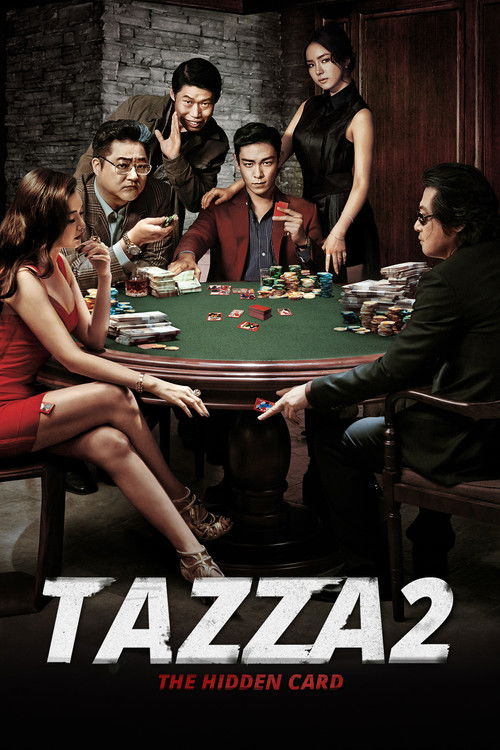
Full spoilers follow.
The rise. Ham Dae-gil establishes himself at the card tables of his hometown, and that reputation earns him an invitation from a slick Seoul gambling crew. Accepting means leaving Mi-na, his first love, behind — the film's first and most consequential wager, made almost casually. In Seoul he is flattered, dressed up and given access to bigger games, and the sequence plays as a success story precisely so that its reversal lands.
The set-up. The crew that recruited him betrays him: Dae-gil is installed as the fall guy in a crooked deal, taking the blame and the debt for a scheme he did not design. This is the film's structural pivot and its thematic argument in one move — his talent was never the point, his expendability was. Stripped of money, protection and reputation, he is forced to disappear and go to ground.
The rebuild. In hiding, Dae-gil grinds his way back, slowly assembling a sufficient stake to re-enter the world at a level where he can actually reach the people who used him. The comic hustler Ko Gwang-ryeol and the calculating President Woo become alternately allies and obstacles, and the film's second half keeps the audience uncertain which of them is playing which side — the point being that in this economy, alliance is a position, never a loyalty. His target becomes the heavyweight gambling boss Jang: beating Jang means accumulating the winnings and leverage needed for retribution against his former crew.
The finale. The endgame escalates into a life-and-death confrontation that brings the legendary gambler Agwi — carried over from Tazza: The High Rollers — into play. The last game is staged under bizarre conditions specifically imposed to remove every possible opportunity for cheating, and the stakes are the players' lives rather than money. The sequence is deliberately brutal and sustained, and it works because the film has spent two hours teaching the audience that no game here is ever clean; watching a game that supposedly cannot be rigged is therefore unbearable in a way a straight card duel never could be.
What becomes clear afterwards. First, the film's two titles are its solution. 'Hand of God' names Dae-gil's gift; 'The Hidden Card' names the thing that actually decides outcomes. The finale's no-cheating rules exist to force those two ideas into direct collision — to ask whether the gift means anything once concealment is removed. Second, Agwi's late arrival retroactively reframes everything before it: the crew's betrayal, Jang's operation and Dae-gil's whole climb turn out to be lower rungs of a hierarchy whose top was already occupied a generation earlier, which is why making Dae-gil Goni's nephew matters. The sequel is not a new story but the same story with a new nephew, and the first film's apparent resolution was an illusion. Third, the cost accounting becomes visible only at the end: Dae-gil's revenge is achieved by the same instrumental logic that was used on him, and the person he was when he left his hometown — the one Mi-na knew — is the stake he actually spent. The victory, whatever its final shape, is indistinguishable from a completed initiation.