Skip to content
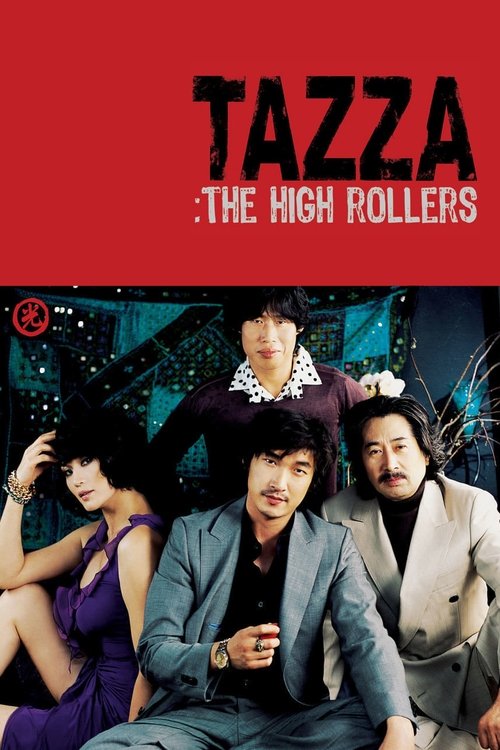
Tazza: The High Rollers
Drenched in smoky neo-noir tension and relentless adrenaline, this high-stakes crime caper captures the intoxicating rush of fate, spinning human greed like sharp plastic cards slicing through the shadows.
Tazza: The High Rollers

Tazza: The High Rollers

타짜

"It's time to deal, bet your life if you dare."

28 September 2006 South Korea 139 min 6.9 (102)

Director: Choi Dong-hoon

Cast: Cho Seung-woo, Kim Hye-soo, Baek Yoon-sik, Yoo Hai-jin, Kim Eung-soo

Crime Comedy The Corrosive Illusion of Greed Deception and Psychological Warfare Mentorship, Discipline, and Professional Ethics Fate Versus Autonomous Choice
Box Office: $39,212,715

Overview

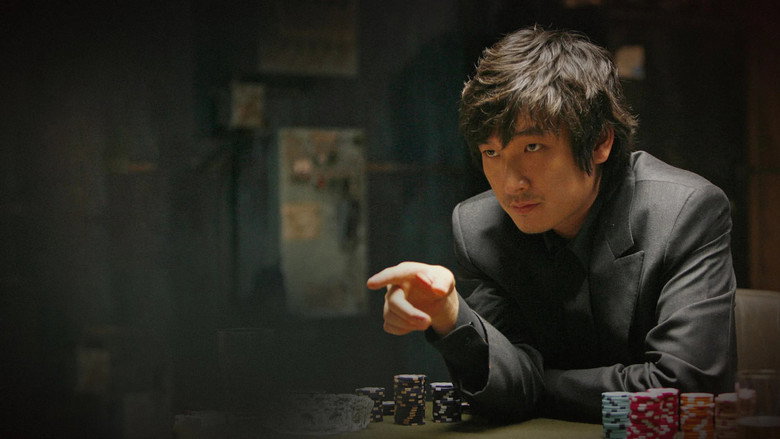
Set within South Korea's clandestine underworld of high-stakes illegal gambling, the story follows Goni, an impulsive young factory worker who squanders his hard-earned savings and his sister's dowry in an all-night game of hwatu (Korean flower cards). Shattered by the loss, Goni soon realizes that the game was rigged from the start by a ring of seasoned card sharps, igniting an obsessive drive to track down the swindlers and reclaim what was stolen.

His pursuit leads him to cross paths with Pyeong Gyeong-jang, a legendary card master who takes the reckless youth under his wing. Under Pyeong's strict mentorship, Goni learns the meticulous arts of psychological deception, sleight of hand, and the disciplined philosophy required to survive at the green felt tables. Transformed into an elite hustler known as a tazza, Goni enters a world where fortune is won with lightning reflexes and lost with the slightest tremble of the fingers.

As Goni ascends through the underground circuit, he aligns himself with Madam Jeong, a seductive and calculating gambling broker who runs private gaming rings for corrupt elites, alongside the affable street hustler Gwang-ryeol. Yet the intoxicating allure of wealth pulls Goni deeper into a treacherous web of lethal mob syndicates and ruthless predators, placing him on an inevitable collision course with Agwui, a sadistic veteran player notorious for dismembering opponents caught cheating.
Core Meaning

At its core, Tazza: The High Rollers serves as a biting parable on the toxic nature of insatiable greed and the illusion of human control. Director Choi Dong-hoon demonstrates that gambling is never merely a matter of statistical luck or mechanical skill; rather, it is an existential battlefield where participants bet their morality, trust, and humanity. The film delivers the sobering message that the ultimate test of mastery is not perpetual victory, but the rare wisdom of knowing when to step away from the table.

Thematic DNA

The Corrosive Illusion of Greed 35%
Deception and Psychological Warfare 25%
Mentorship, Discipline, and Professional Ethics 20%
Fate Versus Autonomous Choice 20%

The Corrosive Illusion of Greed

The narrative exposes greed as a self-perpetuating spiral. Whether through Goni's obsessive desire to win back his family's money or Madam Jeong's thirst for control over the gambling underworld, characters are perpetually seduced by the prospect of just one more victory, inevitably blinding them to their own vulnerability and moral erosion.

Deception and Psychological Warfare

In the world of hwatu, physical trickery is merely an extension of cognitive warfare. The film meticulously details how mastery relies on reading human flaws, exploiting an opponent's pride, fear, and overconfidence, and concealing one's true motives beneath an impassive poker face.

Mentorship, Discipline, and Professional Ethics

Through the relationship between Goni and master Pyeong Gyeong-jang, the story highlights the crucial divide between an undisciplined addict and a true professional. Pyeong emphasizes strict boundaries—advising Goni to leave the game the moment he makes a modest fortune—illustrating that longevity in a lethal trade demands rigorous self-restraint.

Fate Versus Autonomous Choice

The story contrasts the fatalistic trap of the gambler's mindset against the conscious exercise of free will. Characters constantly debate whether their ruin is dictated by the draw of the deck or the moral decisions they make when confronting high-stakes dilemmas.

Character Analysis

Goni

Cho Seung-woo

Archetype: Antihero Key Trait: Audacious, quick-witted, and possessing lightning-fast hand coordination.

Motivation

Initially motivated by a desperate desire to reclaim his stolen dignity and family savings, which later transforms into a quest for vengeance and a clean exit from criminal servitude.

Character Arc

Begins as an impulsive, naive small-town laborer wrecked by financial humiliation; through strict discipline, mentorship, and devastating loss, he evolves into a formidable master hustler who ultimately chooses personal survival and ethics over infinite wealth.

Madam Jeong

Kim Hye-soo

Archetype: Femme Fatale Key Trait: Seductive, calculating, and unapologetically opportunistic.

Motivation

Acquiring total power, financial dominance, and psychological control over the men who operate within her sphere.

Character Arc

Maintains an elegant yet ruthless demeanor as she runs illicit gaming houses, using Goni's skills to expand her operations before her obsessive possessiveness and deceit lead to her undoing.

All 5 characters and cast

Symbols & Motifs

Hwatu (Flower Cards)

Meaning:

The deck of cards functions as an emblem of human vanity and destiny, representing how lives can be flipped, manipulated, or discarded in seconds.

Context:

Shown repeatedly in extreme close-ups throughout the movie, snapped against traditional mats and tables with rhythmic, percussive intensity.

Severed Hands and Cutters

Meaning:

Mutilation serves as a visceral reminder of the irrevocable physical and karmic consequences of high-stakes deceit, proving that cheating carries a permanent debt.

Context:

Personified by Agwui's signature punishment for players caught performing sleight of hand, culminating in the harrowing climactic wager aboard the vessel.

Dense Cigarette Smoke

Meaning:

The thick clouds of smoke symbolize moral ambiguity, obscured truths, and the claustrophobic entrapment of illicit dens where clarity is impossible.

Context:

Pervades almost every private gaming parlor, veiling the faces of gamblers as tension peaks and traps are sprung.

The Burning Sack of Money

Meaning:

Fire consuming paper currency symbolizes spiritual catharsis and liberation from the endless cycle of avarice.

Context:

Featured during the ending train sequence where Goni willingly incinerates illicit cash winnings rather than remaining captive to their bloodstained legacy.

Philosophical Questions

Can an individual ever maintain complete moral agency inside a corrupt system?

The film explores this dilemma through Goni's journey, testing whether an honorable person can practice an inherently fraudulent art without losing their soul to the systemic cruelty that governs it.

Is true victory defined by gaining fortune or having the capacity to walk away?

Pyeong's philosophical warnings and the tragic outcomes of greedy players underscore the idea that absolute mastery is psychological temperance—the willingness to forfeit the game before it consumes you.

How does mutual suspicion erode genuine human connection?

The story depicts a grim reality where every friendship, mentorship, and romantic attraction is continually tested by the fear of betrayal, questioning whether genuine intimacy is possible when deception is second nature.

How It Ends

Alternative Interpretations

While generally received as a thrilling caper noir, some critics interpret the film as an allegory for South Korea's hyper-competitive capitalist reality, where ordinary workers like Goni cannot advance through honest labor and are pushed into predatory games where the rules are rigged by hidden elites. Another compelling feminist interpretation centers on Madam Jeong: rather than viewing her solely as a villainous femme fatale, her calculating maneuvers can be read as a survival mechanism within a brutally misogynistic criminal ecosystem where women are routinely objectified and disposable.

Full ending explanation

Cultural Impact

Tazza: The High Rollers became a landmark milestone in modern South Korean commercial cinema, solidifying director Choi Dong-hoon's signature style of multi-character capers driven by breakneck pacing and razor-sharp dialogue. Beyond attracting nearly seven million admissions in 2006, the film revitalized public interest in hwatu and set the gold standard for Korean crime thrillers. The film's vivid characters and stylized underground vocabulary permeated everyday Korean popular culture, inspiring widespread television parodies, internet memes, and a multi-generational film franchise that continued across sequels over the following decades.

Audience Reception

The film garnered enthusiastic critical praise and extraordinary audience popularity upon release, praised for its stylish direction, flawless pacing, and vibrant ensemble acting. Critics singled out Kim Hye-soo's charismatic, multifaceted performance and Kim Yoon-seok's terrifying presence as Agwui as career highlights. Although some noted that the rapid rules of hwatu could initially disorient viewers unfamiliar with the card game, Choi Dong-hoon's intuitive visual storytelling ensured that the psychological stakes were universally gripping, cementing the film as a modern Chungmuro classic.

Interesting Facts

  • The film is based on the acclaimed comic book (manhwa) series 'Tazza' created by Huh Young-man and written by Kim Se-young.
  • Director Choi Dong-hoon achieved massive commercial success with the film, drawing approximately 6.8 million admissions at the South Korean box office.
  • The movie marked Choi Dong-hoon's second feature film, arriving after his acclaimed 2004 heist debut 'The Big Swindle'.
  • Actor Kim Yoon-seok's chilling, breakout turn as the villain Agwui established a long-running creative partnership with Choi Dong-hoon, leading to prominent roles in several of the director's later blockbusters.
  • The success of the 2006 film turned 'Tazza' into a long-lasting multimedia and cinematic franchise, generating multiple sequels over the following two decades.

Frequently Asked Questions

Explore More About This Movie

Dive deeper into specific aspects of the movie with our detailed analysis pages

Comments (0)

Leave a comment

No comments yet. Be the first to share your thoughts!

Similar Movies