Skip to content
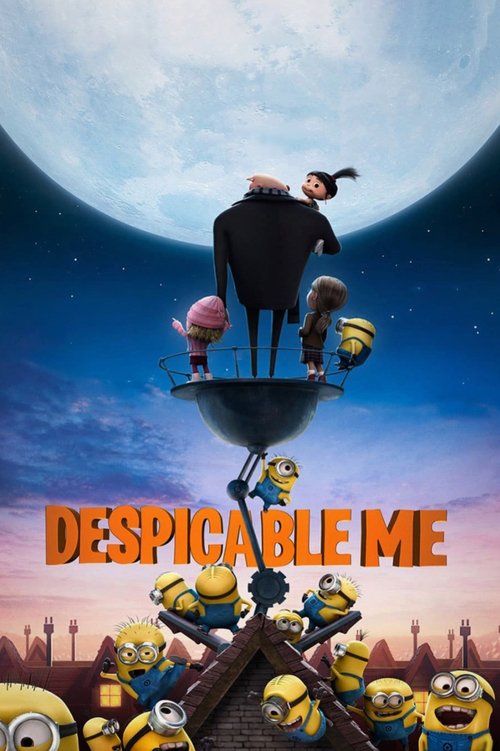
Despicable Me
A subversive spy-fi comedy wrapped in sweet familial warmth, where the icy, angular fortress of a villain's ambition gradually melts under the colorful, chaotic sunshine of three orphaned children's unconditional love.
Despicable Me

Despicable Me

"Superbad. Superdad."

08 July 2010 United States of America 95 min 7.3 (16,333)

Director: Pierre Coffin, Chris Renaud

Cast: Steve Carell, Jason Segel, Russell Brand, Julie Andrews, Will Arnett

Crime Animation Family Comedy Science Fiction Found Family vs. Biological Validation Ego, Ambition, and Real Worth Innocence Softening Cynicism Redemption and Re-evaluating Identity
Budget: $69,000,000
Box Office: $543,284,256

Overview

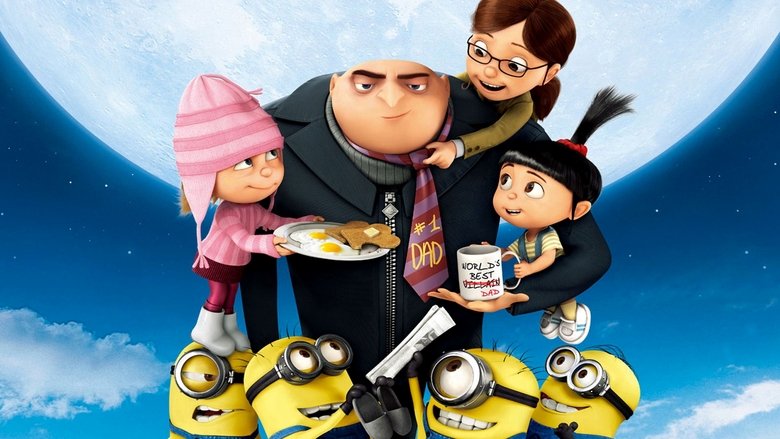
Despicable Me introduces Felonious Gru (voiced by Steve Carell), an ambitious yet weary supervillain whose suburban facade hides a sprawling subterranean laboratory staffed by an army of small, yellow, gibberish-speaking Minions and an elderly, hard-of-hearing weapons scientist, Dr. Nefario (Russell Brand). When an arrogant young upstart villain named Vector (Jason Segel) steals the Great Pyramid of Giza, Gru finds his reputation as the world's greatest criminal mastermind under threat. Desperate to reclaim his top-dog status and secure financing from the ruthless Bank of Evil, Gru concocts an audacious scheme: steal a military-grade Shrink Ray and shrink the Moon itself out of the night sky.

However, when Vector steals the Shrink Ray out of Gru's grasp and retreats behind the impenetrable automated defenses of his high-tech fortress, Gru discovers a potential breach. Vector readily welcomes three orphaned cookie-selling girls—Margo, Edith, and Agnes—into his home. Seizing the opportunity, Gru adopts the trio from Miss Hattie's Home for Girls with the sole intent of using them as unwitting accomplices in a heist.

What begins as a cold, transactional operation unravels as the girls introduce warmth, ballet recitals, bedtime stories, and carnival visits into Gru's once-sterile criminal empire. Gru finds his loyalties tested between the pinnacle of villainous ambition and the unexpected joy of genuine fatherhood.
Core Meaning

The core thesis of Despicable Me is that villainy and emotional hardness are often defensive armors forged in response to rejection, emotional neglect, and the desperate pursuit of validation. The film illustrates that true fulfillment and greatness are not measured by grandiose, ego-driven achievements (such as stealing celestial bodies), but through vulnerable human connection, unconditional love, and found family. Through Gru's transformation, the filmmakers argue that no one is beyond redemption when offered authentic trust and affection.

Thematic DNA

Found Family vs. Biological Validation 35%
Ego, Ambition, and Real Worth 25%
Innocence Softening Cynicism 25%
Redemption and Re-evaluating Identity 15%

Found Family vs. Biological Validation

Gru spends his adult life striving to conquer impossible feats primarily to earn the approval of his chronically unimpressed mother, Marlena. In contrast, Margo, Edith, and Agnes offer him unconditional love, completely unconcerned with his status as a supervillain. The film shows that love built on mutual care and acceptance transcends biological ties.

Ego, Ambition, and Real Worth

The villainous community represents extreme corporate and narcissistic posturing, exemplified by Vector's flashy consumerism and the predatory Bank of Evil. Gru believes shrinking the Moon will prove his worth to the world, only to discover that shrinking his ego and attending a children's ballet recital is infinitely more rewarding.

Innocence Softening Cynicism

The clash between Gru's brutalist, gothic world of weapons and the girls' world of unicorns, pink plushies, and bedtime books visually and narratively breaks down Gru's emotional barriers. The pure innocence of Agnes in particular dissolves Gru's hardened cynicism.

Redemption and Re-evaluating Identity

Gru begins as a man defining himself strictly through malicious competence. The narrative challenges the rigid dichotomy of 'hero' and 'villain,' showing how personal identity can evolve toward benevolence without losing its quirky eccentricity.

Character Analysis

Felonious Gru

Steve Carell

Archetype: Antihero / Reluctant Father Key Trait: Gruff and cynical on the outside, deeply softhearted and creative underneath.

Motivation

Initially seeks global recognition and maternal respect; later strives to protect and raise Margo, Edith, and Agnes.

Character Arc

Evolves from a self-absorbed, approval-seeking villain into a selfless, fiercely protective adoptive parent.

Vector / Victor Perkins

Jason Segel

Archetype: Shadow / Entitled Rival Key Trait: Immature, nerdy, self-aggrandizing, and obsessed with orange tracksuits and direction/magnitude puns.

Motivation

To surpass Gru and monopolize the villainy scene through high-tech crimes.

Character Arc

Remains a flat, static antagonist whose arrogance, nepo-baby entitlement, and high-tech gadgets lead to his comical isolation on the Moon.

All 4 characters and cast

Symbols & Motifs

The Moon

Meaning:

Represents Gru's ultimate childhood dream and his lifelong pursuit of an unattainable goal to win maternal validation. Shrinking and holding it symbolizes reaching the pinnacle of villainous achievement, only for Gru to realize it is physically cold and emotionally empty compared to his daughters.

Context:

Used as the target of Gru's master heist and a recurring motif connected to his childhood memories of space exploration.

The Fluffy Unicorn Plush Toy

Meaning:

Symbolizes childlike innocence, unwavering belief, and the pure affection Agnes bestows on the world.

Context:

Won by Gru using his heavy weaponry at a carnival amusement booth, marking the first time he redirects destructive power to bring pure joy to a child.

The 'Three Little Kittens' Bedtime Book / Gru's Custom Book

Meaning:

The original brush-off bedtime reading represents Gru's emotional detachment, while his handmade book ('One Big Unicorn') mirrors his own journey and serves as an explicit declaration of his love for the three girls.

Context:

Appears during bedtime routines, contrasting Gru's initial coldness with his eventual open-hearted acceptance of fatherhood in the finale.

Costumes and Colors (Black vs. Bright Colors)

Meaning:

Tracks the gradual infusion of emotional vitality and warmth into Gru's life.

Context:

Shown through Gru's muted grey-and-black wardrobe contrasting sharply with the vibrant yellows of the Minions and the girls' warm, multi-colored outfits.

The Bank of Evil

Meaning:

A satirical architectural and institutional monolith representing predatory corporate capitalism and the dehumanizing nature of commodified success.

Context:

Presented as the financial institution funding supervillain plots, featuring the subtitle 'Formerly Lehman Brothers.'

Memorable Quotes

It’s so fluffy, I’m gonna die!
— Agnes

Context

Exclaimed upon winning the giant unicorn plush at the carnival amusement booth.

Meaning

Highlights pure, unfiltered childhood joy and has become one of the most widely quoted lines in modern animation pop culture.

We are going to pull off the true crime of the century. We are going to steal... the Moon!
— Gru

Context

Delivered while rallying the Minions in his subterranean amphitheater to outline his master heist.

Meaning

Establishes the grand scale of Gru's professional ambition and theatrical villain persona.

All 5 quotes

Philosophical Questions

Can transactional self-interest evolve naturally into genuine altruism?

The film explores whether relationships that begin strictly out of exploitation—using the orphans as pawns in a heist—can genuinely transform into unselfish, sacrificial devotion.

What defines true villainy versus emotional self-defense?

Gru's villainy is analyzed as a learned psychological defense mechanism developed in response to unrequited parental affection and childhood emotional neglect.

Is human worth determined by scale of achievement or intimate personal impact?

The narrative contrasts the monumental ego-gratification of shrinking and holding the entire Moon against the intimate responsibility of providing safety and love to three children.

Alternative Interpretations

Anti-Capitalist and Corporate Satire: The depiction of supervillainy functions as a metaphor for Wall Street and venture capitalism, where the Bank of Evil demands immediate return on investment and Vector represents an entitled heir coasting on his father's backing.Deconstruction of Hegemonic Masculinity: Gru's initial definition of strength relies on intimidation, high-caliber weaponry, and domi...

Full ending explanation

Cultural Impact

Released in summer 2010, Despicable Me grossed $544.2 million worldwide against a $69 million budget, breaking the Disney/Pixar and DreamWorks duopoly to establish Illumination Entertainment as an industry heavyweight.

The Minions became a massive global phenomenon; their non-verbal slapstick transcended language barriers, turning them into ubiquitous digital icons, viral memes, theme park centerpieces, and mascots for NBCUniversal/Comcast, launching one of the highest-grossing animated franchises in history.

Audience Reception

Despicable Me was a major critical and audience crowd-pleaser that blended American narrative structure with European visual comedy flair. Audiences and critics praised Steve Carell's charismatic vocal performance, the Minions' slapstick humor, the heartwarming adoption narrative, and Pharrell Williams' stylish musical score. Minor criticisms noted predictable plot beats relative to Pixar's standard and slight pacing slowdowns during second-act cookie-selling scenes.

Interesting Facts

  • Despicable Me was the debut feature production of Illumination Entertainment, founded by Chris Meledandri in 2007.
  • The film was originally conceived by Spanish animator/writer Sergio Pablos under the title Evil Me.
  • The movie was produced across Los Angeles and Paris, with French studio Mac Guff handling principal computer animation.
  • The Minions' language was concocted by co-directors Pierre Coffin and Chris Renaud, who voiced all the Minions using words from French, Spanish, Italian, English, Hindi, and Russian.
  • Steve Carell modeled Gru's singular accent on a blend of Ricardo Montalbán and Bela Lugosi.
  • Voice actor Will Arnett gained weight intentionally to embody the booming, heavy presence of Mr. Perkins.
  • The Minions' look was inspired partly by the Oompah Loompas in Willy Wonka & the Chocolate Factory and classic Looney Tunes slapstick.
  • The soundtrack marked the major animated scoring debut of Pharrell Williams, who collaborated with Heitor Pereira.

Easter Eggs

The Bank of Evil Subtitle

An exterior establishing shot reveals a carved sign reading 'Formerly Lehman Brothers,' satirizing the financial firm whose collapse precipitated the 2008 global financial crisis.

James Bond Tropes

Gru's vehicle, Dr. Nefario's gadget workshop, and Vector's shark tank parody classic 007 villain tropes from Goldfinger and The Spy Who Loved Me.

The Godfather Bed Scene Gag

Gru waking up to find an alien-faced toy head under his bedsheet directly mimics the iconic severed horse-head sequence from The Godfather.

Dr. Seuss Connection

Margo wears a T-shirt sporting an image of The Lorax, foreshadowing Illumination's 2012 adaptation directed by Chris Renaud.

Directors' Cameo

Co-directors Pierre Coffin and Chris Renaud voice virtually all of the Minions, with Renaud also providing the voice for the carnival worker.

Frequently Asked Questions

Explore More About This Movie

Dive deeper into specific aspects of the movie with our detailed analysis pages

Comments (0)

Leave a comment

No comments yet. Be the first to share your thoughts!

Similar Movies