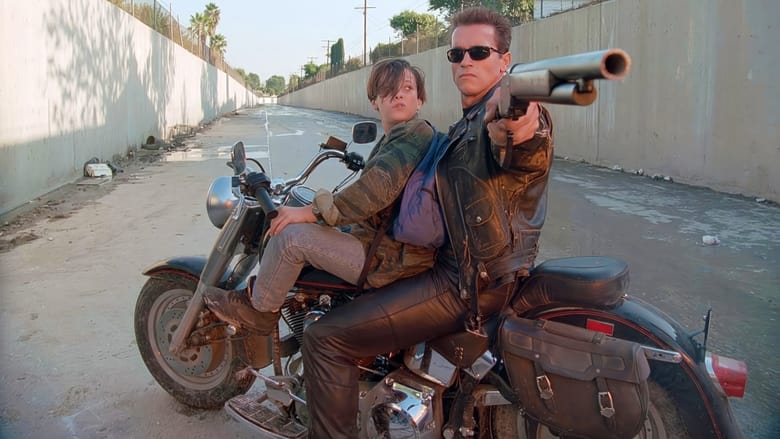
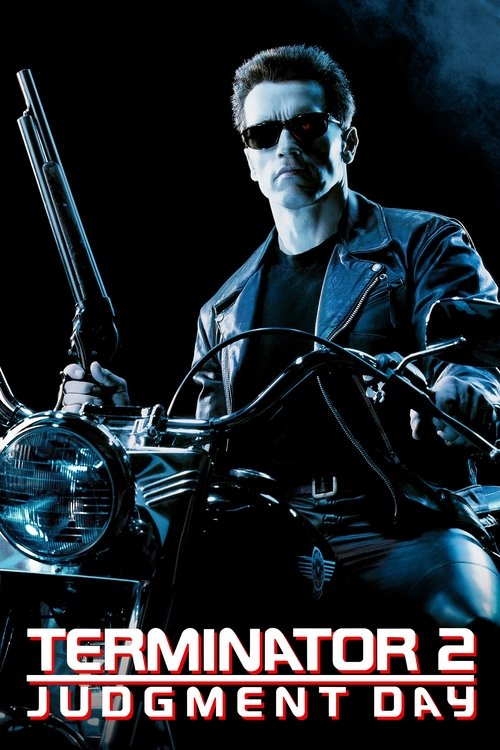
"It's nothing personal."
Director: James Cameron
Cast: Arnold Schwarzenegger, Linda Hamilton, Edward Furlong, Robert Patrick, Earl Boen
Terminator 2: Judgment Day — Movie Quotes
Memorable Quotes
Hasta la vista, baby.
Context
John teaches the T-800 various slang phrases to help it sound more human. Later, in the steel mill, after freezing the T-1000 with liquid nitrogen, the T-800 utters this line before shooting it, causing it to shatter into thousands of pieces.
Meaning
This quote, taught to the T-800 by John Connor, becomes an iconic catchphrase. Its delivery by the Terminator before shattering the frozen T-1000 signifies its adoption of human-like swagger and its bond with John. It's a moment of levity and coolness in an intense action sequence, and it has become one of the most famous lines in cinema history.
The future's not set. There is no fate but what we make for ourselves.
Context
This is a recurring phrase in the Terminator franchise, first mentioned by Kyle Reese in the original film. In "Terminator 2," Sarah carves it into a picnic table before she decides to go after Miles Dyson, signifying her resolve to take control of her destiny and change the future.
Meaning
This quote encapsulates the central theme of the film. It is a declaration of free will and the belief that humanity is not bound by a predetermined destiny. It serves as a source of hope and motivation for the characters in their seemingly impossible mission to prevent Judgment Day.
I know now why you cry, but it's something I can never do.
Context
As the T-800 is being lowered into the molten steel, John Connor is crying and pleading for it not to go. The T-800, having learned about human emotions from John, says this line as a final goodbye, acknowledging their bond and its own limitations as a machine.
Meaning
This poignant line is the culmination of the T-800's journey toward understanding humanity. It signifies that the machine has learned the value of human emotion, specifically grief and love, even if it cannot experience them itself. It's a heartbreaking and profound moment that underscores the film's exploration of what it means to be human.
Come with me if you want to live.
Context
When the T-800 finds Sarah Connor in the mental hospital, she is terrified and attacks him. He calmly delivers this line, echoing the words of her former protector, which helps to convince her to trust him and escape with him.
Meaning
This line, originally spoken by Kyle Reese in the first film, is repeated here by the T-800, creating a powerful moment of irony and role reversal. It immediately establishes the T-800's new role as a protector and forces Sarah to trust the very thing she fears most. It's a succinct and effective way to convey the shift in the dynamic from the previous movie.
Explore More About This Movie
Dive deeper into specific aspects of the movie with our detailed analysis pages