Skip to content
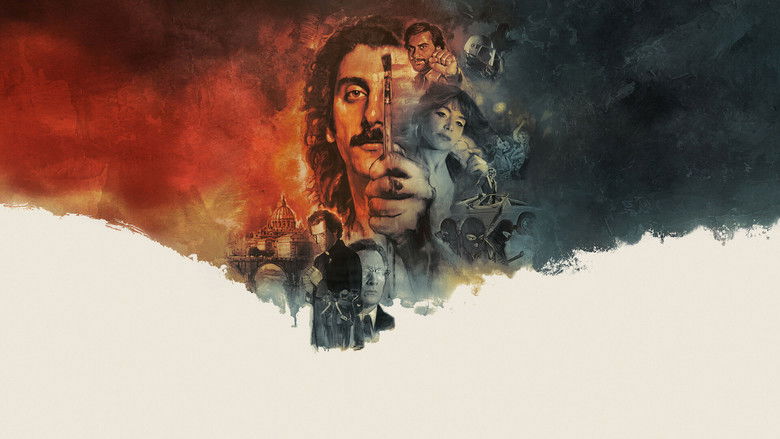
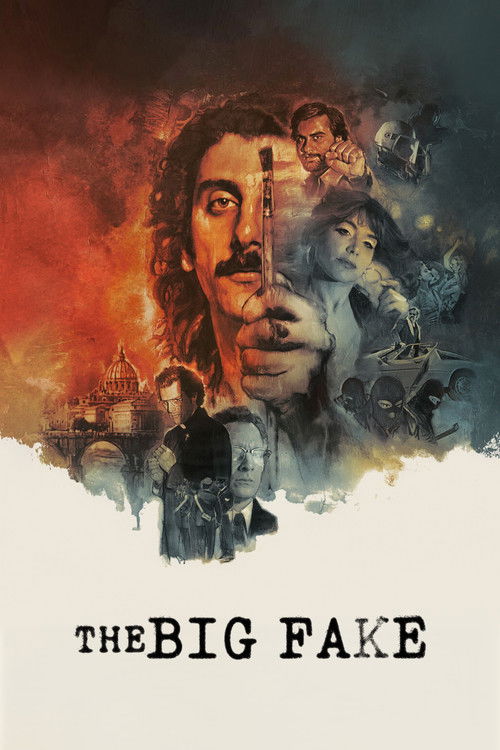
The Big Fake
A smoky crime fresco of 1970s Rome, where a painter's gift curdles into forgery and the line between art and lie dissolves like wet ink on a counterfeit banknote.
The Big Fake

The Big Fake

Il falsario

19 October 2025 Italy 110 min 6.6 (244)

Director: Stefano Lodovichi

Cast: Pietro Castellitto, Giulia Michelini, Andrea Arcangeli, Pierluigi Gigante, Aurora Giovinazzo

Drama Crime Thriller Authenticity and authorship The state as counterfeiter Provincial hunger and the city that consumes it Money, class and the fantasy of escape Truth, memory and the unreliability of history

Overview

The Big Fake (Il falsario) follows Toni, a young man who arrives in Rome carrying almost nothing but a talent for painting and the ambition to become a great artist. The capital of the 1970s has little use for his dreams and enormous use for his hands: what begins as copying the masters slides, almost imperceptibly, into a career as the most gifted forger in the country.

The film, set during Italy's anni di piombo — the "years of lead" — traces Toni's entanglement with the organized crime that ruled Rome in that decade, and with shadows far larger than any gang. Around him move the friends who came up from Rieti with him: don Vittorio, a newly ordained priest placed inside the Curia, and Fabio, nicknamed "Fabione," a metalworker with strong sympathies for the extra-parliamentary left. Three provincial boys, three different ways of being swallowed by the city.

Directed by Stefano Lodovichi and adapted from the 2008 non-fiction book Il falsario di Stato by journalists Nicola Biondo and Massimo Veneziani, the film offers a deliberately novelized account of a real life — one that brushes against the densest mysteries of modern Italian history. It is less a heist picture than a portrait of a man who discovers that in a country built on official fictions, the best counterfeiter is the one nobody ever sees.
Core Meaning

At its heart, The Big Fake argues that forgery is not a deviation from Italian public life of the 1970s but its native language. Toni's crime is only the artisanal, honest version of what the state, the security services and the terror groups were doing on a national scale: manufacturing documents, signatures and truths to be believed.

Lodovichi frames his protagonist as a man of enormous talent and no authorship. Toni can paint like anyone except himself, and that emptiness — the absence of a signature of his own — is both the source of his genius and the wound that drives him. The film asks what happens to a person who is valued precisely for his ability to disappear into other people's names, and whose greatest works can never be claimed.

The larger message is a bleak one about a nation's memory: when the archive itself is a forgery, history becomes unreadable, and the only people who know what really happened are the ones who will never be allowed to say it.

Thematic DNA

Authenticity and authorship 28%
The state as counterfeiter 24%
Provincial hunger and the city that consumes it 20%
Money, class and the fantasy of escape 16%
Truth, memory and the unreliability of history 12%

Authenticity and authorship

Toni arrives in Rome wanting to be an artist, and ends up the most accomplished technician of other people's styles. The film keeps returning to the gap between skill and voice: every canvas he perfects confirms that he can reproduce genius without possessing it. His criminal career is, in this reading, a long displacement activity — the revenge of a man denied a signature.

The state as counterfeiter

Set during the anni di piombo, the film places private forgery alongside public deception. Toni's fakes circulate in the same ecosystem as official communiqués, planted documents and convenient narratives; the story's engine is the suggestion that the difference between a criminal forger and a state one is only a matter of who commissions the work.

Provincial hunger and the city that consumes it

Three friends come down from Rieti to Rome: Toni with his brushes, don Vittorio into the Curia, Fabione onto the shop floor and into extra-parliamentary politics. Art, Church and labour — three routes into the capital, all of which bend toward compromise. The friendship becomes the film's measuring stick for how far each has travelled from who he was.

Money, class and the fantasy of escape

Toni's fame di vita — hunger for life — is inseparable from hunger for money. The film treats wealth as the promised exit from provincial insignificance, and then shows that every sum earned by fakery binds him tighter to the people who commissioned it. Escape keeps being purchased, and keeps failing to arrive.

Truth, memory and the unreliability of history

Because the source material is journalism about one of Italy's murkiest figures, the film is structurally haunted by what cannot be proven. Critics noted that it novelizes and softens its subject; that choice itself dramatizes the theme, since a film about a forger is inevitably a forgery of his life.

Character Analysis

Antonio "Toni" Chichiarelli

Pietro Castellitto

Archetype: Antihero / the gifted counterfeiter Key Trait: Prodigious technical gift paired with an appetite for life that outruns his scruples

Motivation

To matter. Recognition first as an artist, then — when that door stays shut — as the invisible hand behind events too big for his name to be attached to.

Character Arc

Arrives in Rome from Rieti with a talent for painting and the dream of becoming a great artist, and is redirected by hunger, chance and history into becoming the country's most accomplished forger — and a figure entangled in its densest mysteries. His ascent is also a steady erasure of the self he came to build.

Don Vittorio

Not identified in available sources

Archetype: The compromised insider Key Trait: Respectability that functions as cover

Motivation

Advancement within the Church and loyalty to the friends he grew up with — two obligations the film sets on a collision course.

Character Arc

A newly ordained priest from the same provincial circle, placed inside the Roman Curia. His trajectory shadows Toni's: both men gain access to institutions that value them for what they can quietly do rather than for who they are.

All 3 characters and cast

Symbols & Motifs

The copied canvas

Meaning:

Mastery without identity. A perfect copy proves everything about the hand and nothing about the person.

Context:

Painting is Toni's entry point into the story — the talent he carries in his luggage from Rieti — and it becomes the skill that criminal Rome rents from him. Each successful imitation moves him further from the artist he intended to be.

The forged document

Meaning:

Language weaponized: a piece of paper that can redirect a nation's attention, grief or police force.

Context:

The film's dramatic centre of gravity is the transition from faking art, which deceives collectors, to faking text, which deceives a country. The forger's tools stay the same; only the target of belief changes.

1970s Rome itself

Meaning:

A city as a palimpsest of overwritten truths — imperial, papal, republican and criminal layers that never quite align.

Context:

The capital is where all three friends are remade. Its institutions (Curia, factory, underworld) supply the frames within which each man's compromise becomes possible.

The clerical collar

Meaning:

Institutional legitimacy as its own kind of costume — a uniform that authenticates whoever wears it.

Context:

Don Vittorio's placement inside the Curia sets faith and access side by side, mirroring Toni's trade: both men learn how much power flows from a credible surface.

Banknotes and the vault

Meaning:

Value as pure convention — paper that is worth something only because everyone agrees to believe in it, exactly like a fake signature.

Context:

The criminal economy the film depicts runs on cash, and the forger's insight is that currency and art share a single vulnerability: both are authenticated by faith, not by substance.

Philosophical Questions

If a copy is indistinguishable from the original, what exactly are we paying for?

Toni's skill collapses the difference between a masterpiece and its reproduction, exposing that value rests on provenance and belief rather than on the object. The film extends this from paintings to banknotes to official documents — all things that work only while the story attached to them holds.

Can a nation's history be authentic if its documents are not?

By placing a forger at the edge of Italy's most contested events, the film suggests that the historical record is itself an artefact that can be manufactured. What is left of collective memory when the evidence was produced to order?

Is a man responsible for the uses others make of his talent?

Toni supplies technique; others supply intent. The film keeps him at a slight moral distance from the consequences of his work, and then asks whether that distance is real or simply the alibi every skilled accomplice tells himself.

What does friendship survive when three people choose three different systems?

The painter, the priest and the militant leave the same town and enter Church, crime and politics. The film tests whether the bond formed before ideology can outlast the institutions that reshape each man.

Is ambition without a self a form of freedom or of annihilation?

Toni can be anyone, which lets him go everywhere and belong nowhere. The narrative treats his fluency as both superpower and slow disappearance.

Alternative Interpretations

The tragedy of a frustrated artist. On this reading the crime plot is scaffolding, and the real subject is a man with a great hand and no voice. Toni's fakes are the work of someone who would rather be famous for someone else's style than anonymous in his own — a story about talent misrouted rather than about politics.

Full ending explanation

Cultural Impact

The Big Fake arrives inside a long Italian tradition of cinema that relitigates the anni di piombo and the unresolved Moro affair — a lineage running from the political thrillers of the 1970s through more recent screen treatments of the same period. Its novelty is one of angle: rather than approaching the era through magistrates, terrorists or statesmen, it approaches it through a technician, a man whose hands touched the paperwork of national trauma without ever appearing in the official record.

Its release strategy also says something about how Italian historical material now travels. Premiering at the 20th Rome Film Festival in the audience-facing Grand Public strand and then going worldwide on Netflix on 23 January 2026, the film packages a specifically Italian set of traumas — the Curia, the extra-parliamentary left, the Roman underworld — for a global streaming audience. One English-language review framed exactly this, describing it as Netflix turning Italy's political turmoil into a crime thriller.

That framing drew the sharpest critical commentary. Reviewers questioned whether the genre machinery, and a certain softening of the protagonist's real nature, let the film trade historical inquiry for momentum. Its most durable cultural function may therefore be introductory: for a large international audience, it is the first encounter with the name Chichiarelli and with the possibility that Italy's darkest decade was partly written in someone else's handwriting.

Audience Reception

Praised: Pietro Castellitto's central performance drew the most consistent approval — Italian critics described it as deliberately restrained, "poco dirompente" but well matched to the character the film wanted to build. The period reconstruction of 1970s Rome and the sheer strangeness of the underlying true story also worked in the film's favour, particularly for viewers meeting the Chichiarelli case for the first time via Netflix.

Criticised: The dominant reservation was a lack of originality. Reviewers felt that, measured against earlier Italian crime and anni di piombo screen work, the film offered little that was new in form or perspective. A second recurring objection concerned fidelity: critics argued the film "sacrifices the truth," citing the reversal of the ambush in the finale and what they saw as an inevitable softening of the protagonist's real nature.

Controversial: The novelization itself. Because the source is investigative journalism about genuinely unresolved episodes in Italian history, the decision to dramatize and smooth divided viewers between those who wanted a thriller and those who wanted an inquiry.

Verdict: A handsomely mounted, well-acted crime drama whose reach into one of Italy's murkiest chapters is more suggestive than rigorous — compelling as story, contested as history.

Interesting Facts

  • The film is adapted from the 2008 non-fiction book "Il falsario di Stato" by journalists Nicola Biondo and Massimo Veneziani, about the Italian forger and criminal Antonio Chichiarelli.
  • It is a deliberately novelized ("romanzato") account of Chichiarelli's life rather than a strict reconstruction — a choice several Italian critics singled out for discussion.
  • The film was produced by Cattleya, one of Italy's largest production companies.
  • It premiered at the 20th edition of the Rome Film Festival, in the Grand Public strand.
  • Netflix handled worldwide distribution, releasing the film on 23 January 2026.
  • Alongside Pietro Castellitto, the cast includes Claudio Santamaria, Giulia Michelini, Andrea Arcangeli, Pierluigi Gigante and Aurora Giovinazzo.
  • The story is set in Rome during the anni di piombo, the 'years of lead', and follows three friends who move to the capital from Rieti.
  • The real Chichiarelli was linked to the forged communiqué issued after the 1978 kidnapping of former Prime Minister Aldo Moro, and later to the 1984 Rome vault robbery of roughly thirty-five billion lire, often called the 'robbery of the century'.

Frequently Asked Questions

Explore More About This Movie

Dive deeper into specific aspects of the movie with our detailed analysis pages

Comments (0)

Leave a comment

No comments yet. Be the first to share your thoughts!

Similar Movies