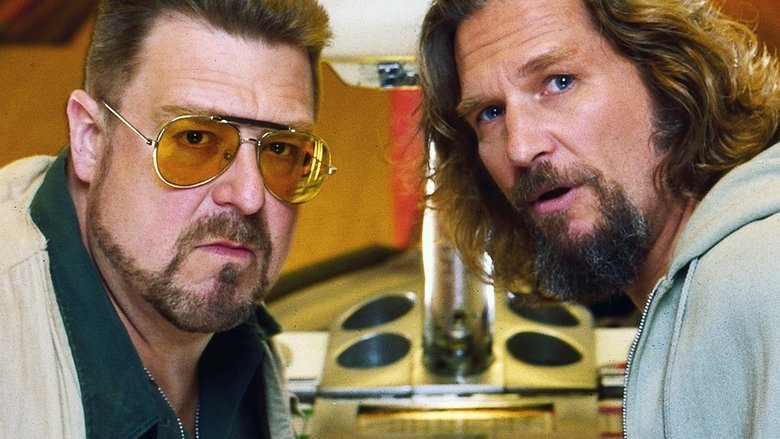

"Times like these call for a Big Lebowski."
Director: Joel Coen
Cast: Jeff Bridges, John Goodman, Julianne Moore, Steve Buscemi, David Huddleston
The Big Lebowski — Movie Quotes
Memorable Quotes
The Dude abides.
Context
This line is spoken by The Dude to The Stranger at the bowling alley bar near the end of the film. After summarizing the recent chaotic events and the death of Donny, The Stranger asks how he's doing. The Dude responds with this simple, profound statement of his enduring philosophy.
Meaning
This is the film's ultimate thesis statement and The Dude's personal mantra. It signifies his philosophy of acceptance, endurance, and tranquility in the face of life's chaos. It's a declaration that despite all the turmoil, he will remain himself and continue his easy-going existence. The line has become a cultural touchstone, representing a laid-back approach to life's challenges.
That rug really tied the room together.
Context
The Dude says this line to Walter and Donny at the bowling alley immediately after the opening scene where his rug is soiled by Treehorn's thugs. It's his justification for why he must confront the other Lebowski, setting the entire story in motion.
Meaning
This quote establishes the central, absurd motivation for The Dude's entire involvement in the plot. It highlights his focus on simple, domestic harmony over grander concerns like money or justice. The rug symbolizes order in his life, and its violation is an offense he cannot let stand. The line has become a popular idiom for describing an essential element that unifies a space, project, or idea.
Yeah, well, you know, that's just, like, your opinion, man.
Context
The Dude delivers this line to Jesus Quintana in the bowling alley. After Jesus gives a typically flamboyant and intimidating speech about what he's going to do to them in the tournament, The Dude calmly deflates his entire tirade with this simple, dismissive phrase.
Meaning
This is The Dude's ultimate, non-confrontational comeback. It's a perfect encapsulation of his passive resistance and his dismissal of others' rigid ideologies. He doesn't argue the point but simply invalidates it by relegating it to the status of a mere opinion. It reflects a postmodern worldview where absolute truths are suspect and everything is a matter of perspective.
This is not 'Nam. This is bowling. There are rules.
Context
Walter screams this at his bowling opponent, Smokey, after Smokey's toe goes over the foul line during a league game. When Smokey refuses to accept the penalty, Walter pulls out a handgun to enforce the "rules," escalating the situation to a terrifying and ridiculous degree.
Meaning
This quote perfectly illustrates Walter's character. He is unable to separate his traumatic experiences in the Vietnam War from his mundane daily life. He constantly tries to apply the life-or-death logic of war to trivial situations, like a foot-fault in bowling. It highlights his obsession with rules and order as a coping mechanism for his PTSD, while also being deeply comedic in its absurdity.
Shut the f**k up, Donny!
Context
Walter yells this at Donny numerous times throughout the film, usually whenever Donny attempts to interject with a question or comment about a conversation he doesn't understand. A prime example is when Donny confuses V.I. Lenin with John Lennon.
Meaning
This recurring line is a key part of the film's comedic dynamic and characterization. It establishes the relationship between the explosive Walter and the meek Donny, who is perpetually "out of his element." While abusive, it's played for laughs and underscores Donny's role as the innocent who can't keep up with the increasingly bizarre plot, making his eventual death all the more poignant.
Explore More About This Movie
Dive deeper into specific aspects of the movie with our detailed analysis pages