Skip to content
The Blacklist
A shadow-drenched noir thriller where charismatic villainy meets fragile vulnerability; like a master puppeteer dancing across a minefield of secrets, wrapping a tangled web of blood and devotion in velvet darkness.
The Blacklist

The Blacklist

"Never trust a criminal... Until you have to."

23 September 2013 — 13 July 2023 United States of America 10 season 218 episode Ended 7.6 (3,678)

Cast: James Spader, Diego Klattenhoff, Harry Lennix, Hisham Tawfiq, Amir Arison

Drama Crime Mystery The Ambiguity of Morality and Justice Parental Sacrifice and Protection vs. Destruction The Search for Identity and Truth Power, Loyalty, and Betrayal in the Shadows The Weight of Guilt and Redemption

Overview

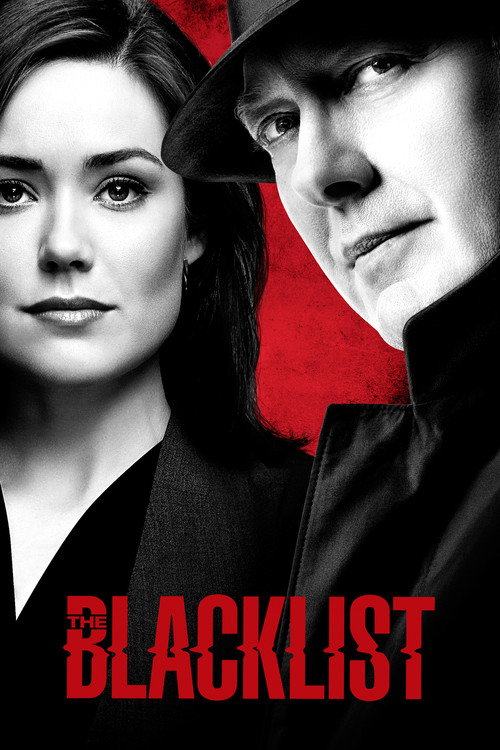
The Blacklist is an expansive American crime thriller series that spans 10 seasons and 218 episodes. The narrative begins when Raymond "Red" Reddington (James Spader), a former U.S. Naval Intelligence officer turned world-renowned master criminal, abruptly surrenders to the FBI at their Washington, D.C. headquarters. He offers an extraordinary deal: immunity from prosecution in exchange for helping an elite, secret FBI Task Force hunt down a covert, high-level list of international terrorists, mobsters, fixers, and assassins—criminals so elusive and dangerous that the government doesn't even know most of them exist. However, Reddington insists on one non-negotiable condition: he will speak exclusively to Elizabeth "Liz" Keen (Megan Boone), a green FBI profiler on her very first day on the job.

Across its ten-season run, the series seamlessly balances a "case-of-the-week" procedural framework with an intricate, serialized mythology. As the FBI Task Force dismantles shadowy global syndicates, intelligence cabals, and bio-terrorists, an insidious web of personal and political secrets emerges. The core driving engine of the series is the enigmatic bond between Red and Liz—a dynamic defined by intense paternal devotion, deep manipulation, mutual protection, and tragic betrayal.

As the narrative expands beyond domestic borders, it delves into decades-old Cold War espionage, intelligence cabals, hidden identities, and deep-seated family legacies. What begins as an uneasy alliance between law enforcement and a master criminal evolves into an epic investigation into who Raymond Reddington truly is, why he entered Elizabeth's life, and how far a person will go to protect the ones they love from the sins of the past.


Core Meaning

At its heart, The Blacklist explores the fluid, ambiguous nature of morality, identity, and protection. Creators Jon Bokenkamp and John Eisendrath constructed the entire ten-season story as a parable about the cost of secrets and the overwhelming weight of parental love. Through Raymond Reddington's journey, the series asserts that absolute black-and-white concepts of "good" and "evil" are illusions; law enforcement institutions can be corrupt and systemic, while an unrepentant criminal can act out of deep personal codes and selfless devotion.

Furthermore, the show explores identity not as a fixed biological fact, but as a deliberate choice and a sacrifice. It poses the idea that a person can completely destroy, remake, and surrender their former self—erasing their past, their name, and even their body—if it guarantees the safety of the next generation. Ultimately, the series carries a haunting message: attempting to shield someone from the harsh truth of their heritage through lies and manipulation often creates the very destruction you sought to prevent.

Thematic DNA

The Ambiguity of Morality and Justice 30%
Parental Sacrifice and Protection vs. Destruction 25%
The Search for Identity and Truth 20%
Power, Loyalty, and Betrayal in the Shadows 15%
The Weight of Guilt and Redemption 10%

The Ambiguity of Morality and Justice

From the pilot episode to the series finale, the show systematically deconstructs conventional law and justice. Red operates in moral gray zones, executing brutal criminals while maintaining a refined appreciation for art, culture, and human warmth. The FBI agents, particularly Donald Ressler and Elizabeth Keen, gradually find their rigid moral compasses eroding as they realize that breaking the law is frequently the only way to achieve true justice.

Parental Sacrifice and Protection vs. Destruction

Red's central motivation throughout the entire series is the absolute protection of Elizabeth Keen. However, as the seasons progress, the show highlights the tragic irony of this protection: Red's obsessive secrecy, lies, and refusal to reveal his identity create a vacuum that repeatedly pulls Liz into lethal danger, ultimately destroying her normal life.

The Search for Identity and Truth

Identity in The Blacklist is fluid and deceptive. Key characters frequently adopt aliases, undergo facial reconstruction, or completely fake their deaths. The multi-season mystery of "Who is Raymond Reddington?" serves as a broader philosophical query about whether a person is defined by their bloodline, their past, or the actions and persona they build over a lifetime.

Power, Loyalty, and Betrayal in the Shadows

The show depicts a world governed by hidden networks—The Cabal, the KGB, the CIA, global cartels, and Red's criminal empire. Loyalty is the rarest and most valuable currency, tested continually through betrayals by close allies like Mr. Kaplan and Dembe Zuma, revealing how fragile trust becomes when buried under layers of espionage.

The Weight of Guilt and Redemption

Red Reddington describes himself as a "sin eater"—someone who willingly darkens his own soul and shoulders unbearable guilt so that others can remain pure. The series continuously reflects on whether a life built on murder, corruption, and crime can ever achieve true spiritual redemption.

Character Analysis

Raymond "Red" Reddington

James Spader

Archetype: Antihero / Mastermind / Trickster Key Trait: Unflappable eloquence, sharp wit, and cold ruthlessness masked behind charming storytelling.

Motivation

To protect Elizabeth Keen (and later her daughter Agnes) at all costs and complete his master plan of dismantling global criminal threats.

Character Arc

Begins as an untouchable, eccentric "Concierge of Crime" surrendering to the FBI. Over 10 seasons, he evolves from an all-powerful puppet master to a weary, deeply human figure tormented by the loss of Elizabeth, eventually dismantling his own criminal empire and surrendering his life to fate in Spain.

Elizabeth "Liz" Keen

Megan Boone

Archetype: Protagonist / Tragic Heroine / Descending Antihero Key Trait: Fierce instinct and emotional intensity, constantly torn between law enforcement duty and criminal darkness.

Motivation

To uncover the absolute truth of her origin and identity, and to keep her daughter safe from Red's shadow.

Character Arc

Begins as an idealistic FBI profiler. As she unravels the lies surrounding her husband, her parents, and Red, her moral boundaries collapse. By Season 8, she becomes criminal number 1 on the Blacklist, waging an all-out war against Red before meeting a tragic death.

All 5 characters and cast

Symbols & Motifs

The Black Fedora & Three-Piece Suit

Meaning:

Represents Red's armor, elegance, authority, and carefully constructed persona. It shields his true vulnerability and serves as a visual symbol of classic film noir sophistication.

Context:

Suggested by James Spader himself, it is worn constantly by Red throughout his travels and encounters.

The Scar on Liz’s Wrist

Meaning:

Represents Liz’s suppressed childhood memory of the fatal night of the fire and her inescapable physical connection to Red's past.

Context:

A burn scar shaped like the Russo-American intelligence symbol for the secret archive, present on Liz's wrist throughout her life.

The Post Office Glass Cage / War Room

Meaning:

Serves as a visual motif for illusory control: while the FBI believes they hold Red captive inside the glass box, Red is consistently the one controlling the room and the narrative from within.

Context:

The hyper-secure subterranean glass cell where Red is held when surrendering at the FBI headquarters.

The Music Box ("Patricia")

Meaning:

Symbolizes Liz’s lost childhood, maternal comfort, and the hidden connection between Red and Katarina Rostova.

Context:

A hidden music box featured in early seasons that plays a specific lullaby.

The Spanish Bull

Meaning:

Symbolizes noble, raw nature, unavoidable mortality, and Red’s final refusal to be captured or judged by human courts, choosing instead an honorable, primal death on his own terms.

Context:

Featured in the Season 10 finale when Red comes face-to-face with a massive bull in the Spanish countryside.

Memorable Quotes

Have you ever sailed across an ocean, Donald? On a sailboat surrounded by sea with no land in sight, without even the possibility of sighting land for days to come? To stand at the helm of your destiny... I want that, one more time.
— Raymond Reddington

Context

Trapped inside a bulletproof box while Ressler bleeds out in Season 1, Episode 10 ("Anslo Garrick").

Meaning

Delivers a famous poetic monologue about why he refuses to let death take him before he experiences the sensory wonders of life once more.

There is nothing that will take the pain away. But eventually you will find a way to live with it. There will be nightmares. And every day it will be the first thing you think about. Until one day, it's the second.
— Raymond Reddington

Context

Red comforts Ressler after the traumatic death of Ressler's former fiancée in Season 1, Episode 16 ("Mako Tanida").

Meaning

Offers profound, realistic insight into grief, loss, and emotional survival.

All 4 quotes

Episode Highlights

Pilot

S1E1

Establishes the core premise: Red surrenders to the FBI and demands to work solely with rookie profiler Elizabeth Keen.

Significance:

Launches the central narrative engine and mystery surrounding Red and Liz's relationship.

Anslo Garrick (No. 16)

S1E10

The Post Office is violently besieged. Features Red's classic monologue to Ressler.

Significance:

Showcases Red's vulnerability and fiercely protective nature when his team is endangered.

Cape May

S3E19

A quiet, dreamlike, surreal episode where a grieving Red retreats to an empty coastal house and hallucinates Katarina Rostova.

Significance:

Universally regarded as a masterpiece that lays deep narrative clues to Red's true identity.

Mr. Kaplan: Conclusion (No. 4)

S4E22

Red's former cleaner Mr. Kaplan turns on him, digging up a secret duffel bag containing human bones.

Significance:

Threatens to undo Red's entire identity and sets off a major multi-season chase for the truth.

Sutton Ross (No. 17)

S5E22

DNA testing on the bones in the duffel bag is finally completed.

Significance:

A massive turning point revealing that the real Raymond Reddington has been dead for decades, proving Spader's Red is an imposter.

Nachalo (No. 24)

S8E21

Filmed almost entirely in stylized black-and-white in a Latvian bunker, Red takes Liz through a step-by-step visual historical breakdown.

Significance:

Explains Katarina Rostova, the fire, and the creation of the "Raymond Reddington" persona.

Konets

S8E22

Elizabeth Keen is shot dead on the street by Vandyke, dying in Red's arms.

Significance:

Serves as the tragic climax of the main story arc before she can execute Red to take over his empire.

Raymond Reddington: Good Night (No. 00)

S10E22

Red disbands the Task Force, walks into the Spanish countryside, and faces down a bull.

Significance:

The series finale that closes Red's life story on his own terms.

Philosophical Questions

Is a stolen identity defined by blood or by actions?

The show questions whether identity lies in genetics or in the lived experiences, choices, and sacrifices a person makes while occupying a persona.

Does absolute protection inevitably corrupt the protected?

By shielding Liz from the truth for her safety, Red inadvertently forces her to become a fugitive and criminal, questioning if protective love can become toxic.

Can bad deeds performed for noble causes ever lead to true redemption?

Red spends decades committing crimes to preserve global security and protect his family, questioning whether the end ever truly justifies the means.

Alternative Interpretations

The "Redarina" Theory (Primary Canon Reading): The most widely supported interpretation is that Raymond Reddington is actually Katarina Rostova—Liz's biological mother. Following the real Reddington's death in the fire, Katarina underwent extensive plastic surgery to assume his identity, build a criminal empire, and protect her daughter. Visual cuts in Season 8 reinforce this reveal.

Full ending explanation

Cultural Impact

Premiering in 2013 on NBC, The Blacklist brought cable-style antihero sophistication directly to network television during an era dominated by cable hits like Breaking Bad. The show played a major historic role in streaming economics when Netflix acquired SVOD rights for a groundbreaking fee of around $2 million per episode early in its run. James Spader’s portrayal earned widespread acclaim and a 2014 Golden Globe nomination, helping the show maintain a massive global fanbase across international platforms for 10 seasons.

Audience Reception

Seasons 1–3: Received high critical acclaim, with reviewers praising James Spader's performance, slick production, and the case-of-the-week structure.

Seasons 4–6: Maintained praise for Red's monologues, though viewers began voicing frustration over Elizabeth Keen's erratic character decisions.

Seasons 7–8: Proved highly polarizing due to the introduction of a fake Katarina Rostova and Liz turning into Red's enemy, culminating in shock over Liz's death in Season 8.

Seasons 9–10: Saw a return to classic procedural dynamics; the series finale provoked debate over Red's death by a bull, though many praised its poetic nature.

Interesting Facts

  • James Spader was cast as Raymond Reddington just three days before filming began on the pilot episode.
  • Red's signature fedora hat was suggested by James Spader, who felt an international traveler of Red's style would wear one.
  • Show creator Jon Bokenkamp stated the series was initially inspired by the capture of Boston mobster Whitey Bulger.
  • Megan Boone's real-life pregnancy in Season 3 was written into the show, prompting the arc where Liz fakes her death.
  • The Season 7 finale used graphic-novel style animation to complete unshot scenes cut short by COVID-19 lockdowns.

Easter Eggs

The Pretty in Pink Reunion

In Season 10, Episode 20, Red’s pilot "Edward" is played by Andrew McCarthy, who co-starred with James Spader in Pretty in Pink (1986) and directed over 20 episodes of The Blacklist.

The "Just Fly Away" Book Detail

In Season 8, Episode 16, Agent Park reads a book written in real life by director Andrew McCarthy about a girl discovering her father's hidden family, mirroring Liz's story arc.

Producer Name Cameos

Several minor characters and background details bear the names of writers and producers, including showrunner Jon Bokenkamp and executive producer Lukas Reiter.

Hitchcockian Homages

The episode "Cape May" contains deliberate visual and narrative nods to Alfred Hitchcock classics Vertigo and Rebecca, focusing on ghostly obsessions and identity doubled over water.

Frequently Asked Questions

Explore More About This Movie

Dive deeper into specific aspects of the movie with our detailed analysis pages

Comments (0)

Leave a comment

No comments yet. Be the first to share your thoughts!

Similar Movies