
Skip to content
The Closer
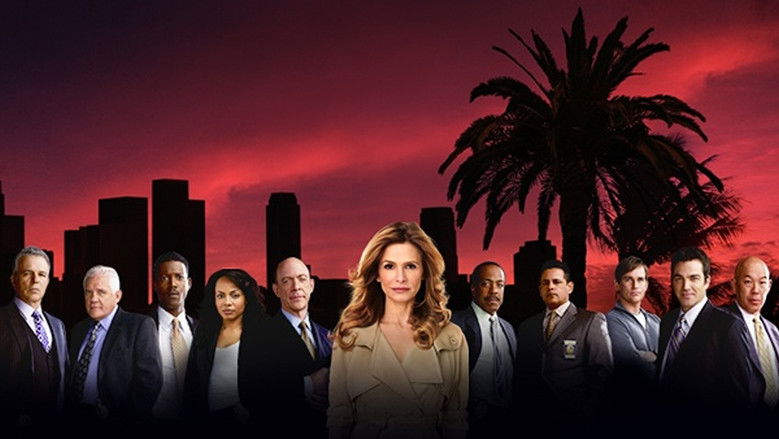
A sun-baked neo-noir procedural that pulses with anxious, high-stakes moral tension, where justice is extracted like molten gold from the shadowed crucible of the interrogation room.
The Closer

The Closer

"They'll bring you in. She'll make you talk."

13 June 2005 — 13 August 2012 United States of America 7 season 109 episode Ended 7.8 (355)

Cast: Kyra Sedgwick, J.K. Simmons, Corey Reynolds, Robert Gossett, G.W. Bailey

Drama Crime Mystery The Ethical Price of "Closing" Feminine Authority in Institutional Hierarchies Found Family, Tribalism, and Institutional Loyalty Obsession and the Erosion of the Self

Overview

The Closer, created by James Duff, centers on Deputy Chief Brenda Leigh Johnson (Kyra Sedgwick), an eccentric, CIA-trained Southern interrogator recruited from Atlanta to head a specialized homicide squad within the Los Angeles Police Department. Arriving as an outsider in an entrenched, insular, and predominantly male departmental culture, Brenda immediately encounters open hostility, sexism, and bureaucratic resistance. Her mandate is clear yet daunting: to take command of high-profile, politically sensitive homicides and secure ironclad convictions where standard investigative routes stall.

Across seven seasons, the series traces both the institutional and emotional evolution of Brenda and her squad. What begins as an antagonistic working relationship gradually softens into fierce loyalty and mutual protectiveness as the detectives recognize Brenda’s uncanny psychological acumen. Alongside her grueling professional cases, Brenda navigates the personal friction of establishing a life in Los Angeles, balancing an evolving romance with FBI Special Agent Fritz Howard (Jon Tenney), weathering family pressures from her Southern parents, and managing compulsive personal coping mechanisms.

As Brenda ascends through the LAPD hierarchy—transitioning her unit from the Priority Murder Squad to the Priority Homicide Division and ultimately the Major Crimes Division—the series shifts from episodic puzzles to serialized institutional drama. The final seasons examine the mounting collateral damage of Brenda’s single-minded pursuit of justice. Her penchant for bending protocols, isolating herself from departmental rules, and pushing moral limits leads to intense internal oversight, departmental leaks, and legal vulnerability, forcing a profound reckoning between absolute justice and the human costs of achieving it.
Core Meaning

The overarching thesis of The Closer is that the relentless pursuit of truth requires navigating profound ethical compromise, and that justice secured through manipulation carries a heavy psychological and moral tax. James Duff conceived Brenda Leigh Johnson not as an infallible hero, but as a deeply flawed instrument of accountability. The series argues that legal systems are inherently political, fragile, and often inadequate to deliver true closure to victims. While Brenda possesses a singular ability to elicit the truth from criminals, the narrative steadily reveals that being an effective "closer" demands a ruthlessness that threatens to hollow out one’s personal ethics, relationships, and peace of mind. True resolution comes not from institutional dominance or retribution, but from acknowledging human vulnerability and the limits of one's own control.

Thematic DNA

The Ethical Price of "Closing" 30%
Feminine Authority in Institutional Hierarchies 25%
Found Family, Tribalism, and Institutional Loyalty 25%
Obsession and the Erosion of the Self 20%

The Ethical Price of "Closing"

From the pilot forward, Brenda is celebrated for eliciting confessions when physical evidence falls short. However, the series systematically complicates this virtue. Brenda routinely lies to suspects, exploits psychological vulnerabilities, leverages suspects’ religious guilt, and skirts constitutional boundaries. By Season 7, this moral acrobatics culminates in the federal lawsuit regarding the death of gang member Terrell Baylor, illustrating that when law enforcement operates outside procedural safeguards, it incurs profound ethical culpability.

Feminine Authority in Institutional Hierarchies

Brenda enters the LAPD as a woman with floral dresses, oversized bags, and a thick Georgia accent, subverting the traditional archetype of the hardened, masculine cop. Creator James Duff specifically intended for Brenda’s femininity to function as a source of tactical strength rather than a liability. Suspects and colleagues underestimate her southern pleasantries, allowing her to disarm opponents and dismantle institutional sexism without sacrificing her distinct identity.

Found Family, Tribalism, and Institutional Loyalty

The squad initially signs letters of transfer to protest Brenda's appointment. Over seven years, shared trauma, investigative breakthroughs, and Brenda's fierce defense of her team transform a dysfunctional group of cynics into an ironclad unit. Detectives like Provenza, Flynn, Gabriel, and Sanchez shift from recalcitrant insubordinates into protective brothers and mentors, illustrating how shared duty can forge enduring kinship in the face of institutional indifference.

Obsession and the Erosion of the Self

Brenda’s professional brilliance is juxtaposed with her chaotic domestic existence. Her obsession with murder cases repeatedly compromises her physical health, postpones milestones with Fritz, strains her relationship with her parents, and leaves her ill-equipped for ordinary emotional intimacy. Her ultimate multi-season duel with serial predator Phillip Stroh illustrates how fixation can verge on pathology, eroding the line between legal duty and personal vendetta.

Character Analysis

Brenda Leigh Johnson

Kyra Sedgwick

Archetype: The Flawed Crusader / The Closer Key Trait: Unyielding psychological intuition and relentless persistence.

Motivation

Starts with an obsessive drive to close cases and secure convictions; matures into an awareness that procedural integrity and human relationships must balance legal vengeance.

Character Arc

Evolves from an isolated, defensive interloper into a beloved leader who commands absolute loyalty, before facing the crushing legal and psychological consequences of her win-at-all-costs philosophy in Season 7.

Lt. Louie Provenza

G.W. Bailey

Archetype: The Reluctant Mentor / Cynical Veteran Key Trait: Dry, cantankerous wit paired with unshakeable street smarts.

Motivation

Motivated initially by avoiding extra paperwork and coasting to his pension; evolves into protecting the squad’s survival and honoring Brenda’s integrity.

Character Arc

Begins as a lazy, near-retirement cynic deeply resentful of Brenda’s authority, evolving into her most steadfast defender, emotional anchor, and tactical protector.

All 5 characters and cast

Symbols & Motifs

Sweets and Junk Food (The Desk Drawer / Ding Dongs)

Meaning:

Brenda’s compulsive consumption of snack cakes and sugary treats serves as an immediate coping mechanism for stress and repressed trauma. The locked desk drawer represents her private sanctuary of emotional vulnerability; her act of leaving behind a Ding Dong in the series finale signifies both an offering of peace and the symbolic passing of the departmental torch.

Context:

Brenda keeps snack cakes hidden in her locked desk drawer across the series to handle extreme tension, culminating in the pilot's introduction and the series finale's handover.

Brenda’s Handbag and Floral Wardrobe

Meaning:

Her oversized leather handbag—frequently overflowing, disorganized, and stuffed with case files alongside cosmetic items—visually mirrors her cluttered mental state and chaotic life. Her vibrant, feminine cardigans and skirts act as camouflage in the drab, institutional corridors of the LAPD, masking her razor-sharp interrogation tactics under a veneer of disarming domesticity.

Context:

Worn and carried constantly by Brenda throughout the LAPD squad rooms, crime scenes, and interrogation suites.

The Interrogation Room ("The Murder Room")

Meaning:

The interrogation room serves as a secular confessional booth. With its two-way mirror, muted walls, and claustrophobic framing, the space represents the moral crossroads of the show, where truth is pried out through psychological warfare.

Context:

The central staging ground for the climax of nearly every investigation, where Brenda systematically dismantles suspects' defenses.

The Cat (Kitty)

Meaning:

Inherited unexpectedly, Kitty symbolizes Brenda’s reluctant capacity for domestic attachment and unconditional empathy. Kitty forces Brenda to care for another living creature without an agenda or interrogation script, making the cat's eventual decline and death in Season 5 a poignant metaphor for Brenda’s mortality and emotional vulnerability.

Context:

Living in Brenda's home throughout the middle seasons until the pet's illness and euthanasia in Season 5.

The phrase "Thank you, thank you so much"

Meaning:

Repeated by Brenda across all seven seasons, this verbal tic transforms depending on the scene—serving alternately as Southern politeness, a subtle dismissal of bureaucratic posturing, or the final, predatory seal placed on a trapped suspect just before the confession drops.

Context:

Used routinely in interpersonal conversations, administrative squabbles, and at the culmination of intense interrogations.

Memorable Quotes

It looks like love.
— Lt. Louie Provenza

Context

Spoken in Season 1, Episode 1, "Pilot" as sarcasm, and echoed in Season 7, Episode 21, "The Last Word" as Brenda leaves her office for the last time.

Meaning

In the pilot, Brenda gazes into the squad room of hostile detectives and asks what it looks like; Provenza sarcastically replies, "It looks like love". In the series finale, as the squad stands united in fierce loyalty and affection around her departing desk, Provenza repeats the exact line—this time with deep sincerity, encapsulating the seven-year emotional journey of the ensemble.

Thank you. Thank you so much.
— Deputy Chief Brenda Leigh Johnson

Context

Series-wide recurring motif used across all seven seasons.

Meaning

Brenda’s defining verbal trademark. Delivered with an exaggerated Southern cadence, it serves as polite misdirection to disarm suspects, a weaponized dismissal to patronizing superiors, and the final punctuation mark when an interrogation ends in an irreversible confession.

All 5 quotes

Episode Highlights

Pilot

S1E1

Introduces Brenda Leigh Johnson as she arrives in Los Angeles to take over the Priority Murder Squad. It establishes her unorthodox psychological interrogation techniques, her Southern outsider persona, and the open hostility of her all-male team.

Significance:

Lays the thematic foundation for the entire series: Brenda's outsider status, her dependence on chocolate to handle stress, and her long-term battle to win the trust of her colleagues.

Serving the King (Parts 1 & 2)

S2E14

Following an administrative leave triggered by an officer-involved shooting, Brenda is pulled into a clandestine joint operation with the CIA regarding national security and a diplomatic murder.

Significance:

Explores Brenda’s CIA past, expands the scope beyond typical street homicides, and cements the absolute investigative synchronization between Brenda and Fritz.

Ruby

S3E4

Major Crimes investigates the disappearance of a young girl, leading to a confrontation with a registered sex offender. When the suspect refuses to reveal the child's location, Brenda faces excruciating ethical limits regarding civil liberties versus saving a life.

Significance:

One of the darkest, most emotionally harrowing hours of the series, foreshadowing Brenda's willingness to step outside strict legal protocol to protect victims.

The Round File

S3E15

Brenda investigates a poisoning case inside a retirement community while simultaneously navigating the personal and professional complications of her engagement to Fritz.

Significance:

Balances the series’ tonal trademark of high-stakes homicide detection with gentle domestic comedy and emotional growth in Brenda’s personal life.

Time Bomb

S4E10

An explosive ambush on an LAPD squad car leaves Detective Julio Sanchez fighting for his life and sets off a race against a domestic terrorist cell.

Significance:

Galvanizes the squad's tribal unity, deepening Sanchez’s emotional trauma and driving home the acute physical peril facing the squad.

The Strike Zone

S5E3

Introduces Captain Sharon Raydor (Mary McDonnell) of the LAPD Force Investigation Division (FID). When a gang-related murder involves questionable squad tactics, Raydor arrives to audit Brenda’s unit.

Significance:

Initiates the critical multi-season philosophical rivalry between Brenda’s results-oriented justice and Raydor’s rule-bound institutional integrity, setting up the narrative bridge to Major Crimes.

Repeat Offender

S6E15

Explores the contentious political race for the new Chief of Police between Will Pope, Commander Russell Taylor, and external candidates, with Brenda caught directly in the crosshairs.

Significance:

Solidifies the structural reorganization of Major Crimes and signals the start of the institutional squeeze that will trap Brenda throughout the final season.

The Last Word

S7E21

The culmination of Brenda’s multi-season obsession with psychopath Phillip Stroh (Billy Burke). Featuring crucial testimony from runaway Rusty Beck (Graham Patrick Martin), Brenda confronts Stroh in an elevator, faces suspension, and suffers a home invasion that ends in a violent shootout.

Significance:

Concludes Brenda Leigh Johnson’s tenure at the LAPD as she departs to lead the District Attorney’s Bureau of Investigation, leaving the squad in Raydor’s hands and setting up the spin-off Major Crimes.

Philosophical Questions

Does the certainty of guilt justify deceptive means?

The series consistently investigates whether an interrogator’s psychological manipulation and tactical falsehoods compromise the moral legitimacy of justice.

Can absolute justice coexist with institutional bureaucracy?

Brenda’s clashes with Will Pope and Sharon Raydor examine whether modern legal institutions exist to uncover truth and protect victims, or merely to minimize political liability and legal risk.

Where does professional duty end and destructive obsession begin?

Brenda’s pursuit of predators—most notably Phillip Stroh—questions whether the drive to protect society can itself devolve into a toxic, consuming pathology.

Alternative Interpretations

The Heroic Vindication Reading: In this traditional procedural view, Brenda Leigh Johnson is an uncompromising crusader for victims whose unconventional methods are vindicated by the results. Though harassed by bureaucracy and shadowed by the slimy Phillip Stroh, she relies on instinct, traps the serial predator, and leaves the department on her own terms to protect her squad, remaining true to her moral core.

Full ending explanation

Cultural Impact

Premiering in June 2005 on TNT, The Closer launched into an American television landscape dominated by network crime procedurals (CSI, Law & Order, NCIS) that leaned heavily on forensic laboratory science, forensic technology, and stoic male authority figures. The Closer rejected high-tech forensic omniscience in favor of character-driven psychological warfare, emphasizing human verbal confession over DNA microscopes.

Alongside FX’s The Shield and USA Network's Monk, The Closer proved that basic-cable networks could produce high-rating, critically celebrated original dramas capable of rivaling broadcast networks. The series demonstrated that A-list film actors could transition into weekly cable television, blazing a trail for performers like Glenn Close (Damages) and Holly Hunter (Saving Grace).

Brenda Leigh Johnson dismantled the television trope of the hyper-masculinized female investigator. She was allowed to be neurotic, messy, stubborn, socially awkward, and uncompromising without losing her moral authority or likability. Critics and media scholars identify Brenda’s DNA in subsequent female-led crime dramas, including Major Crimes, Happy Valley, and Mare of Easttown.

Audience Reception

Across its seven seasons, The Closer achieved consistently strong critical and commercial reception (holding an overall Rotten Tomatoes/Metacritic average of 83% Critics and 81% Audience Fresh rating). Seasons 1–3 garnered critical acclaim and breakthrough cable ratings, leading to peak viewership and Kyra Sedgwick's Emmy win during Seasons 4–5. Critics widely praised Sedgwick’s charismatic lead performance, her depth, wit, and vulnerability, as well as the chemistry of the supporting cast—particularly G.W. Bailey, Tony Denison, and J.K. Simmons—and the series' emphasis on verbal sparring over generic shootouts.

Procedural purists occasionally criticized the formulaic rhythm of suspects breaking down and confessing within a single interrogation session, arguing that real suspects rarely fold so cleanly without counsel. Other viewers found Brenda’s domestic neuroses and her dependency on Fritz grating over time.

Seasons 6 and 7 saw a tonal shift toward darker, serialized drama involving internal affairs leaks and the sudden death of Brenda's mother, which divided portions of the fandom who missed the earlier balance of procedural closure and levity. The series finale ("The Last Word") drew mixed reactions: while praised for its emotional farewells, some viewers and critics were disappointed that Brenda brought down Phillip Stroh through physical violence and a shootout rather than out-thinking him in the interrogation room.

Interesting Facts

  • Series creator James Duff conceived The Closer after noticing that contemporary television procedurals frequently forced female detectives to succeed by adopting aggressive, masculine behaviors, deliberately writing Brenda as unabashedly feminine.
  • Former Los Angeles County District Attorney Gil Garcetti served as a consulting producer throughout the series' entire run, vetting interrogation scenarios and Southern California legal tactics.
  • Kyra Sedgwick received five consecutive Primetime Emmy Award nominations for Outstanding Lead Actress in a Drama Series before winning in 2010 for Season 5.
  • Phillip P. Keene, who portrayed civilian surveillance coordinator Buzz Watson across both The Closer and Major Crimes, is the real-life husband of creator/showrunner James Duff.
  • When Kyra Sedgwick announced her departure, James Duff structured the final season to transition directly into the spinoff Major Crimes, which debuted in the timeslot immediately following the finale.
  • The series repeatedly broke basic-cable viewership records, with its Season 7 finale attracting over 9 million live viewers.

Easter Eggs

The Bookending "Ding Dong" Motif

In the pilot episode, Brenda discovers a Hostess Ding Dong in her desk drawer, introducing her confectionery coping mechanism. In the final shot of her office in "The Last Word," Brenda leaves an unopened Ding Dong inside the drawer for her successor, Sharon Raydor—a subtle Easter egg acknowledging continuity and departmental succession.

Echo of the Pilot's Dialogue

Provenza’s final words to Brenda ("It looks like love") verbatim quote his opening sarcastic line from the pilot, transforming a seven-year-old insult into an emotional expression of devotion.

The Introduction of Rusty Beck

The character of teenage hustler Rusty Beck (Graham Patrick Martin), introduced in the series finale as the key witness against Phillip Stroh, was specifically engineered to serve as the emotional throughline and adopted ward for Sharon Raydor in Major Crimes.

Curtis Armstrong’s Antagonistic Persona

Character actor Curtis Armstrong was cast as civil attorney Peter Goldman, the chief antagonist suing Brenda and the LAPD in Season 7. The casting deliberately subverted his comedic 1980s pop-culture persona into an irritating, legally formidable opponent.

Frequently Asked Questions

Explore More About This Movie

Dive deeper into specific aspects of the movie with our detailed analysis pages

Comments (0)

Leave a comment

No comments yet. Be the first to share your thoughts!

Similar Movies