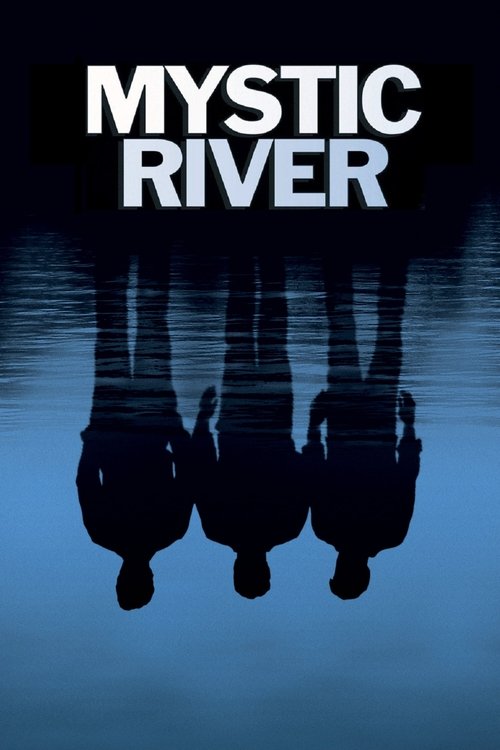
Mystic River
A neo-noir tragedy steeped in suffocating grief and moral ambiguity. Like the dark waters of the titular river, the film submerges the viewer in a cold current of past trauma that eventually drowns the present in inevitable violence.
Mystic River

Mystic River

"We bury our sins, we wash them clean."

08 October 2003 United States of America 138 min ⭐ 7.7 (7,233)
Director: Clint Eastwood
Cast: Sean Penn, Tim Robbins, Kevin Bacon, Laurence Fishburne, Marcia Gay Harden
Drama Crime Thriller Mystery
Trauma and Lost Innocence Vigilante Justice vs. Rule of Law Grief and Masculinity The Complicity of Community
Budget: $25,000,000
Box Office: $156,800,000

Overview

In a working-class Irish neighborhood in Boston, three childhood friends—Jimmy Markum, Dave Boyle, and Sean Devine—are drifted apart by a horrific event in 1975 where Dave was abducted and sexually abused for days while the others watched. Twenty-five years later, their lives tragically intersect again when Jimmy's 19-year-old daughter, Katie, is brutally murdered.

Sean, now a homicide detective, is assigned to the case and must investigate his old neighborhood. Meanwhile, Jimmy, an ex-con and neighborhood store owner, conducts his own vigilante investigation, consumed by rage and grief. Suspicion falls heavily on Dave, who returned home the night of the murder covered in blood with a suspicious story, triggering a spiral of distrust and violence that revisits the trauma of their shared past.
Core Meaning

The Inescapability of the Past

Clint Eastwood's film argues that childhood trauma is not an event that ends, but a continuous force that shapes destiny. The central message is that violence begets violence in a cyclical tragedy; the sins of the past (Dave's abduction, Jimmy's criminal history) ripple forward to destroy the next generation. It deconstructs the American myth of vigilante justice, revealing it not as heroism, but as a blind, destructive force born of pain and toxic masculinity.

Thematic DNA

Trauma and Lost Innocence 30%
Vigilante Justice vs. Rule of Law 25%
Grief and Masculinity 25%
The Complicity of Community 20%

Trauma and Lost Innocence

The film explores how a single traumatic event destroys innocence and permanently alters the trajectory of lives. Dave is the "boy who escaped the wolves" but never truly left the car; his entire adult identity is fractured by his victimization. Jimmy and Sean carry the survivor's guilt, which manifests as rage and emotional detachment respectively.

Vigilante Justice vs. Rule of Law

The conflict between Jimmy's "street justice" and Sean's legal procedure is central. Jimmy believes the law is insufficient and that he must wash his own sins clean through vengeance. The tragedy lies in the fact that his vigilante instincts lead him to murder an innocent man, proving that justice without due process is merely chaos.

Grief and Masculinity

The male characters struggle to process emotions. Jimmy's grief transforms instantly into aggression because he lacks the tools to mourn vulnerably. The film critiques a specific brand of old-school masculinity where silence and violence are the only acceptable responses to pain, leading to catastrophic miscommunication.

The Complicity of Community

The neighborhood of Buckingham Flats acts as a silent character that protects its own but also buries its secrets. The "code of silence" that binds the community ultimately enables Dave's death, as his wife Celeste and the neighbors allow suspicion to fester rather than seeking the truth.

Character Analysis

Jimmy Markum

Sean Penn

Archetype: Tragic Antihero / Vigilante
Key Trait: Explosive Rage

Motivation

To protect his family and avenge his daughter, driven by a deep-seated need for control and a belief that he owes a debt to fate for his past crimes.

Character Arc

Starts as a reformed criminal trying to live a legitimate life. The murder of his daughter drags him back into his dark past. He regresses from a grieving father to a cold-blooded killer, ultimately accepting his nature as a "king" of the underworld rather than facing the horror of his mistake.

Dave Boyle

Tim Robbins

Archetype: The Victim / Scapegoat
Key Trait: Psychological Trauma

Motivation

To stop the "wolves" (pedophiles) and protect children, trying to reclaim the power he lost as a boy.

Character Arc

A broken man haunted by childhood abuse. He tries to be a good father but is mentally unraveling. He commits a vigilante act (killing a pedophile) which ironically makes him the prime suspect for a crime he didn't commit (Katie's murder), leading to his tragic execution by his former friend.

Sean Devine

Kevin Bacon

Archetype: The Observer / The Law
Key Trait: Stoicism

Motivation

To find the truth and uphold the law, while trying to reconcile his own detachment from human connection.

Character Arc

Estranged from the community and his own wife. He represents the detached arm of the law. He solves the case, but too late to save Dave. His arc ends with a weary acceptance of the community's corruption, symbolized by his silent exchange with Jimmy at the parade.

Annabeth Markum

Laura Linney

Archetype: Lady Macbeth Figure
Key Trait: Ruthless Loyalty

Motivation

Survival and dominance of her family clan above all morality.

Character Arc

Initially appears as a supportive wife, but in the finale reveals a terrifying moral ruthlessness. She validates Jimmy's murder of Dave to ensure the stability and power of their family unit.

Symbols & Motifs

The Mystic River

Meaning:

A repository for the community's buried secrets and sins. It represents the false hope that one can "wash away" guilt. In reality, the river hides bodies but does not absolve the perpetrators.

Context:

Used in the opening and closing shots, and referenced by Jimmy as the place where he "buries his sins." It is where he kills Dave, believing it will cleanse him, just as it hides the truth of his past crimes.

Wet Cement / Names in the Sidewalk

Meaning:

The permanence of the past. The boys wrote their names in wet concrete moments before the abduction.

Context:

The film returns to this image to show that while the cement has hardened and the names are permanent, the friendship was halted at that exact moment. The unfinished name represents the interrupted childhood.

The Hockey Game

Meaning:

The loss of potential and the randomness of fate. It represents the "normal" life that was stolen from Dave.

Context:

The boys are playing street hockey when the abductors arrive. The ball rolls down the drain, symbolizing their innocence disappearing into the dark underworld.

Memorable Quotes

Is that my daughter in there? Is that my daughter in there?!

— Jimmy Markum

Context:

Jimmy arrives at the crime scene in the park and tries to fight through the police officers to see the body.

Meaning:

A raw, visceral expression of grief that pierces the police cordon. It establishes the unbearable pain that drives the rest of the film's violence.

We bury our sins here, Dave. We wash them clean.

— Jimmy Markum

Context:

Spoken by Jimmy to Dave right before he kills him by the banks of the Mystic River.

Meaning:

Jimmy's justification for murder. He believes the river (and his own moral code) allows him to erase his crimes, highlighting his delusion and lack of true remorse.

Sometimes I think all three of us got in that car. And all of this is just a dream, and we're actually just eleven years old waiting for us to wake up.

— Sean Devine

Context:

Sean speaking to Jimmy towards the end of the film, reflecting on how their lives were defined by that one day.

Meaning:

Acknowledges that the trauma of the abduction destroyed all three lives, not just Dave's. They are all stuck in that moment in the past.

Philosophical Questions

Is vigilante justice ever morally justifiable?

The film presents a brutal counter-argument to the 'good guy with a gun' trope. Jimmy acts on what he believes is righteous fury, but because he operates outside the truth-seeking mechanism of the law, he commits an irrevocable evil. It asks if emotion can ever be a reliable guide for justice.

Are we defined by our trauma?

Dave tries desperately to be a normal father, but the film suggests that some wounds are too deep to heal. It raises the uncomfortable question of determinism: was Dave's fate sealed the moment he got in the car, or did he have a choice?

Alternative Interpretations

The Ending: Tragedy or Triumph?

The most debated aspect is the ending. Some interpret the final parade scene as the triumph of evil, where Jimmy is "crowned" king of the neighborhood by his wife, having successfully eliminated the weak link (Dave) and consolidated his power. Others view it as a hollow victory, a tragedy where Jimmy is condemned to live with the soul-crushing secret that he killed his innocent friend, with Sean's final gesture serving as a warning that he is watching.

Dave as a Ghost

Another reading suggests Dave was metaphorically dead from the moment he entered the car as a child. His physical death at Jimmy's hands is merely the formalization of a soul that was destroyed decades ago. In this view, Jimmy is not a murderer but an angel of death releasing Dave from his purgatory.

Cultural Impact

Mystic River is considered a masterpiece of early 2000s American cinema and a defining point in Clint Eastwood's directorial career. It marked a shift towards darker, more emotionally complex dramas in Hollywood.

  • Awards Dominance: The film's dual acting Oscar wins solidified Sean Penn and Tim Robbins as powerhouse dramatic actors and validated Eastwood's status as a premier auteur, not just an icon of Westerns.
  • Boston Noir: It paved the way for a resurgence of gritty, Boston-set crime dramas (like The Departed and Gone Baby Gone), establishing the city's cinematic identity as a place of old grudges and tribal loyalty.
  • Critical Legacy: It is frequently cited in film studies for its classical tragedy structure and its refusal to offer a comforting ending, challenging audiences to accept moral ambiguity.

Audience Reception

Audience reception was overwhelmingly positive but marked by emotional exhaustion. Viewers consistently praise the acting masterclass delivered by the three leads. However, many find the film depressing and emotionally draining. The ending is a frequent point of contention; many viewers feel frustrated by the lack of justice for Dave and the chilling nature of Annabeth's final speech, though most agree this bitterness is intentional and effective.

Interesting Facts

  • Clint Eastwood composed the score for the film himself, in addition to directing.
  • Sean Penn and Tim Robbins won the Academy Awards for Best Actor and Best Supporting Actor respectively, making it the first film since 'Ben-Hur' (1959) to win both male acting categories.
  • Warner Bros. executives wanted the film shot in Toronto to save money, but Clint Eastwood refused, insisting that it be filmed on location in Boston for authenticity.
  • The film was shot in just 39 days, a testament to Eastwood's efficient, no-nonsense directing style.
  • The scene where Jimmy pleads with the police at the crime scene required Sean Penn to be physically restrained by several extras because his acting was so intense.
  • Marcia Gay Harden (Celeste) was actually pregnant during the filming, which added to her character's vulnerability, although it was hidden with costumes.

Easter Eggs

Dennis Lehane Cameo

Dennis Lehane, the author of the novel Mystic River, makes a cameo appearance in the final scene. He is seen waving from a convertible in the parade, acknowledging the adaptation of his work.

References to 'Vampires' (1998)

When Dave is watching TV, the movie playing is John Carpenter's Vampires. This is a subtle nod to the theme of hunting monsters, which Dave ironically becomes in his attempt to kill the 'wolves'.

⚠️ Spoiler Analysis

Click to reveal detailed analysis with spoilers

Frequently Asked Questions

Explore More About This Movie

Dive deeper into specific aspects of the movie with our detailed analysis pages

Comments (0)

Leave a comment

No comments yet. Be the first to share your thoughts!