"The Count of Monte Cristo" (2024) culminates in the complete and systematic ruin of Edmond Dantès's enemies. His intricate plans come to fruition, revealing the hidden sins of each man who betrayed him.
Danglars, the jealous shipmate, is financially ruined. The Count, using his vast wealth, manipulates the stock market by spreading false information about the disappearance of Danglars's fleet. When Danglars borrows heavily from the Count to recover his losses, the Count forecloses on his assets, leaving him bankrupt.
Gérard de Villefort, the corrupt prosecutor, is destroyed by the public revelation of his darkest secret. At a trial, the Count arranges for Andrea Cavalcanti—a young man he has been mentoring—to reveal that he is Villefort's illegitimate son, whom Villefort had tried to bury alive years earlier. This bombshell destroys Villefort's career and reputation. In a fit of vengeful rage, Andrea later assassinates his father, Villefort, before being killed himself while trying to escape.
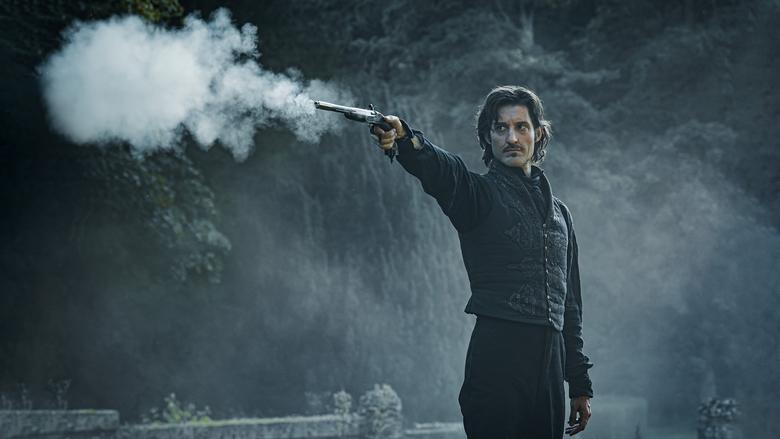
Fernand de Morcerf, who married Mercédès and built a celebrated military career, is exposed as a traitor. The Count brings Haydée, the daughter of the Ali Pasha of Janina, to Paris. He encourages her to tell the story of how a French officer betrayed her father to his enemies and sold her and her mother into slavery. This officer is revealed to be Fernand. His son, Albert, feeling his family's honor has been besmirched by the Count's machinations, challenges him to a duel. To save her son, Mercédès confronts the Count, pleading with him and confirming she knows his true identity. Edmond agrees to spare Albert. After learning the truth about his father, Albert renounces him, and Mercédès leaves Fernand. Utterly disgraced and abandoned, Fernand confronts Edmond. They engage in a final, brutal duel. Edmond emerges victorious but chooses not to kill Fernand, telling him that death would be a form of forgiveness. He leaves Fernand to live with his dishonor.
The ending sees Edmond having successfully completed his revenge, but at a great personal cost, as Haydée is devastated by Andrea's death and initially blames the Count. He is left to ponder the path he has taken. In a departure from the novel, the film's conclusion is more solitary. Edmond sails away, leaving a letter for Mercédès, having to live with the consequences of his all-consuming quest. The hidden meaning is that while he achieved his revenge, he did not find true peace or happiness in the act, but perhaps a chance to start anew, free from the burden of his past.