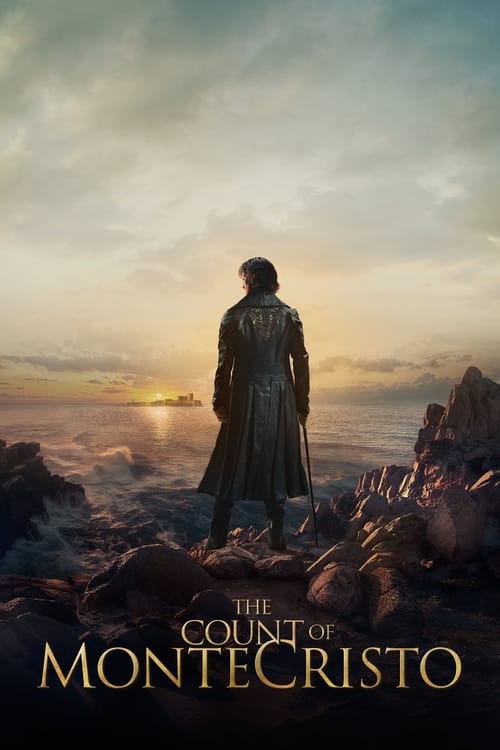
The Count of Monte Cristo
Le Comte de Monte-Cristo
"This is not vengeance, this is justice."
Overview
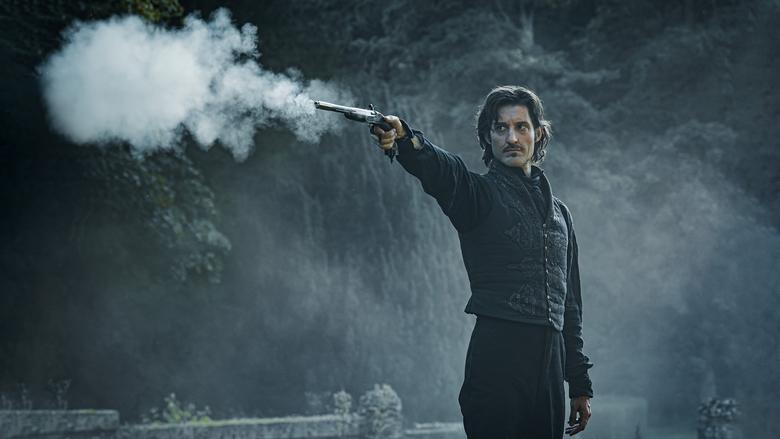
Based on Alexandre Dumas's classic novel, "The Count of Monte Cristo" (2024) is a sprawling French adventure film directed by Alexandre de La Patellière and Matthieu Delaporte. The story begins in 1815 with the promising young sailor Edmond Dantès (Pierre Niney), who is on the verge of marrying his beloved Mercédès (Anaïs Demoustier) and being promoted to captain. However, his bright future is shattered when he is betrayed by those envious of his success: his shipmate Danglars (Patrick Mille), and Fernand de Morcerf (Bastien Bouillon), who is in love with Mercédès. Framed as a Bonapartist traitor, he is condemned without a fair trial by the ambitious prosecutor Gérard de Villefort (Laurent Lafitte) and imprisoned in the infamous Château d'If.
After fourteen agonizing years of captivity, Dantès makes a daring escape. During his imprisonment, he was educated by a fellow inmate, Abbé Faria (Pierfrancesco Favino), who also revealed to him the location of a vast hidden treasure on the island of Monte Cristo. Now possessing immense wealth and knowledge, Dantès reinvents himself as the enigmatic and powerful Count of Monte Cristo. He emerges into Parisian high society with a singular goal: to exact a slow and calculated revenge on the men who destroyed his life and stole everything he held dear.
As the Count, Dantès masterfully manipulates the lives of his enemies, who have since risen to positions of power and influence. He systematically dismantles their fortunes, reputations, and families, using their own greed and corruption against them. His path to vengeance is fraught with moral complexities as he confronts his past love, Mercédès, and questions whether the man he has become is a righteous avenger or a monster consumed by hatred.

Core Meaning
The core meaning of "The Count of Monte Cristo" revolves around the profound and often corrosive nature of revenge. The film explores whether ultimate retribution can truly bring peace or if it inevitably consumes the avenger, transforming him into a reflection of the evil he seeks to punish. Directors Alexandre de La Patellière and Matthieu Delaporte delve into the ethical labyrinth of justice, questioning whether one man has the right to act as an agent of Providence. Beyond a simple tale of vengeance, the film is a meditation on loss, the passage of time, and the possibility of redemption. It poses the question of whether, after being consumed by a quest for destruction, a person can rediscover their humanity and find a new reason to live.
Thematic DNA
Revenge vs. Justice
The central theme is the ambiguous line between justice and revenge. Edmond Dantès initially seeks to right the wrongs committed against him, believing his actions are a form of divine justice. However, his meticulously planned vengeance becomes an all-consuming obsession that brings collateral damage, affecting innocent people connected to his enemies. The film provocatively questions whether his elaborate schemes are a righteous quest for justice or a personal vendetta that mirrors the cruelty of his betrayers, ultimately forcing him to confront the moral cost of his actions.
Transformation and Identity
The film powerfully depicts the theme of transformation. The innocent and optimistic Edmond Dantès is effectively killed in the Château d'If, and from his despair, the cold and calculating Count of Monte Cristo is born. This is not just a change of name and status, but a profound alteration of his soul. Pierre Niney's performance highlights this duality, showing a man who wears a mask of sophistication and power to hide the deep wounds of his past. The narrative explores whether any part of the original Edmond remains and if he can ever reconcile his two identities.
Betrayal and its Consequences
Betrayal is the catalyst for the entire narrative. Dantès is betrayed by his 'friends' out of jealousy, ambition, and romantic rivalry. The film meticulously shows how these acts of treachery fester over time, not only destroying Dantès' life but also setting in motion a chain of events that will ultimately lead to the downfall of the perpetrators. It illustrates how a single act of malice can have far-reaching and devastating consequences, rippling through generations.
Love and Forgiveness
Amidst the dark quest for revenge, themes of love and forgiveness emerge as potential paths to redemption. Dantès's lingering feelings for Mercédès and his growing affection for his ward Haydée represent a connection to his lost humanity. The climax forces him to choose between his destructive path and the possibility of mercy, especially when the lives of the next generation are at stake. The film explores whether forgiveness is possible, not for his enemies, but for himself, to free him from the prison of his own hatred.
Character Analysis
Edmond Dantès / The Count of Monte Cristo
Pierre Niney
Motivation
His primary motivation is to exact a meticulous and devastating revenge on Fernand de Morcerf, Danglars, and Gérard de Villefort, the men who stole his life, his love, and his freedom. He believes he is an instrument of Providence, destined to punish the wicked.
Character Arc
Edmond Dantès begins as a naïve, optimistic young sailor whose life is full of promise. After being brutally betrayed and imprisoned, he undergoes a radical transformation fueled by hatred and a desire for vengeance. He emerges as the sophisticated, cold, and calculating Count of Monte Cristo. His arc is a journey into darkness, where he masterminds the destruction of his enemies, but in doing so, he risks losing his own soul. The final act of the film tests his capacity for mercy, forcing him to decide whether to complete his revenge at all costs or reclaim a part of his lost humanity.
Fernand de Morcerf
Bastien Bouillon
Motivation
His motivations are rooted in jealousy of Edmond's success and an obsessive love for his cousin, Mercédès. He is willing to do anything to possess her and remove Edmond from the picture.
Character Arc
Fernand starts as Edmond's friend and Mercédès's cousin, secretly harboring a deep jealousy and unrequited love. His betrayal of Edmond allows him to marry Mercédès and achieve high military rank and social standing. However, his life is built on a foundation of lies. His arc is one of ascent followed by a precipitous fall, as the Count exposes his past treachery and strips him of his honor, wealth, and family, leaving him a broken man.
Mercédès de Morcerf
Anaïs Demoustier
Motivation
Initially motivated by her deep love for Edmond, she is later driven by a desire for stability and the protection of her son, Albert. Her actions are often a result of despair and resignation to what she believes is her fate.
Character Arc
Mercédès is Edmond's devoted fiancée at the beginning of the film. After his disappearance and presumed death, she marries Fernand. She lives a life of privilege but is haunted by the loss of Edmond. Her arc is one of quiet suffering and compromise. When she encounters the Count of Monte Cristo, she is the first to recognize him. This realization forces her to confront the choices she made and ultimately leads her to leave Fernand and renounce the life built on his betrayal.
Gérard de Villefort
Laurent Lafitte
Motivation
His primary motivation is personal ambition and self-preservation. He is ruthless in eliminating any threat to his career and social standing, showing no regard for true justice.
Character Arc
Villefort is an ambitious and morally bankrupt prosecutor who condemns Edmond to prison to protect his own political career and cover up his family's Bonapartist connections. He rises to become a powerful judge. His arc is one of hubris leading to destruction. The Count orchestrates his downfall by exposing a dark secret from his past: an illegitimate son he tried to bury alive. This public humiliation shatters his reputation and leads to his ruin.
Abbé Faria
Pierfrancesco Favino
Motivation
Faria is motivated by a thirst for knowledge and a desire for freedom. He sees in Edmond a worthy successor to his knowledge and wealth, and a son he never had.
Character Arc
Abbé Faria is a scholarly priest and fellow prisoner at the Château d'If. He becomes Edmond's mentor, educating him in science, languages, and culture, and helping him deduce the identity of his betrayers. Faria's death during a failed escape attempt is a pivotal moment that solidifies Edmond's resolve. Though his physical presence is limited, his influence shapes the entirety of Edmond's transformation into the Count, providing him with the intellectual tools and the financial means (the treasure) to enact his revenge.
Symbols & Motifs
The Château d'If
The Château d'If symbolizes a tomb and a womb. It is the place where Edmond Dantès's youthful innocence dies, a living tomb where he is stripped of his identity and hope. Simultaneously, it is the womb from which the Count of Monte Cristo is born, a place of profound transformation through suffering and education by Abbé Faria.
The film depicts the prison with grim, claustrophobic cinematography, emphasizing its role in Dantès's psychological and physical torment. His dramatic escape from the fortress, sewn into a burial sack and thrown into the sea, is a powerful visual metaphor for his death and rebirth.
The Island of Monte Cristo and its Treasure
The island and its treasure represent the means to power and the physical manifestation of Dantès's rebirth. The immense wealth allows him to create the persona of the Count and infiltrate the society of his enemies. The treasure is not just material; it's also the knowledge imparted by Faria, which is the true source of his power.
The discovery of the treasure is a pivotal moment, visually depicted as a near-religious experience. From this point on, Dantès uses this wealth as his primary weapon, orchestrating financial ruin and social upheaval for his foes.
The Count's Disguises and Masks
The various disguises and, in this version, a physical mask used by the Count symbolize his fragmented identity and his deliberate separation from his past self, Edmond Dantès. The mask literally hides his face, allowing him to operate with impunity, but it also represents the emotional mask he wears to conceal his pain and humanity. Actor Pierre Niney noted that finding the final face of the Count was key to finding the character.
Throughout the film, Dantès assumes multiple identities to manipulate his enemies. The most prominent is the porcelain-like mask he wears as the Count, which gives him an almost inhuman appearance, reflecting his detachment from the world and his singular focus on revenge.
Philosophical Questions
At what point does justice become revenge?
The film constantly blurs the line between these two concepts. Dantès is undeniably a victim of a profound injustice. His initial goal is to see his betrayers punished, a form of justice the legal system denied him. However, the sheer scale, meticulous cruelty, and personal satisfaction he takes in their destruction push his actions deep into the realm of revenge. The film explores this through the collateral damage of his schemes, forcing the audience to question if his actions are morally justifiable, even if his enemies deserve their fate.
Can a person be reborn from suffering, or are they forever defined by it?
Dantès's transformation in prison is central to this question. Abbé Faria gives him the tools for a new life—education and wealth. Yet, Dantès uses this rebirth not to build a new life of happiness but to fuel a quest for destruction rooted in his past suffering. The film investigates whether his identity as the Count is a true reinvention or simply a mask for the broken prisoner he remains inside. His final moments suggest that only by letting go of his all-consuming quest can he truly begin to live again, implying that one must actively choose to move beyond trauma.
Is it possible to be an agent of Providence without becoming a monster?
Dantès often sees himself as an instrument of divine will, a force sent to punish the wicked. This belief gives him the moral justification for his ruthless actions. The film challenges this self-perception by showing the human cost of his plans, particularly the suffering of those who are peripherally involved. It raises the question of whether any human being can wield such power over the lives of others without being corrupted by it, suggesting that playing God inevitably leads to a loss of one's own humanity.
Alternative Interpretations
While the film is largely a straightforward narrative of revenge, different interpretations have emerged regarding its thematic focus and character motivations.
One interpretation sees the film as a critique of the justice system itself. Dantès becomes a vigilante precisely because the official legal system is corrupt and serves the powerful. His actions, though extreme, can be read as a necessary corrective to a society where justice is for sale. In this view, he is less a monster and more a revolutionary figure challenging a broken system.
Another perspective focuses on the psychological cost of revenge. Some viewers and critics argue that the film's primary message is a cautionary one, demonstrating that a quest for vengeance ultimately leads to self-destruction and isolation. Dantès achieves his goals but is left emotionally scarred and alone at the end, suggesting that his victory is a hollow one. His choice to spare Fernand at the very end is not an act of forgiveness but a crueler punishment: forcing him to live with his disgrace.
A more critical interpretation suggests the film glorifies its 'superhero' protagonist too much, sanding off the darker, more morally ambiguous edges of the novel. Some who are very familiar with the book argue that by making Dantès a more overtly heroic, almost Marvel-esque figure, the adaptation loses some of the novel's complex exploration of whether the Count truly becomes a villain himself. The introduction of the character Angèle, not present in the book, and the modification of Villefort's character were seen by some as creating a more cartoonishly evil villain, thereby making Dantès's revenge feel more justified and less morally complex.
Cultural Impact
Released in 2024, "The Count of Monte Cristo" made a significant cultural impact, particularly in its native France, where it was hailed as a triumphant return of the grand historical epic. The film's creation came in the wake of the success of "The Three Musketeers" adaptation by the same writers, signaling a renewed appetite for large-scale, lavish productions of France's literary heritage, proving that such films could compete with Hollywood blockbusters.
Critically, the film was widely praised upon its premiere at the Cannes Film Festival and continued to receive positive reviews for its ambitious scope, stunning cinematography, and Pierre Niney's compelling lead performance. It was celebrated as a faithful yet modern take on the classic novel, capturing its spirit while streamlining the dense plot for contemporary audiences.
The audience reception was overwhelmingly positive, leading to enormous box office success in France and strong international sales. It became one of the most-watched French films of all time, demonstrating the enduring appeal of Dumas's story of revenge and redemption. The film's popularity also had a tangible effect on cultural tourism, boosting visitor numbers to key locations from the novel.
Philosophically, the film reignited discussions about the timeless themes of justice, vengeance, and forgiveness. Its portrayal of a tormented antihero resonated with modern sensibilities, leading to comparisons with contemporary figures like Batman and sparking conversations about the morality of vigilantism.
Audience Reception
The audience reception for "The Count of Monte Cristo" was overwhelmingly positive, contributing to its massive success at the French box office and strong performance internationally. Viewers widely praised the film as a spectacular and engrossing epic, celebrating its grand scale, beautiful cinematography, and lavish production design that felt like a return to classic adventure cinema.
Pierre Niney's performance as Edmond Dantès was a frequent highlight in audience reviews, with many lauding his ability to portray the character's dramatic transformation from an innocent young man to a cold, vengeful antihero. The supporting cast was also well-received. Many viewers found the nearly three-hour runtime to be well-paced and engaging, with every moment serving the complex narrative.
The main points of criticism, particularly from purists of Dumas's novel, centered on deviations from the source material. Some felt that streamlining the complex plot and consolidating characters, while necessary for a film adaptation, led to a loss of nuance. A few viewers found the portrayal of the villains to be overly cartoonish, which in their view, lessened the moral ambiguity of Dantès's revenge. However, these criticisms were generally in the minority, with most of the audience embracing the film as a powerful and faithful-in-spirit adaptation.
Interesting Facts
- The film had its world premiere at the 77th Cannes Film Festival on May 22, 2024, where it received a standing ovation that lasted nearly 11-12 minutes.
- With an estimated budget of €42.9 million, it was the most expensive French production of 2024.
- The film was a massive box office success in France, selling over 9 million tickets and becoming the second highest-grossing film of the year in the country.
- The directing and writing duo, Matthieu Delaporte and Alexandre de La Patellière, also wrote the successful two-part 2023 adaptation of another Alexandre Dumas classic, "The Three Musketeers".
- Actor Pierre Niney underwent extensive preparation for the role, including hours of makeup and prosthetics to portray the transformation of Edmond Dantès into the Count. He considered the role the French equivalent of playing Hamlet.
- Niney has said he found inspiration for the Count's altered voice from Batman, wanting to sound like someone who had lived many lives.
- The film's score was composed by Jérôme Rebotier and recorded in London.
- The movie's success led to a noticeable increase in tourism to the real Château d'If and Alexandre Dumas's home, the Château de Monte-Cristo.
Easter Eggs
Batman/Superhero Allusions
Several critics and even the filmmakers have drawn parallels between the Count and modern superheroes, particularly Batman. A man who suffers a great tragedy, uses immense wealth to create an alternate persona, and operates as a vigilante outside the law to bring his own form of justice to a corrupt society. Pierre Niney himself mentioned that he thought of the Count as 'Batman's ancestor' when developing the character's deeper voice.
⚠️ Spoiler Analysis
Click to reveal detailed analysis with spoilers
Frequently Asked Questions
Explore More About This Movie
Dive deeper into specific aspects of the movie with our detailed analysis pages
Comments (0)
No comments yet. Be the first to share your thoughts!