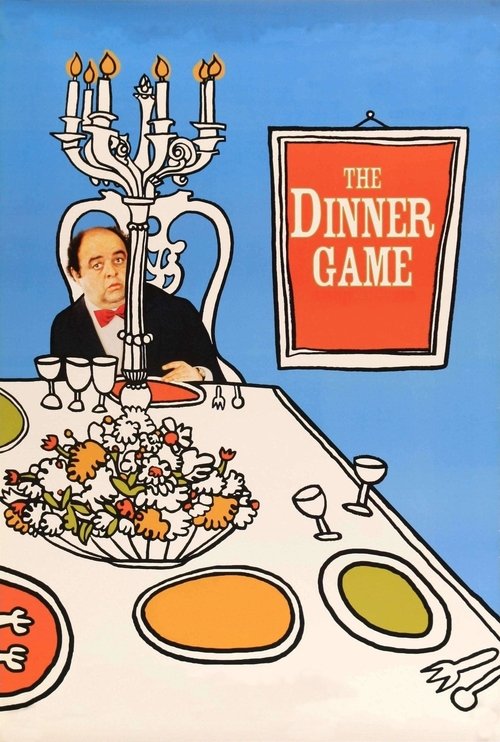
Le Dîner de cons
"A feast for the senseless."
The Dinner Game - Symbolism & Philosophy
Symbols & Motifs
Matchstick Models
Symbolizes Pignon's patience, simplicity, and purity of heart. Unlike Brochant's cynical world, Pignon's hobby is constructive and requires dedication. It represents a fragile beauty that Brochant initially despises but eventually destroys (symbolically and literally).
Pignon proudly displays his 346,422-matchstick Eiffel Tower to Brochant, who mocks it. Later, it stands as a testament to Pignon's lonely but creative soul.
The Telephone
The instrument of destruction and chaos. It represents communication, which Pignon consistently fails at in social contexts but dominates as a tool of unintentional sabotage.
Almost all the major plot twists occur via telephone calls made from Brochant's living room, where Pignon misinterprets instructions, impersonates people poorly, or reveals secrets.
The Absent Dinner
The dinner itself never happens on screen. It symbolizes the elusive nature of the "game" and the void at the center of Brochant's social life. The real dinner of fools happens in the apartment, with Brochant as the main course.
The entire film is structured around the anticipation of this event that is cancelled, shifting the "theater of cruelty" to Brochant's own home.
Philosophical Questions
Is it ethical to mock the simple-minded for entertainment?
The film explores the cruelty inherent in the "Dinner Game." It forces the audience to laugh at Pignon while simultaneously condemning Brochant for doing the same, creating a tension between being an observer and a participant in the mockery.
Who defines what constitutes an 'idiot'?
The film posits that intelligence is not just intellectual capacity but emotional wisdom. Brochant is 'smart' but socially destructive and morally bankrupt. Pignon is 'dumb' but emotionally sincere. The film asks if the true idiot is the one who cannot build a matchstick tower, or the one who destroys his own life through arrogance.
Core Meaning
The film serves as a biting satire on social elitism and the definition of intelligence. Director Francis Veber illustrates that intellectual superiority does not equate to moral superiority. While Pignon is socially awkward and simplistic, he possesses a genuine heart and loyalty that the sophisticated Brochant lacks. The core message is one of karmic reversal: the arrogance of the elite (Brochant) is their true foolishness, while the "idiot" (Pignon) becomes the unwitting agent of justice, exposing the hollowness and cruelty of Brochant's existence.