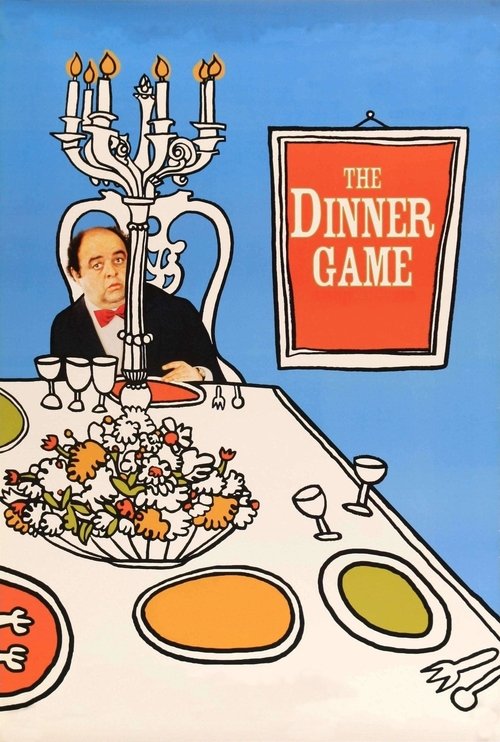
The Dinner Game
Le Dîner de cons
"A feast for the senseless."
Overview
Pierre Brochant, a wealthy and arrogant Parisian publisher, participates in a cruel weekly ritual known as a "dinner for idiots" (un dîner de cons). The concept is simple: each guest must bring an eccentric "idiot" to the dinner to be mocked by the group, unbeknownst to the victim. The one who brings the most spectacular idiot wins. Brochant is ecstatic to have found a "world-class" champion: François Pignon, a sweet-natured employee of the Finance Ministry obsessed with building replicas of landmarks out of matchsticks.
However, catastrophe strikes before the dinner even begins. Brochant suffers a debilitating back injury and is trapped in his apartment. When Pignon arrives to escort him, Brochant's wife Christine leaves him in disgust over his cruelty. Desperate to save his marriage, Brochant is forced to rely on the clumsy Pignon to help him contact her. What follows is a relentless spiral of disasters as Pignon's well-intentioned blunders destroy Brochant's life, revealing his mistress to his wife, inviting a tax inspector to his home, and stripping away his dignity layer by layer.
Core Meaning
The film serves as a biting satire on social elitism and the definition of intelligence. Director Francis Veber illustrates that intellectual superiority does not equate to moral superiority. While Pignon is socially awkward and simplistic, he possesses a genuine heart and loyalty that the sophisticated Brochant lacks. The core message is one of karmic reversal: the arrogance of the elite (Brochant) is their true foolishness, while the "idiot" (Pignon) becomes the unwitting agent of justice, exposing the hollowness and cruelty of Brochant's existence.
Thematic DNA
The Subjectivity of Idiocy
The film constantly questions who the real "con" (idiot/asshole) is. While Pignon is an idiot in terms of social cues and obsession, Brochant is a moral idiot for his cruelty. The narrative flips the power dynamic, showing Pignon's humanity triumphing over Brochant's cynicism.
Cruelty and Karma
The entire plot is a machine of poetic justice. Brochant intends to exploit Pignon for a laugh, but instead, Pignon unintentionally punishes Brochant for his malice. Every injury Brochant suffers is a direct result of inviting Pignon into his life.
Class and Intellectual Arrogance
The conflict is driven by the clash between the bourgeois Parisian elite and the working-class "everyman." The dinner itself is a symbol of class contempt, and the film takes pleasure in dismantling the protected world of the wealthy through the chaotic intervention of the "little man."
Unlikely Friendship and Solitude
Beneath the farce lies a layer of melancholy. Both men are, in their own ways, solitary figures. Pignon's obsession stems from his wife leaving him, mirroring Brochant's situation. For a brief moment, they bond over their shared heartbreak, suggesting a potential connection that arrogance had previously made impossible.
Character Analysis
Pierre Brochant
Thierry Lhermitte
Motivation
To win the "Dinner of Idiots" competition and prove his superior wit to his friends; later, to save his marriage.
Character Arc
Starts as a smug, cruel predator looking for entertainment. Through physical pain and emotional humiliation, he is stripped of his wife, his mistress, and his dignity. He briefly gains self-awareness and gratitude towards Pignon, only to be crushed again by a final blunder.
François Pignon
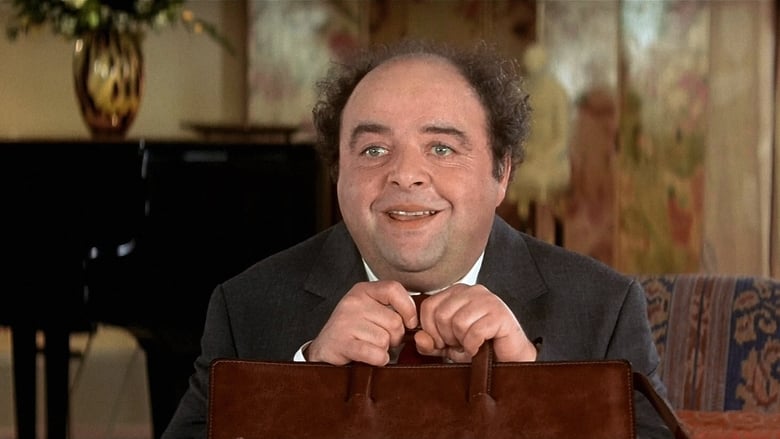
Jacques Villeret
Motivation
To be helpful to his new "friend" Pierre and to share his passion for matchstick models.
Character Arc
Remains largely static in his nature—kind, helpful, and clumsy—but his impact on the world around him is cataclysmic. He moves from being a victim to an accidental avenger, eventually realizing the cruelty of the dinner but forgiving Brochant.
Juste Leblanc
Francis Huster
Motivation
To watch Brochant suffer (initially) and then to help resolve the chaos.
Character Arc
Acts as a foil to Brochant, having previously suffered Brochant's betrayal (Brochant stole his wife). He enjoys Brochant's suffering but ultimately helps him, serving as a bridge between the two main characters.
Lucien Cheval
Daniel Prévost
Motivation
To help a friend (Pignon) and punish tax evaders.
Character Arc
Enters as a colleague of Pignon to help, but transforms into a terrifying antagonist for Brochant when he reveals his identity as a relentless tax inspector.
Symbols & Motifs
Matchstick Models
Symbolizes Pignon's patience, simplicity, and purity of heart. Unlike Brochant's cynical world, Pignon's hobby is constructive and requires dedication. It represents a fragile beauty that Brochant initially despises but eventually destroys (symbolically and literally).
Pignon proudly displays his 346,422-matchstick Eiffel Tower to Brochant, who mocks it. Later, it stands as a testament to Pignon's lonely but creative soul.
The Telephone
The instrument of destruction and chaos. It represents communication, which Pignon consistently fails at in social contexts but dominates as a tool of unintentional sabotage.
Almost all the major plot twists occur via telephone calls made from Brochant's living room, where Pignon misinterprets instructions, impersonates people poorly, or reveals secrets.
The Absent Dinner
The dinner itself never happens on screen. It symbolizes the elusive nature of the "game" and the void at the center of Brochant's social life. The real dinner of fools happens in the apartment, with Brochant as the main course.
The entire film is structured around the anticipation of this event that is cancelled, shifting the "theater of cruelty" to Brochant's own home.
Memorable Quotes
Il s'appelle Juste Leblanc.
— Pierre Brochant
Context:
Brochant tries to explain who is coming to visit. Pignon asks, "Ah bon, il n'a pas de prénom ?" (Oh, he doesn't have a first name?), thinking Brochant said "He is just Leblanc."
Meaning:
A linguistic masterpiece of confusion. Pignon thinks "Juste" is an adjective (meaning "just" or "only") rather than a first name, leading to an endless loop of misunderstanding.
Ah ! La boulette !
— François Pignon
Context:
uttered after he accidentally reveals the existence of the mistress to the wife, or commits other major gaffes.
Meaning:
Pignon's catchphrase of realization when he understands he has made a colossal mistake. It underscores his innocence—he never means harm, he just commits "blunders."
C'est un as !
— Pierre Brochant
Context:
Brochant is on the phone describing his "find" before Pignon arrives.
Meaning:
Brochant describes Pignon's level of idiocy to his friends. It highlights the dehumanizing way the elite view their "guests"—as champions in a sport of stupidity.
On a les droits ! On a les droits !
— François Pignon
Context:
After a phone call where Pignon pretends to be a producer to fool the wife but fails miserably by being too enthusiastic.
Meaning:
Pignon celebrates believing he has secured the film rights to a book, not realizing he has actually just destroyed Brochant's cover story to his wife.
Philosophical Questions
Is it ethical to mock the simple-minded for entertainment?
The film explores the cruelty inherent in the "Dinner Game." It forces the audience to laugh at Pignon while simultaneously condemning Brochant for doing the same, creating a tension between being an observer and a participant in the mockery.
Who defines what constitutes an 'idiot'?
The film posits that intelligence is not just intellectual capacity but emotional wisdom. Brochant is 'smart' but socially destructive and morally bankrupt. Pignon is 'dumb' but emotionally sincere. The film asks if the true idiot is the one who cannot build a matchstick tower, or the one who destroys his own life through arrogance.
Alternative Interpretations
While typically viewed as a straightforward comedy, some critics interpret the film as a tragedy of loneliness. Pignon is desperate for connection, which makes him vulnerable to exploitation. Brochant is surrounded by "friends" who are actually rivals and judges. Another reading suggests it is a subversive class war piece, where the working-class Pignon systematically dismantles the bourgeois accumulation of wealth (tax evasion), status (the dinner), and family (adultery), leaving the aristocrat with nothing.
Cultural Impact
Le Dîner de cons is a monument of French popular culture. Upon its release in 1998, it became a social phenomenon, with its dialogue entering the everyday lexicon of French speakers. It solidified the "Pignon" archetype as the definitive French "idiot"—sympathetic yet destructive. The film is frequently cited as the gold standard for stage-to-screen adaptations, proving that sharp dialogue and acting can sustain a film without elaborate sets. It also sparked conversations about the ethics of bullying disguised as humor ("moquerie"), forcing audiences to examine their own complicity in laughing at others.
Audience Reception
The film received near-universal acclaim from both critics and audiences in France and internationally. Viewers praised the chemistry between Villeret and Lhermitte, the clockwork precision of the script, and the masterful comic timing. The "Juste Leblanc" scene is legendary. Criticism is sparse but occasionally notes the film's theatrical static nature (it feels like a filmed play) and some viewers find the premise too cruel to be comfortable, though most agree the ending provides sufficient comeuppance.
Interesting Facts
- The film is based on Francis Veber's own 1993 play of the same name, which also starred Jacques Villeret as Pignon.
- Jacques Villeret won the César Award for Best Actor for his performance, a rare feat for a comedic role.
- The character name 'François Pignon' is a recurring name in Francis Veber's films (appearing in Les Compères, L'Emmerdeur, Le Placard), always denoting a naive outsider.
- The film drew over 9 million viewers in France, making it one of the most successful French films of all time.
- An American remake was released in 2010 titled Dinner for Schmucks, starring Steve Carell and Paul Rudd.
- Despite the title, the actual 'dinner' never takes place in the movie; the entire film is a 'huis clos' (chamber piece) in the apartment.
- The 'Juste Leblanc' scene is considered one of the greatest sketches in French comedy history, often compared to Abbott and Costello's 'Who's on First?'.
Easter Eggs
The 'Pignon' Universe
The name François Pignon connects this film to a wider 'Veber-verse.' While the characters have different backstories in each film, they represent the same archetype of the 'annoying little man' who destroys the hero's life.
Lucien Cheval's Football Obsession
The tax inspector is an avid football fan (supporting OM - Olympique de Marseille), adding a layer of tribal realism to his character and contrasting with Brochant's high-culture snobbery.
⚠️ Spoiler Analysis
Click to reveal detailed analysis with spoilers
Frequently Asked Questions
Explore More About This Movie
Dive deeper into specific aspects of the movie with our detailed analysis pages
Comments (0)
No comments yet. Be the first to share your thoughts!