Full spoilers follow.
The origin. Sadimin, the ambitious patriarch of a struggling jamu dynasty, develops a new herbal formula he names Abadi Nan Jaya. It works: those who drink it look visibly younger. What it also contains is a hidden pathogen. Sadimin becomes Patient Zero, and the tonic that was meant to rescue the family business instead seeds a zombie outbreak that spreads out from the household into rural Java.
The structural point is that the disaster is not an accident of contamination but a direct consequence of intention. Sadimin was not trying to make medicine; he was trying to buy time, for the company and for himself. The pathogen is what the shortcut costs.
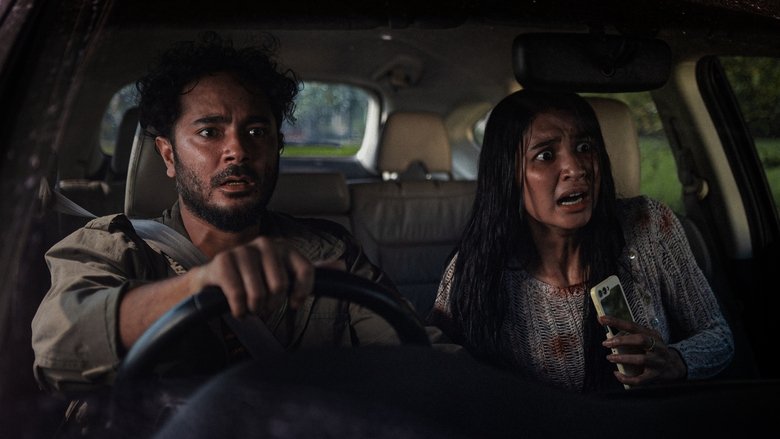
The domestic detonation. Everything that goes wrong once the infection begins was already loaded before it. Kenes and Rudi arrive with their son Raihan mid-collapse — Rudi's affair has pushed them to the brink of divorce. Bang is an entitled non-contributor circling the inheritance. Karina, Sadimin's new wife, is treated as an interloper. The outbreak simply removes the social constraints that were keeping these people from acting on what they already felt.
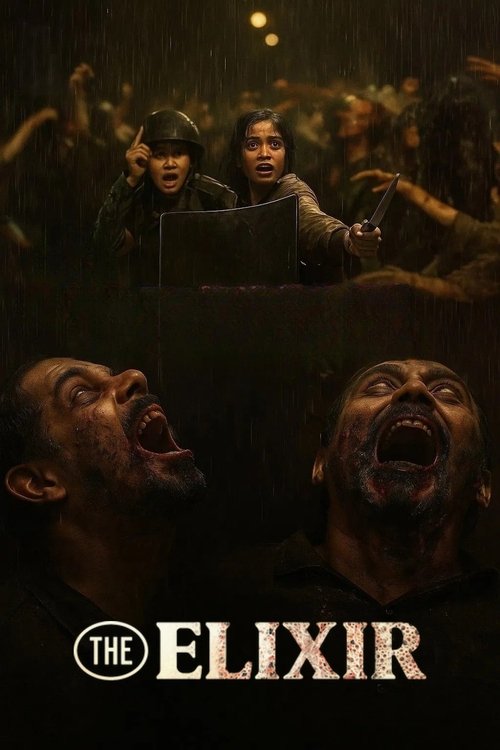
The rules. The film's signature invention is the rain. Contact with rainfall doesn't kill the infected but suspends them, leaving them caught in a limbo, limbs twitching in time with the falling drops. It converts weather into strategy and provides the film's most unsettling imagery — a village full of bodies dancing to a downpour.
The ending. The final act is punishing. The film comes very close to killing everyone and stops just short, landing on an ending widely described as bleak and bittersweet rather than triumphant. Its decisive turn belongs to Kenes: having fought through the whole ordeal as the family's one functional protector, she realises she has been infected.
This retroactively reframes the film. Kenes' entire arc has been about refusing to inherit her father's failures — his selfishness, his shortcuts, his hunger. The infection is the inheritance she cannot refuse. She receives, biologically, exactly what Sadimin wanted: the thing in the bottle, working inside her. It is the film's cruellest irony that the only person who understood the danger is the one who ends up carrying it.
The final figure. The closing moments introduce a mysterious woman whose identity the film does not spell out, and who became the film's most-discussed ambiguity. She functions simultaneously as an unresolved threat, a suggestion that the contagion has already travelled beyond the village, and an implication that the elixir's story is larger and older than one family's ambition — that Sadimin may have been a vector rather than an author.