"The Empire Strikes Back" delves into the complexities of good versus evil, suggesting that the line between them is not always clear. The film posits that the potential for both light and darkness exists within everyone, a concept symbolically represented when Luke sees his own face inside Darth Vader's helmet during a vision. It is a story about maturation and the painful trials one must endure to grow. The director, Irvin Kershner, wanted to explore the idea that in the face of overwhelming despair, true character is forged. The film's core message is one of perseverance and hope, even in the darkest of times, emphasizing that victory is not always immediate or easy, and that setbacks are an integral part of the journey to ultimate triumph.
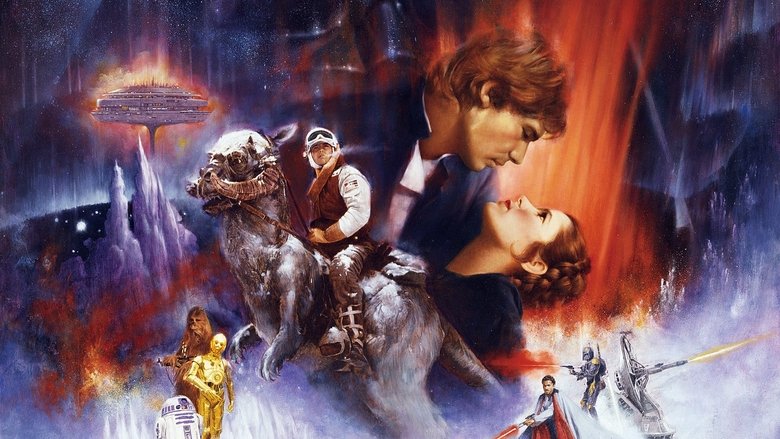
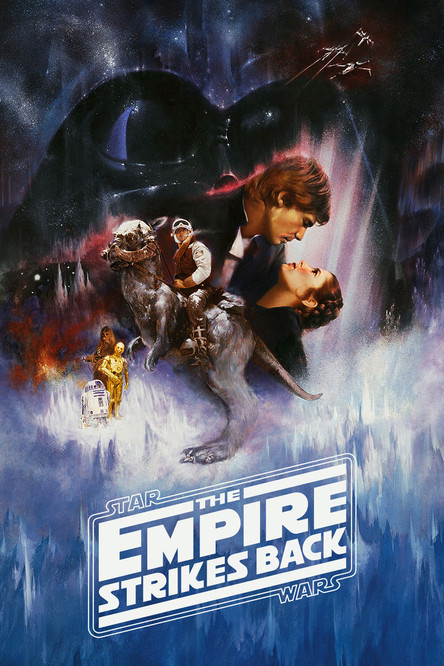
"The Star Wars saga continues."
Director: Irvin Kershner
Cast: Mark Hamill, Harrison Ford, Carrie Fisher, Billy Dee Williams, Anthony Daniels
The Empire Strikes Back — Symbolism & Philosophy
Symbols & Motifs
The Cave on Dagobah
The cave represents a journey into the subconscious and a confrontation with one's inner darkness. It symbolizes the idea that the greatest enemy often lies within. By entering the cave, Luke is forced to face his fears and the potential for him to turn to the dark side.
During his training with Yoda, Luke is instructed to enter a cave that is strong with the dark side of the Force. Inside, he has a vision of Darth Vader and, after striking him down, sees his own face in Vader's shattered helmet, foreshadowing their connection and his own potential for darkness.
Lightsabers
The color of a lightsaber is symbolic of its wielder's allegiance. Luke's blue lightsaber represents the Jedi and the side of good, while Darth Vader's red lightsaber symbolizes the Sith and the dark side. The clash of these two colors visually represents the central conflict of the film.
Lightsabers are used in the pivotal duel between Luke Skywalker and Darth Vader. The fight is not just a physical battle but an ideological one, with each combatant wielding a weapon that signifies their connection to the Force.
Hoth
The icy, desolate landscape of Hoth symbolizes the dire situation of the Rebel Alliance. The stark white environment reflects a sense of isolation and the seemingly insurmountable odds they face against the Empire.
The film opens on the planet Hoth, where the Rebels have established a secret base. The Empire's discovery of this base and the subsequent battle force the Rebels to flee, emphasizing their vulnerability and the beginning of a dark chapter for the heroes.
Darth Vader's Helmet
Darth Vader's helmet and armor symbolize his loss of humanity and his transformation into a tool of the dark side. The brief glimpse of his scarred head beneath the helmet offers a hint of the man he once was, adding a layer of tragedy to his character.
Throughout the film, Vader is an intimidating, faceless presence. The scene where he is in his meditation chamber and his helmet is lowered onto his head provides a rare moment of vulnerability, reminding the audience that there is a damaged human being inside the machine.
Philosophical Questions
Does destiny control our lives, or do we have the freedom to choose our own path?
The film explores this question through Luke Skywalker's journey. He is told by Obi-Wan and Yoda that he is the galaxy's last hope and that he has a destiny to fulfill. However, he is also warned about the choices he will have to make and the temptation of the dark side. His decision to leave Dagobah to save his friends is a clear example of him exercising his free will, even if it goes against the guidance of his mentors and potentially jeopardizes his destiny. The tension between what is foretold and what is chosen is a central theme of the film.
What is the nature of good and evil?
"The Empire Strikes Back" presents a more nuanced view of good and evil than its predecessor. It suggests that the potential for both exists within individuals. Luke's vision in the cave, where he sees his own face in Vader's helmet, implies that he could succumb to the dark side. The revelation that Vader is Luke's father further blurs the lines, showing that the embodiment of evil was once a good man. This raises the question of whether anyone is truly beyond redemption, a theme that would be more fully explored in the next film.
What is the role of faith and belief in overcoming obstacles?
The concept of faith is central to Luke's Jedi training. Yoda emphasizes the importance of believing in oneself and the Force to accomplish the seemingly impossible. Luke's failure to lift his X-wing from the swamp is attributed to his lack of belief. Yoda's famous line, 'Do. Or do not. There is no try,' underscores the idea that true commitment and faith are necessary for success. This theme is not just limited to the Force but can be seen as a broader commentary on the power of belief in overcoming any challenge.
Core Meaning
Explore More About This Movie
Dive deeper into specific aspects of the movie with our detailed analysis pages