
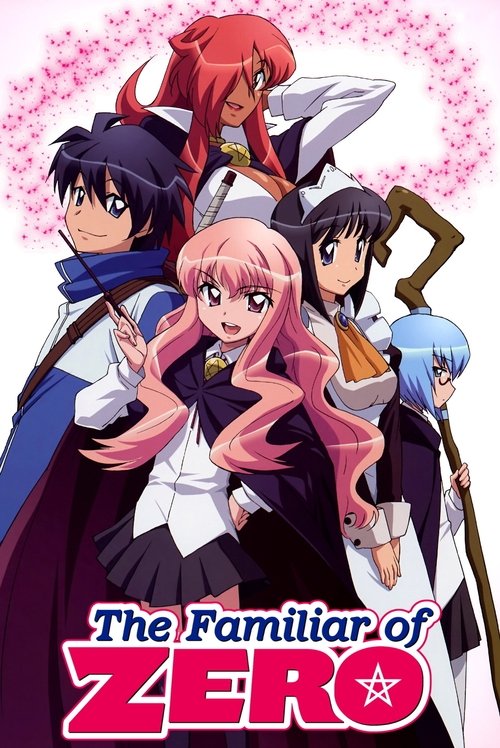
"The Familiar of Zero's" overarching plot is driven by the true nature of Louise and Saito's powers. Louise is not a failure as a mage; she is one of four legendary "Void Mages," whose power is so immense it cannot be controlled through the four standard elements. Her "failures" are actually misfired spells of incredible power. This is why she was able to summon a familiar from another world, something unheard of.
Saito is not just any human; he is the legendary familiar known as "Gandalfr," whose destiny is to be the partner and protector of a Void Mage. The runes on his hand grant him the supernatural ability to master any weapon he touches. Throughout the series, other Void Mages and their familiars are revealed. For instance, the Pope of Romalia is a Void Mage, and his familiar, Julio, possesses the power of "Windalfr," the ability to control magical beasts.
A major plot twist involves the death and resurrection of Saito at the end of Season 2. After sacrificing himself to hold off an army, he is brought back to life by Tiffania, a half-elf who is later revealed to also be a Void Mage. This event deepens his bond with Louise but also ties his life force to Tiffania, adding another layer of complexity to their relationships. Tiffania's Void ability is the power of oblivion, capable of erasing memories.
The series finale reveals the ultimate purpose of the Void Mages. They were created by the founder of magic, Brimir, to pilot a powerful spell to take his people to the Holy Land—which is revealed to be Earth. The final antagonist is an ancient dragon that threatens to destroy the world. Saito, using his Gandalfr ability to pilot a modern fighter jet summoned from Earth, engages the dragon in a final battle. After defeating it, the portal collapses, leaving him stranded. In a final, desperate act of love, Louise channels all her power to open a gateway to Earth, finds Saito, and after a brief visit to his home in Tokyo, they use the last of the portal's energy to return to Halkeginia together, where they finally marry. The anime's ending is unique to the show, providing a conclusive romantic finish before the source material was completed.