Skip to content
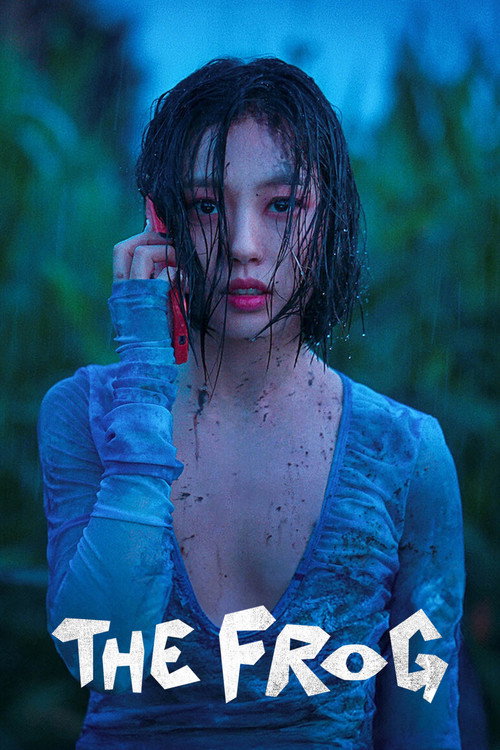
The Frog
A suffocating psychological neo-noir steeped in creeping dread, where innocent lives unravel like splintered glass beneath the quiet canopy of an uncaring forest.
The Frog

The Frog

아무도 없는 숲속에서

"Dear guest, you are not welcome."

23 August 2024 — 23 August 2024 South Korea 1 season 8 episode Ended 7.3 (139)

Cast: Kim Yun-seok, Go Min-si, Lee Jung-eun, Roh Yoon-seo, Park Ji-hwan

Drama Crime Mystery The Plight of Collateral Victims ("The Frogs") The Moral Paralysis of Willful Blindness & Complicity The Lingering Echoes of Trauma Across Time The Entitlement of Destructive Privilege vs. Common Decency

Overview

The Frog (아무도 없는 숲속에서, literally "In the Forest Where No One Is") is an eight-episode psychological mystery-crime thriller created for Netflix, directed by Mo Wan-il (The World of the Married) and written by Son Ho-young. The limited series operates across two parallel timelines set twenty years apart within the same rural South Korean region, exploring the lives of two ordinary men whose worlds collapse after encountering uninvited guests harboring monstrous secrets.

In the early 2000s, Koo Sang-jun (Yoon Kye-sang) runs the scenic Lake View Motel with his wife and young son. On a torrential summer night, he generously welcomes a stranded motorist who turns out to be a notorious serial killer. The fallout of the heinous crime committed inside one of his rooms decimates the motel's reputation, fractures his family, and plunges Sang-jun into relentless ruin and mental devastation.

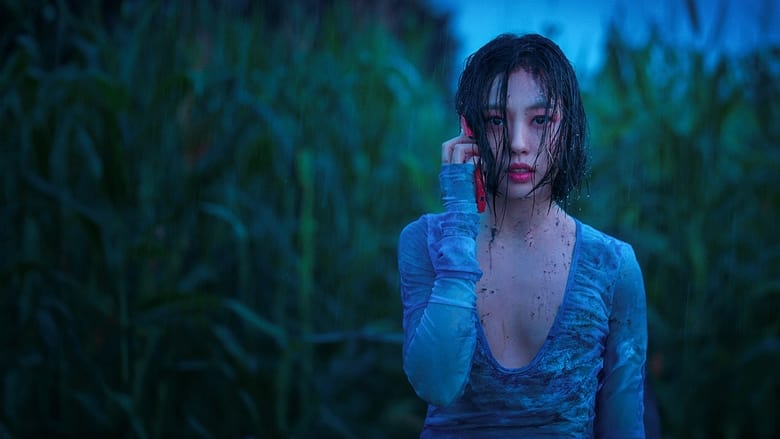
In the early 2020s, Jeon Yeong-ha (Kim Yoon-seok), a retired former doctor grieving the loss of his late wife, manages a secluded vacation rental home deep in the forest. His quiet life is violently destabilized when a mysterious, affluent woman named Yoo Seong-a (Go Min-si) checks in with a young boy—and departs alone, leaving behind traces of blood and suspicious cleanup. Connected across decades by seasoned detective Yoon Bo-min (Lee Jung-eun / Ha Yoon-kyung), the narrative examines how these two men confront catastrophe, guilt, and the inescapable ripples of violence.


Core Meaning

The fundamental thesis of The Frog is encapsulated by the traditional Korean proverb: "A frog dies from a stone thrown inadvertently". While conventional crime media fixates on perpetrators and direct victims, The Frog directs its lens toward the "secondary victims"—the collateral casualties ("frogs") whose lives, families, and sanity are destroyed simply by being in the path of someone else's malice.

By intertwining this proverb with George Berkeley's philosophical paradox—"If a tree falls in a forest and no one is around to hear it, does it make a sound?"—the creators explore the devastating weight of unseen tragedy, the moral burden of silence, and the isolation felt by those whose suffering goes unacknowledged by society.

Thematic DNA

The Plight of Collateral Victims ("The Frogs") 35%
The Moral Paralysis of Willful Blindness & Complicity 25%
The Lingering Echoes of Trauma Across Time 20%
The Entitlement of Destructive Privilege vs. Common Decency 20%

The Plight of Collateral Victims ("The Frogs")

The narrative focuses on how ordinary people are shattered by arbitrary violence. Koo Sang-jun did nothing wrong; his hospitable instinct to provide shelter during a downpour ruined his life. The show examines how society stigmatizes the locations and bystanders of violent crimes, forcing victims into unearned despair.

The Moral Paralysis of Willful Blindness & Complicity

Jeon Yeong-ha suspects that a child was murdered in his rental, yet he wipes away bloodstains and deletes dashcam footage because acknowledging the horror would disrupt his peaceful sanctuary. The series deconstructs how self-preservation transforms an ordinary person into an accessory to horror.

The Lingering Echoes of Trauma Across Time

Trauma is depicted as a generational contagion. Sang-jun’s inability to recover from his tragedy cascades onto his son Gi-ho, whose entire adolescence and adulthood become consumed by vengeance. The parallel framing of the 2000 and 2021 timelines demonstrates that unresolved pain does not fade; it gathers momentum.

The Entitlement of Destructive Privilege vs. Common Decency

Antagonist Yoo Seong-a represents narcissistic entitlement backed by immense wealth. She views Yeong-ha’s rental property, art, and the lives of others as disposable canvases for her own aesthetic and emotional whims.

Character Analysis

Jeon Yeong-ha (전영하)

Kim Yoon-seok (김윤석)

Archetype: Reluctant Antihero / Burdened Everyman Key Trait: Stoic, guilt-ridden, and quietly calculating.

Motivation

Starts with a desire for tranquil isolation → Shifts to desperate self-preservation and covering up the incident → Evolves into fierce maternal/paternal protection and active moral retribution.

Character Arc

Begins as a withdrawn, emotionally exhausted widower seeking isolation. When faced with evidence of a crime, he opts for passive denial to preserve his quiet routine. Over eight episodes, as Seong-a directly threatens his daughter, Yeong-ha is forced out of denial, confronting his cowardice and taking proactive, violent measures to protect his family and right his moral failures.

Yoo Seong-a (유성아)

Go Min-si (고민시)

Archetype: Psychopathic Antagonist / Agent of Chaos Key Trait: Unpredictable, predatory, elegantly ruthless.

Motivation

Wants an isolated space to dispose of her stepson → Becomes fixated on claiming Yeong-ha’s cottage as her private artistic sanctuary → Escalates to destroying everyone who refuses to submit to her control.

Character Arc

Introduced as an enigmatic, glamorous guest. As her narcissistic depravity is revealed, she escalates from subtle psychological torment into unhinged physical violence, arson, and hostage-taking, treating Yeong-ha's home and life as her personal playground.

All 5 characters and cast

Symbols & Motifs

The Stone and the Frog (돌과 개구리)

Meaning:

The defining metaphor of the series. The "stone" represents the perpetrator's impulsive, self-serving violence; the "frog" represents the innocent bystander who is crushed by its trajectory.

Context:

Referenced through the core thematic dialogue and narrative framework across both timelines.

The Falling Tree in the Forest (쓰러지는 나무)

Meaning:

Symbolizes catastrophic events occurring in isolation and the denial of truth and moral reckoning.

Context:

Used in the opening philosophical narration: if an innocent child is murdered in a secluded rental and the owner buries the truth, does the crime cease to exist?

The Vinyl Record and Turntable (LP 레코드와 턴테이블)

Meaning:

Acts as a leitmotif for Yoo Seong-a's madness, psychological disturbance, and the lingering residue of her presence.

Context:

Classical music and specific vinyl tracks left behind inside the cottage that Yeong-ha plays.

The Blood-Stained Red Painting (붉은 그림)

Meaning:

Symbolizes the transformation of human carnage into self-indulgent "art," representing Seong-a's psychopathy and disregard for life.

Context:

Seong-a's grotesque, high-contrast abstract paintings created at Yeong-ha's cottage.

Bleach and Cleaning Supplies (락스와 청소도구)

Meaning:

Symbolizes futile human attempts to wash away guilt, complicity, and the indelible stain of violent crime.

Context:

Used by Yeong-ha to scrub away evidence and bloodstains inside the guesthouse.

The Secluded Guesthouse / Motel Room (숲속 펜션과 모텔 403호)

Meaning:

Spaces of intended sanctuary and hospitality that turn into claustrophobic stages of psychological terror and entrapment.

Context:

The Lake View Motel operated by Sang-jun in 2000 and the modern forest vacation rental managed by Yeong-ha in 2021.

Memorable Quotes

아무도 없는 숲속에서 커다란 나무가 쓰러졌다. 쿵 소리가 났겠는가, 안 났겠는가?
— Jeon Yeong-ha / Narrator

Context

Opening narration and recurring thematic thesis throughout Episode 1 and the series.

Meaning

Sets up the core philosophical inquiry regarding hidden atrocities, moral reckoning, and human conscience.

무심코 던진 돌에 개구리는 맞아 죽는다.
— Jeon Yeong-ha & Yoon Bo-min

Context

Spoken in Episode 6 and Episode 8, defining the thematic core of collateral damage.

Meaning

Summarizes the profound, unfair tragedy experienced by ordinary people who cross paths with unhinged monsters.

All 4 quotes

Episode Highlights

Do You Know What They Call People Like Us?

S1E1

Introduces the two timelines: Sang-jun welcoming a stranger during a storm in 2000, and Yeong-ha accommodating the cold, elegant Seong-a and her young stepson in 2021.

Significance:

Establishes the parallel storytelling structure and tone of impending tragedy.

As If You Couldn't Stop Thinking About It

S1E3

Focuses on the total collapse of Koo Sang-jun’s family after serial killer Ji Hyang-cheol is apprehended; his wife falls into deep depression, and his son Gi-ho is tormented by peers.

Significance:

Solidifies the "Frog" metaphor by illustrating how secondary victims are slowly destroyed by societal cruelty and trauma.

I Think She Killed the Child

S1E4

Yoo Seong-a returns to the guesthouse a year later. Yeong-ha confronts her bizarre behavior, realizing she has invaded his life permanently and is using his home as her personal painting studio.

Significance:

Shifts the 2021 timeline from a quiet mystery to an active, claustrophobic psychological confrontation.

The Hunter

S1E6

Chief Yoon Bo-min begins closing in on the irregularities at Yeong-ha’s rental. Concurrently, the adult Gi-ho prepares his long-awaited retribution against serial killer Ji Hyang-cheol during a prison transport/hospital transfer.

Significance:

Accelerates the convergence of both timelines and illustrates the catastrophic endgame of long-term trauma.

The Climax of Blood

S1E7

Seong-a abducts Yeong-ha’s pregnant daughter Ui-seon, forcing Yeong-ha to abandon all passivity. Gi-ho successfully snipes Ji Hyang-cheol, fulfilling his revenge.

Significance:

Destroys Yeong-ha's illusion that he can manage the situation quietly, propelling the narrative into its violent climax.

In the Woods with No One Around

S1E8

The final showdown at the vacation home. Seong-a’s ex-husband, Ha Jae-sik, arrives seeking vengeance for his murdered son. Seong-a is shot and falls dead into the pool. Yeong-ha assists Gi-ho in escaping scrutiny and finally provides Bo-min with the full truth.

Significance:

Resolves both generational stories, offering closure and quiet solace to the enduring victims.

Philosophical Questions

Does an unseen tragedy possess moral weight?

Explored through the paradox of the falling tree: If an atrocity occurs in a secluded place with no surviving witness to speak, does society bear a collective responsibility to seek the truth?

Where does self-preservation end and moral complicity begin?

Examines at what point an innocent bystander who conceals a suspicion to protect their livelihood becomes morally responsible for subsequent victims.

Can retributive justice ever heal generational trauma?

Gi-ho achieves his long-sought vengeance against the serial killer, yet the ending ponders whether blood for blood truly restores what was stolen from his family.

Alternative Interpretations

1. The Existential Parable on Chance and Injustice: Under this reading, the series is a meditation on the cruelty of random chance. Neither Sang-jun nor Yeong-ha invited catastrophe through fatal moral flaws; disaster struck simply because malicious agents existed in the world.

Full ending explanation

Cultural Impact

In South Korea, real-life high-profile homicide cases (such as the Hwaseong serial murders or infamous guesthouse crimes) historically inflicted intense social stigma on business owners and local communities, frequently ruining innocent bystanders financially and socially. The Frog was praised by cultural commentators for shifting the crime-genre focus away from sensationalizing serial killers toward giving dignity and voice to collateral victims. The series generated extensive cultural discussion upon its August 2024 release, ranking among Netflix’s Global Non-English Top 10 series.

Audience Reception

Praised Aspects: Go Min-si received widespread acclaim for her fearless, terrifying portrayal of Yoo Seong-a, while Kim Yoon-seok and Yoon Kye-sang were lauded for their grounded, emotionally devastating portrayals of grief and terror. Mo Wan-il's lush, high-contrast visual framing, evocative use of colors, and tension-building sound design were singled out as top-tier. Critics also praised the show's thematic depth in exploring secondary victimization rather than glorifying criminal mastermind tropes.

Points of Criticism & Controversy: Some viewers and critics found the non-linear switching between the 2000 and 2021 timelines disjointed and slow during the first three episodes before the narrative threads connected. Furthermore, Yeong-ha’s prolonged reluctance to contact law enforcement in the middle episodes frustrated viewers expecting standard police procedural logic.

Overall Verdict: A stylish, thought-provoking, and intensely atmospheric psychological thriller that rewards patience with a gripping, violent second half and an emotionally resonant conclusion.

Interesting Facts

  • This marked the first Netflix original series directed by Mo Wan-il, celebrated for directing JTBC’s The World of the Married.
  • Acclaimed veteran film actor Kim Yoon-seok returned to television series drama for the first time in nearly 17 years.
  • Go Min-si underwent significant weight loss to achieve an angular, predatory look for Yoo Seong-a and took dedicated art and movement lessons to depict an unhinged painter.
  • Director Mo Wan-il custom-designed the forest guesthouse with specific warm architectural symmetry so that its violation and bloodstains would trigger profound aesthetic sadness in viewers.
  • The project was developed under the working title Alone in the Woods before receiving the international English title The Frog to spotlight the Korean proverb.
  • The haunting soundtrack was composed by renowned music director Gaemi (Kang Dong-yoon), blending classical vinyl cues with dissonant electronic motifs.

Easter Eggs

Cinematic Homages to The Shining and Memories of Murder

The slow tracking camera shots down isolated woodland roads and claustrophobic corridors deliberately pay homage to Stanley Kubrick’s The Shining and Bong Joon-ho’s Memories of Murder.

Visual Symmetry between Motels

The Lake View Motel’s room numbers and the structural layout of Yeong-ha’s vacation home mirror each other, visually reinforcing that Yeong-ha and Sang-jun are two reflections of the same unfortunate frog.

Chanyeol's Hidden Role

EXO member Park Chanyeol’s casting was kept largely under wraps prior to promotional releases; his character Gi-ho serves as the bridge completing the emotional arc between 2000 and 2021.

The Record Needle Slip

When Yeong-ha replays the record Seong-a left behind, the scratch on the vinyl corresponds precisely to the moment a violent strike occurred in the room, hinting at the buried crime before it is confirmed.

Frequently Asked Questions

Explore More About This Movie

Dive deeper into specific aspects of the movie with our detailed analysis pages

Comments (0)

Leave a comment

No comments yet. Be the first to share your thoughts!

Similar Movies