Skip to content
The Judge from Hell
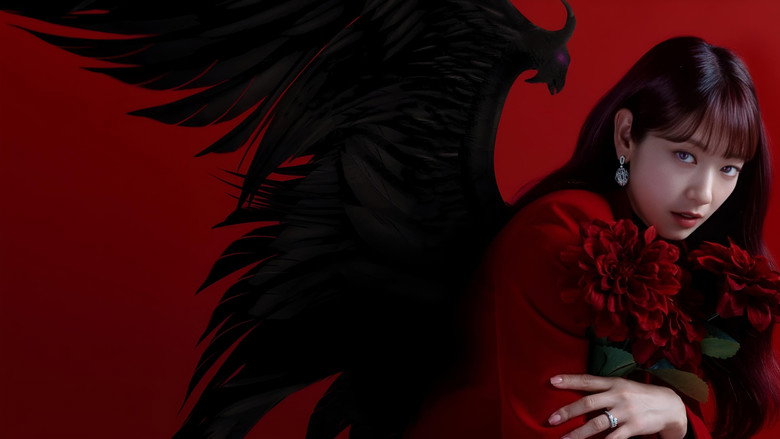
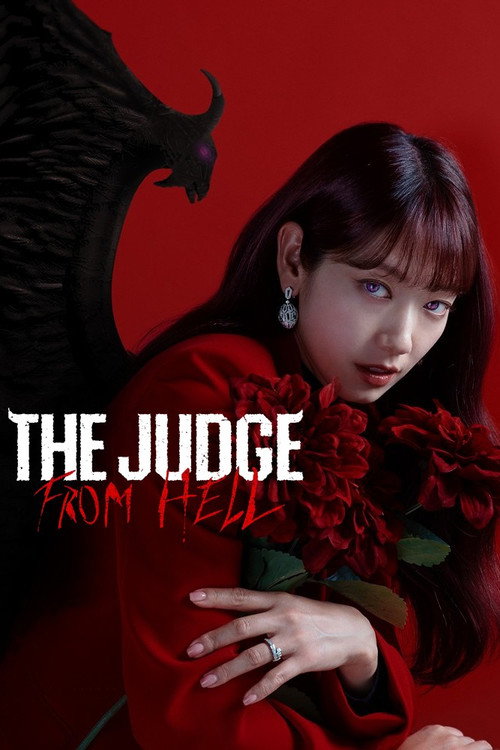
A razor-sharp dark fantasy where icy hellfire collides with mortal grief, painting a blood-splattered courtroom canvas where a merciless demon wears the robes of law to deliver visceral catharsis to broken souls.
The Judge from Hell

The Judge from Hell

지옥에서 온 판사

21 September 2024 — 02 November 2024 South Korea 2 season 14 episode Returning Series 8.6 (183)

Cast: Park Shin-hye, Kim Jae-young, Kim Ah-young, Kim In-kwon, Kim Hye-hwa

Drama Crime Sci-Fi & Fantasy Mystery Justice vs. Legal Loopholes Empathy & Humanization Grief & Victim Advocacy Guilt & Redemption Corruption of Power & Elite Impunity

Overview

The Judge from Hell (지옥에서 온 판사) is a South Korean fantasy-crime legal drama that blends dark supernatural mythos with vigilante retribution. The overarching story centers on Justitia, an elite demon judge from Hell who commits an error by wrongly sending an innocent soul—elite judge Kang Bit-na—to Gehenna. As punishment, Bael, the deputy ruler of Hell, banishes Justitia to Earth, trapping her inside the corpse of the newly murdered Judge Kang Bit-na. Her penitent mandate requires her to track down, execute, and send ten unrepentant murderers—who caused deaths without showing remorse—to Hell within one year.

As Justitia operates within the Seoul Central District Court, she deliberately hands out lenient sentences to unrepentant criminals in human court so she can ambush them afterwards, conduct a demonic trial, and send their souls to Gehenna. Her dark mission becomes complicated when she meets Han Da-on, an empathetic detective carrying the profound trauma of his family's unsolved murder. Da-on’s presence and the raw pain of crime victims begin to crack Justitia’s demonic detachment, causing her to experience human emotions, tears, and moral conflict.

Across its run, the series evolves from episodic vigilante trials into an overarching mystery involving Serial Killer J, hidden high-ranking demons living on Earth, and a confrontation between divine grace, demonic duty, and human law. Studio S formally confirmed development of a second season following the show's rating success on SBS and Disney+.

Core Meaning

The creators of The Judge from Hell explore the friction between formal jurisprudence and moral justice. The series addresses public dissatisfaction with legal systems where technicalities, wealth, and systemic loopholes allow violent offenders to escape appropriate punishment while victims' families remain trapped in lifelong torment.

Through Justitia’s transformation, the series asserts that true justice cannot exist as a cold, bureaucratic algorithm. It requires empathy—the ability to understand the victim's pain and hold offenders genuinely accountable. The narrative demonstrates that revenge alone yields empty bloodshed, but when punishment is paired with genuine sympathy for the grieving, it restores dignity to the innocent.

Thematic DNA

Justice vs. Legal Loopholes 30%
Empathy & Humanization 25%
Grief & Victim Advocacy 20%
Guilt & Redemption 15%
Corruption of Power & Elite Impunity 10%

Justice vs. Legal Loopholes

The series contrasts human courts, where criminals exploit technicalities or fake mental illness, against infernal trials where excuses are stripped away.

Empathy & Humanization

Justitia begins as an unfeeling demon who scoffs at human tears, but through her bond with Han Da-on, she develops a heart, demonstrating that love and empathy distinguish human nature from hellish cruelty.

Grief & Victim Advocacy

Rather than focusing solely on the perpetrator's punishment, the narrative highlights the lifelong anguish borne by surviving family members, declaring that a crime unforgiven by victims cannot be forgiven by law.

Guilt & Redemption

Explores whether flawed human beings and fallen supernatural entities can achieve redemption through self-sacrifice and confronting past mistakes.

Corruption of Power & Elite Impunity

Exposes how wealthy political and corporate figures utilize their authority to cover up heinous acts, framing poverty and vulnerability as helpless while abusing public trust.

Character Analysis

Kang Bit-na / Justitia

Park Shin-hye

Archetype: Antihero / Arrogant Punisher Key Trait: Unapologetic arrogance, sharp wit, and lethal combat capability.

Motivation

Initially: Complete her 10-killer quote to escape Earth.
Evolved: Protect Da-on and deliver genuine legal/infernal justice.

Character Arc

Transforms from a ruthless, cola-chugging demon who views humans as meat into a compassionate judge who sacrifices her life for true justice.

Han Da-on

Kim Jae-young

Archetype: Moral Hero / Broken Crusader Key Trait: Meticulous observation, deep empathy, and emotional vulnerability.

Motivation

Bring Serial Killer J to justice and protect innocent victims from violent criminals.

Character Arc

Moves from a strictly law-abiding detective to a grieving survivor tempted by dark vengeance, ultimately balancing mercy with justice.

All 5 characters and cast

Symbols & Motifs

The Soda Can (Cola)

Meaning:

Justitia’s terrestrial addiction; symbolizes her indulgence in human sensory pleasures.

Context:

Serves as a quirky contrast between her terrifying demon identity and mundane human habits.

The Dagger of Gehenna / Demon Blade

Meaning:

Justitia’s weapon of sentence.

Context:

Used to brand the offender’s forehead with the demonic seal of Hell before thrusting it into their heart to banish their soul to eternal damnation.

Tears / Crying

Meaning:

In the show’s lore, demons possess no tear ducts or human empathy; when Justitia begins crying for Da-on's pain, it marks her spiritual threshold into humanization.

Context:

Marks Justitia's transition into human emotional awareness as her bond with Han Da-on awakens empathy within her.

The Bloody Mirror

Meaning:

Serves as a gateway reflecting true demonic forms and unmasked sins, symbolizing self-reflection and the divide between human facades and supernatural truth.

Context:

Used to reflect true demonic forms and unmasked sins.

The Blindfolded Statue of Justitia

Meaning:

The classic legal symbol of impartiality, subverted by Judge Kang Bit-na who openly mocks blind justice.

Context:

Subverted in the courtroom setting to argue that justice must see the victim's suffering clearly.

Memorable Quotes

이제부터 진짜 재판을 시작할게. 지옥으로!
— Kang Bit-na / Justitia

Context

Stated across multiple episodes (notably Ep 2, Ep 4, Ep 8) when she cornered culprits in her illusionary tribunal space.

Meaning

The iconic signature catchphrase delivered before Justitia initiates her infernal trial against unrepentant criminals.

피해자와 피해 유가족이 용서하지 않은 죄는, 법 또한 용서하지 않는다.
— Kang Bit-na / Justitia

Context

Season 1, Episode 14 during the final public trial of Serial Killer J.

Meaning

The thematic core of the entire series, marking her complete growth into a true judge who puts victim healing above cold legal doctrine.

All 4 quotes

Episode Highlights

The Descent

S1E1

Establishes the supernatural premise, showing Justitia’s error in Hell, her exile into Judge Kang Bit-na's stabbed body, and her initial chaotic introduction to human court.

Significance:

Introduces the main narrative setup, the dual-realm mechanics, and Justitia's mandate on Earth.

The First Infernal Trial

S1E2

Features the execution of Moon Jeong-jun (dating violence offender).

Significance:

Demonstrates the show's signature formula: light human verdict followed by brutal infernal punishment.

Sins Against Children

S1E4

Focuses on domestic violence perpetrator Bae Ja-yeong.

Significance:

Delivers high viewer catharsis as Justitia subjects her to the exact torture she inflicted on her stepson.

Corporate Impunity

S1E6

Justitia targets Choi Won-joong, a corrupt CEO who murdered a union worker.

Significance:

Da-on catches up to her, creating high tension between police investigation and vigilante justice.

The Turning Point

S1E8

Senior Officer Kim So-young is murdered by Serial Killer J.

Significance:

Da-on breaks down in grief and asks Justitia to help him kill the murderer, shifting his archetype from lawful officer to dark avenger.

Unmasking Serial Killer J

S1E12

Uncovers that Jung Tae-gyu is Serial Killer J and reveals Satan hiding within Assemblyman Jeong Jae-geol.

Significance:

High-octane action and supernatural reveals resolve major mysteries of the overarching plot.

Court Adjourned

S1E14

The season finale where Bit-na sentences Serial Killer J to death in human court, defies Bael, dies, is resurrected by Angel Gabriel, and receives a new assignment with the choice of remaining human.

Significance:

Resolves the main trial narrative, brings closure to victims, and establishes the foundation for Season 2.

Philosophical Questions

Does punishment without true remorse or repentance bring moral justice?

Explored through Justitia's trials, contrasting simple retribution with the need for perpetrator remorse and genuine sympathy for grieving families.

When formal legal institutions fail to protect society, is vigilante justice ethically permissible?

Explored through the tension between human courts bound by legal codes and loopholes versus infernal trials that deliver direct eye-for-an-eye punishment.

Can a person or entity born without empathy (a demon) learn morality through exposure to human suffering?

Explored through Justitia's transformation as her bond with Han Da-on cracks her demonic detachment, causing her to shed tears and experience human emotions.

Alternative Interpretations

The Vigilante Retribution Reading: Focuses on the show as a fantasy of direct revenge, arguing that formal law is fundamentally broken and only divine/demonic intervention can achieve true moral balance.The Moral Humanization Reading: Views the supernatural elements as an allegory for emotional growth, showing how love, empathy, and community convert an unfeeling heart into a compassionate human b...

Full ending explanation

Cultural Impact

The Judge from Hell was produced against a backdrop of public frustration in South Korea regarding lenient judicial rulings on violent crimes, domestic abuse, and corporate corruption. Cases where perpetrators received light sentences due to claims of mental instability, intoxication, or first-time offense status frequently spark public outrage in South Korea.

The show tapped into this social mood by delivering cathartic vigilante justice where perpetrators experience the exact terror they inflicted on victims. Critics noted that while the show’s extreme violence sparked minor controversy, its ultimate focus on victim advocacy resonated with audiences, solidifying Park Shin-hye’s status as a top-tier versatile actress.

Audience Reception

The Judge from Hell achieved a domestic viewership peak of 13.6% (Nielsen Korea), a finale rating of 11.9%, and an 83% Rotten Tomatoes Audience Score, standing as a highly satisfying dark fantasy thriller.

Praise: Audiences praised Park Shin-hye’s charismatic performance, the fast-paced cathartic execution scenes, stylish fashion styling, and chemistry between the leads.

Criticism: Some critics noted plot conveniences, inconsistent pacing in middle episodes, and high graphic violence. A few viewers felt that introducing romantic humanization softened the demon lead too early.

Overall Verdict: A commercial and critical hit for SBS and Disney+, praised as one of the standout K-dramas of 2024.

Interesting Facts

  • Screenwriter Jo Yi-soo wrote the script as a fresh voice in TV, paired with veteran film director Park Jin-pyo (Voice of a Murderer, You Are My Sunshine), creating a blend of cinematic dark thrillers and fast-paced TV pacing.
  • Famous for playing relatable, kind heroines in dramas like The Heirs and Pinocchio, this series served as Park Shin-hye's boldest anti-hero role, requiring martial arts, swordplay, and villainous comedic timing.
  • Park Shin-hye trained extensively in hand-to-hand combat, knife fighting, and crossbow shooting, performing the vast majority of her execution action sequences without stunt doubles.
  • The show premiered with a 6.8% rating nationwide on SBS and quickly soared into double digits, peaking at 13.6%, making it one of the highest-rated Korean terrestrial dramas of 2024.
  • Features high-profile special cameos including Oh Na-ra as the original form of Justitia in Hell and Shin Sung-rok as Bael, the high-ranking demon lord.
  • Following international success on Disney+ and strong domestic viewership, Studio S confirmed Season 2 development.

Easter Eggs

Oh Na-ra & Shin Sung-rok Cameos

Oh Na-ra plays the true fiery form of Justitia in Hell in Episode 1, while Shin Sung-rok plays Bael, winking at his iconic history of playing dark/demonic villains in K-dramas (My Love from the Star).

Mythological Syncretism

The series blends Roman judicial iconography (Justitia), Judeo-Christian demonology (Bael, Valak, Paimon, Gremory), and angelic lore (Gabriel), creating a distinct supernatural world.

Homage to Vigilante Tropes

References Western urban fantasy series like Lucifer and Buffy the Vampire Slayer through its combination of witty, pop-drinking immortal protagonists battling earthly evil alongside human police partners.

Frequently Asked Questions

Explore More About This Movie

Dive deeper into specific aspects of the movie with our detailed analysis pages

Comments (0)

Leave a comment

No comments yet. Be the first to share your thoughts!

Similar Movies