Skip to content
A Killer Paradox
A neon-soaked dark comedy wrapped in a psychological crime noir, where cosmic absurdity and moral dread collide like a blunt hammer against fractured glass, leaving a lonely soul adrift in a bloody storm of fate.
A Killer Paradox

A Killer Paradox

살인자ㅇ난감

"A godsent hero or unpunished sinner."

09 February 2024 — 09 February 2024 South Korea 1 season 8 episode Ended 7.3 (196)

Cast: Choi Woo-shik, Son Seok-koo, Lee Hee-jun, Kwon Da-ham, Oh Min-ae

Drama Crime Comedy Mystery Moral Ambiguity & Extrajudicial Justice Cosmic Absurdity vs. Divine Intervention Systemic Failures & Rot Within the Law Identity Erosion & Psychological Guilt

Overview

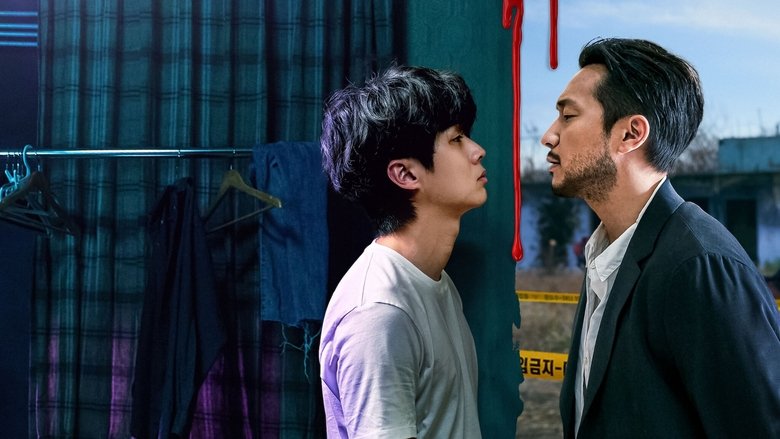
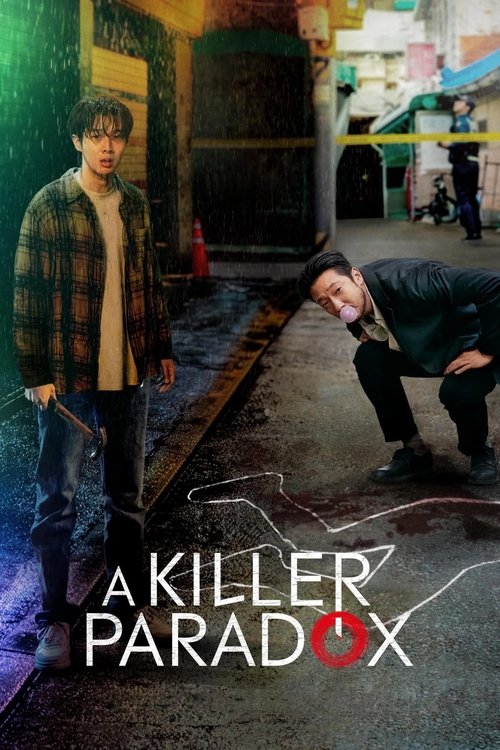
A Killer Paradox (2024) is an eight-episode South Korean crime thriller dark comedy streaming series directed by Lee Chang-hee and written by Kim Da-min, based on the Naver webtoon Salinja-o-Nangam by Kkomabi. The story centers on Lee Tang, an aimless university student working part-time at a convenience store, who lives a mundane, passive existence while dreaming of escaping to Canada. His life changes forever late one night when an altercation with a belligerent customer leads him to strike back in self-defense, accidentally killing the man. Plagued by suffocating guilt and paranoia, Tang prepares for his inevitable arrest—only to learn that his victim was actually an elusive serial killer.

As Tang attempts to process this bizarre twist, subsequent unexpected encounters force him into further violent confrontations. Miraculously, every individual he kills turns out to be a vile criminal who escaped legal punishment, and every shred of physical evidence pointing to Tang is repeatedly destroyed or erased by bizarre twists of luck. He attracts the attention of Roh Bin, a wealthy hacker obsessed with vigilante justice, who seeks to groom Tang into a real-life "dark hero".

Meanwhile, Jang Nan-gam, an intuitively sharp and unrelenting homicide detective, suspects that Tang is at the center of the strange string of deaths. The cat-and-mouse chase escalates into a multi-sided conflict with the arrival of Song Chon, a former detective turned rogue, unhinged vigilante killer who seeks out Tang to test his moral legitimacy. Across its single season, the series chronicles Tang's transformation from an anxious bystander into an enigmatic figure operating at the boundary of law, fate, and cosmic justice.


Core Meaning

The creators of A Killer Paradox use a dark, satirical lens to interrogate the concept of extrajudicial justice and the inherent flaws of human morality. Rather than crafting a typical superhero or vigilante celebration, director Lee Chang-hee explicitly intended to explore a moral paradox: Can an inherently evil act (murder) ever be justified if the outcome accidentally serves a social good?

Through Lee Tang's bizarre luck, the show questions whether true justice in human society is guided by divine intervention, cosmic irony, or purely random absurdity. By juxtaposing Tang’s passive, luck-driven killings with Song Chon’s twisted self-righteous execution style, the series demonstrates how individual vigilantism inevitably degenerates into hypocrisy and tyranny. Ultimately, the creators convey that operating "justice above the law" destroys human identity and offers no genuine moral salvation—yet society’s legal failures repeatedly create the appetite for such monsters to exist.

Thematic DNA

Moral Ambiguity & Extrajudicial Justice 35%
Cosmic Absurdity vs. Divine Intervention 25%
Systemic Failures & Rot Within the Law 20%
Identity Erosion & Psychological Guilt 20%

Moral Ambiguity & Extrajudicial Justice

The show constantly blurs the lines between victim, murderer, and hero. Initially, Tang's killings are accidental self-defense or desperate panic. As he partners with Roh Bin, Tang transitions into an active vigilante hunting down rapists, abusers, and murderers. The theme highlights the danger of playing God, contrasting Tang’s luck-based targets with Song Chon’s self-appointed role as judge, jury, and executioner.

Cosmic Absurdity vs. Divine Intervention

A central question throughout the show is whether Tang possesses a supernatural "bad seed" radar or if he is simply the beneficiary of absurd, statistically improbable luck. The universe repeatedly conspires to wipe away his traces—flies covering security camera lenses, stray dogs eating evidence, rain washing away blood. The show leaves viewers questioning if fate approves of his actions or is mocking human morality.

Systemic Failures & Rot Within the Law

Every victim Tang kills is someone who slipped through the legal system due to corruption, wealth, or procedural loopholes. The series exposes the law as inadequate and easily manipulated by figures like Chairman Hyung. It shows how police officers like Jang Nan-gam’s father and Song Chon were corrupted by the system, proving that human institutions often fail to protect the innocent.

Identity Erosion & Psychological Guilt

The narrative tracks the psychological destruction of its main characters. Tang shifts from a timid, guilty young man suffering from hallucinated victims to an emotionless killer desensitized to bloodshed. Detective Jang similarly loses his professional distance, driven into madness as his personal life and faith in police integrity unravel.

Character Analysis

Lee Tang

Choi Woo-shik

Archetype: Reluctant Antihero / Accidental Vigilante Key Trait: Primal intuition for identifying evil accompanied by inexplicable, uncanny luck.

Motivation

Initially seeks self-preservation and escape, which evolves into a desire to inflict justice on corrupt evil-doers who escape the law.

Character Arc

Begins as a passive, directionless college student tormented by guilt after killing a man in self-defense. Over time, upon discovering his victims were monsters, he abandons his fear, embraces his "gift," and adopts a cold, detached vigilante persona, only to realize the heavy curse of his path.

Detective Jang Nan-gam

Son Suk-ku

Archetype: Obsessive Sleuth / Cynical Lawman Key Trait: Unyielding detective instincts and persistent bubble-gum chewing.

Motivation

Uncovering the truth behind unresolved homicides, which morphs into a personal obsession with stopping Tang and confronting Song Chon.

Character Arc

Introduced as an unorthodox, highly perceptive detective driven by gut instinct. As he pursues Tang, his personal life collapses: his father’s dark corrupt past is exposed, his dog dies, and his mentor is murdered. He grows disillusioned with formal law and faces a breakdown between legal duty and revenge.

All 4 characters and cast

Symbols & Motifs

The Toy Hammer

Meaning:

Symbolizes blunt, impulsive, accidental violence and the immediate loss of innocence.

Context:

Tang borrows a hammer from the convenience store where he works to hang a picture, but it unexpectedly becomes his weapon during his very first accidental murder.

Bristling Goosebumps / Neck Hair

Meaning:

Acts as Tang's primal, unexplainable "evil detector" motif, signaling the presence of hidden, heinous evil.

Context:

Tang feels an intense physical sensation with goosebumps on his neck and hair standing up whenever he is in close proximity to a dangerous criminal.

The Rocky Mountains Poster (Canada)

Meaning:

Symbolizes Tang's deep longing for freedom, clean air, redemption, and escape from the suffocating realities of his life.

Context:

Tang keeps a poster depicting the Canadian Rocky Mountains hung on the wall in his room as he dreams of moving to Canada.

Chewing/Bubble Gum

Meaning:

Represents his internal restless energy, cynically masking his razor-sharp observational instincts and intensity.

Context:

Detective Jang Nan-gam is constantly seen chewing gum and blowing bubbles throughout various homicide investigations.

Flies and Stray Dogs

Meaning:

Represent the unpredictable, absurd hand of nature and fate protecting Tang from human law and criminal justice.

Context:

Insects and animals intervene at crucial moments, such as flies obstructing security camera lenses or a stray dog swallowing vital physical evidence.

Blindness and Glasses

Meaning:

Acts as a motif for hidden truth, deception, moral corruption, and societal blindness.

Context:

Represented by the seemingly blind woman Yeo-ok (who wears dark sunglasses to hide that her vision has returned) and corrupt elites wearing glasses.

Memorable Quotes

내 인생은 주관식이 아니라 객관식이다.
— Lee Tang

Context

Spoken by Lee Tang during critical reflective moments in Episode 1 and Episode 8.

Meaning

Captures Tang’s belief that he lacks agency and that choices are forced upon him by circumstance, highlighting his initial passivity.

자네가 진짜 특이한 능력이 있는 건지, 아니면 운이 더럽게 좋은 건지...
— Detective Jang Nan-gam

Context

Stated by Detective Jang Nan-gam to Lee Tang during their climax in Episode 8.

Meaning

Sums up the core ambiguity of the entire narrative—is Tang a divine instrument or an absurdly lucky killer?

All 4 quotes

Episode Highlights

The First Strike

S1E1

Lee Tang accidentally kills a customer with a hammer after work. The victim is revealed to be an infamous serial killer.

Significance:

Sets the entire black-comedy thriller framework in motion.

The Blackmail

S1E2

A seemingly blind woman, Yeo-ok, blackmails Tang after witnessing his crime. Tang kills her, only to find out she murdered her own parents for insurance money.

Significance:

Establishes Tang's supernatural pattern of killing evil people.

Enter Roh Bin

S1E4

Tang meets hacker Roh Bin, who equips him with resources and a strategy.

Significance:

Marks Tang’s transition from an accidental killer into a deliberate vigilante.

The Shadow of Song Chon

S1E5

Introduces Song Chon, a terrifying former cop who hunts down criminals and vigilantes.

Significance:

Shifts the show’s dynamic from a light dark comedy to a tense, multi-front detective thriller.

Sins of the Father

S1E7

Song Chon exposes the truth about Detective Jang Nan-gam’s father—that he was a corrupt drug smuggler who framed innocent people.

Significance:

Shatters Nan-gam’s moral foundation.

The Final Paradox

S1E8

The climactic showdown between Tang, Nan-gam, and Song Chon in a burning warehouse. Roh Bin dies taking the fall for Tang's crimes.

Significance:

Nan-gam lets Tang live, setting up the lingering paradox ending.

Philosophical Questions

Is justice defined by legal procedure or by moral outcomes?

Explores Utilitarianism vs. Deontology by analyzing whether breaking legal structures is permissible to achieve moral results.

Does intent matter if the result of an action is objectively beneficial?

Examines Tang's actions, as he kills out of panic or luck, yet unintentionally saves future victims from dangerous criminals.

Can extrajudicial violence ever remain pure, or does it inevitably turn the vigilante into a tyrant?

Explored through the sharp contrast between Lee Tang's luck-driven actions and Song Chon's cruel, self-righteous vigilantism.

Alternative Interpretations

Viewers can interpret the series through three distinct lenses:

Full ending explanation

Cultural Impact

A Killer Paradox emerged at a time when South Korean public discourse was intensely focused on victim rights, light judicial sentences for violent offenders, and systemic law enforcement corruption. The show tapped into societal frustration where citizens feel the legal system fails to deliver righteous punishment.

Critically, the show was widely praised for its stylish, fast-paced direction and strong performances, holding top-10 positions on Netflix globally upon release. Critics commended the first four episodes for innovative dark comedy, though some viewers noted a tonal shift in the second half when Song Chon's storyline introduced darker, traditional detective thriller tropes.

Audience Reception

The overall verdict for the series stands at 8/10 (★★★★☆). Episodes 1–4 received widespread praise (★★★★☆) for their black comedy and visual style, while Episodes 5–8 received mixed to tense reception (★★★☆☆) during the Song Chon noir arc.

Praised elements include dynamic match-cut visual editing, dark humor, Choi Woo-shik’s subtle emotional range, Son Suk-ku’s charismatic presence, and deepfake visual tech. Criticisms focused on pacing slowdowns in episodes 5–7 following Song Chon's introduction, complex plot threads left ambiguous, and gum-chewing sound design that annoyed select viewers.

Interesting Facts

  • Director Lee Chang-hee previously directed the webtoon adaptation Strangers From Hell (2019) and vowed never to adapt another webtoon due to high fan criticism, but broke his rule for A Killer Paradox.
  • The production team used AI Deepfake technology to map Son Suk-ku's actual childhood photos onto young actors rather than hiring dissimilar child actors.
  • Choi Woo-shik, whose character dreams of escaping to Canada, is actually a Canadian citizen in real life having spent his youth in Vancouver.
  • Actor Lee Hee-jun underwent two hours of prosthetics and heavy aging makeup daily to portray the elderly ex-detective Song Chon.
  • In February 2024, Netflix clarified that similarities between character Chairman Hyung and opposition leader Lee Jae-myung were entirely accidental coincidences.

Easter Eggs

The Name "Roh Bin"

Roh Bin's name is a direct phonetic Korean translation of "Robin," Batman's famous sidekick. His apartment is filled with Batman collectibles, reflecting his desire to assist a vigilante "Batman" figure.

Title Ambiguity ("살인자ㅇ난감")

The Korean title uses the consonant "ㅇ" which allows three distinct readings: 1. Salinja-ui Nangam ("A Murderer's Dilemma"); 2. Salin Jangnangam ("Murder Toy"); 3. Salinja O. Nangam ("The Murderer and Detective Nan-gam").

Match Cut Editing Transitions

The director frequently uses match cuts to transition between scenes—such as a piece of convenience store food cutting into a gory crime scene detail—referencing cinematic techniques used by Park Chan-wook and Bong Joon-ho.

Frequently Asked Questions

Explore More About This Movie

Dive deeper into specific aspects of the movie with our detailed analysis pages

Comments (0)

Leave a comment

No comments yet. Be the first to share your thoughts!

Similar Movies