The core meaning of "The Godfather Part II" is a profound exploration of the corrupting nature of power and the tragic irony of destroying one's family in the name of protecting it. Director Francis Ford Coppola contrasts the rise of Vito Corleone with the moral fall of his son, Michael. Vito, while ruthless, builds his empire on a foundation of community and family, earning respect and loyalty. Michael, in his quest to secure the family's legacy and legitimize its business, becomes a cold and paranoid tyrant, alienating and ultimately destroying those closest to him. The film serves as a cautionary tale about the immense personal cost of ambition, suggesting that the pursuit of absolute power inevitably leads to spiritual and emotional emptiness. It delves into the dark side of the American Dream, portraying a success story built on violence and deceit that ultimately leaves its inheritor victorious but utterly alone.
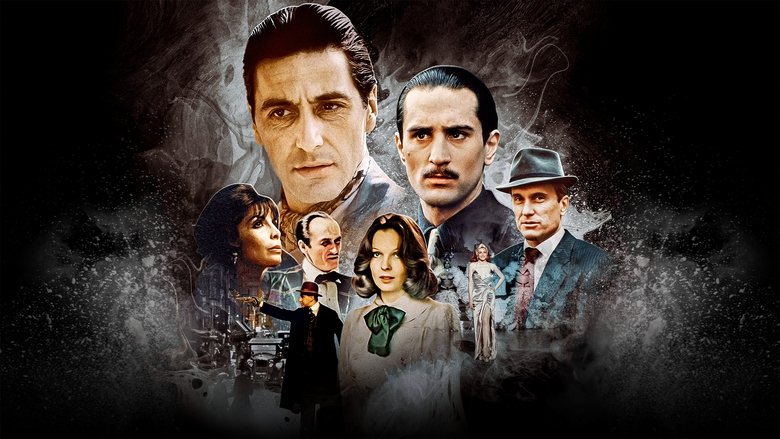
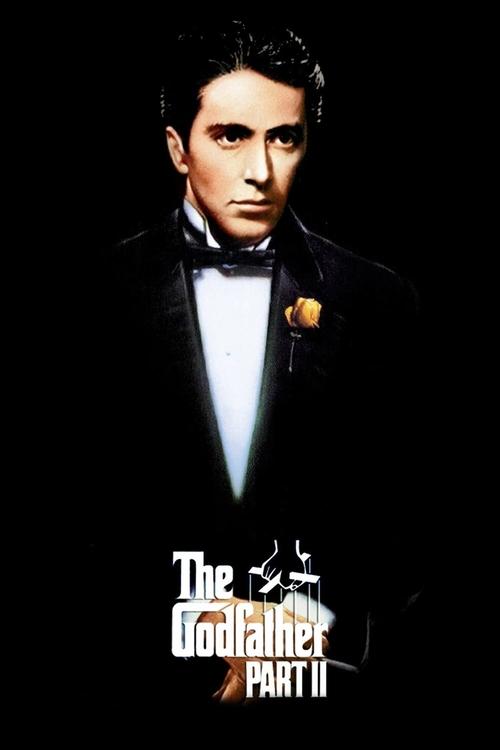
"The rise and fall of the Corleone empire."
Director: Francis Ford Coppola
Cast: Al Pacino, Robert Duvall, Diane Keaton, Robert De Niro, John Cazale
The Godfather Part II — Symbolism & Philosophy
Symbols & Motifs
The Parallel Timelines
The dual narratives of Vito and Michael serve as a powerful symbol of contrast and comparison. Vito's story represents the rise of the family, built on community, tradition, and a certain code of honor. Michael's story symbolizes the family's moral decay and descent into a colder, more corporate form of criminality, where loyalty is secondary to power.
The film constantly intercuts between Vito's warm, sepia-toned past in early 20th-century New York and Michael's cold, starkly lit present in the late 1950s. This juxtaposition highlights the tragic irony of Michael's journey: as he gains more power, he loses the very humanity and family connection that his father fought to build.
The Kiss of Death
The kiss is a symbol of ultimate betrayal and a death sentence. It is a gesture that feigns affection or forgiveness while sealing the recipient's fate.
The most significant use of this symbol is when Michael discovers Fredo's betrayal in Cuba. During a New Year's Eve party, Michael grabs Fredo, kisses him forcefully on the lips, and says, "I know it was you, Fredo. You broke my heart. You broke my heart." This moment marks the point of no return for Fredo, signifying that his betrayal is unforgivable and that he is marked for death.
Doors
Doors often symbolize separation, isolation, and the division between Michael's business and family life. A closing door frequently signifies Kay's exclusion from the dark realities of the Corleone family's affairs.
Similar to the iconic final shot of the first film, doors continue to play a symbolic role. When Kay reveals her abortion to Michael, he explodes in rage and throws her out of the room, shutting the door on their marriage. The final shots of the film emphasize Michael's solitude, often framed by doorways and windows, visually representing his emotional and moral imprisonment.
Philosophical Questions
Can one maintain their humanity while pursuing and holding absolute power?
The film explores this question through the character of Michael Corleone. His journey demonstrates that the pursuit of absolute power necessitates ruthless and inhumane actions. In his quest to eliminate all threats and secure his family's empire, he sheds his morality piece by piece, culminating in the murder of his own brother. The film contrasts him with his father, Vito, who managed to balance his criminal activities with a genuine sense of family and community. However, the film ultimately suggests that Michael's path is the inevitable endpoint of such a life, posing the question of whether Vito's balancing act was an exception or merely an earlier stage in the same corrupting process. Michael's final state of isolated, powerful emptiness serves as a stark answer: absolute power ultimately consumes one's humanity.
Is family defined by blood or by loyalty?
This question is at the heart of the Corleone saga. The family preaches the importance of blood ties above all else. Yet, Michael's actions challenge this principle. He trusts his adopted brother and consigliere, Tom Hagen, more than his blood brother Fredo. Ultimately, he chooses to punish Fredo's disloyalty with death, a clear statement that for him, loyalty transcends blood. The film explores the tension and ultimate breakdown of these two conflicting ideas of family, suggesting that in Michael's world, the bonds of loyalty, and the consequences of breaking them, are the supreme law.
Core Meaning
Explore More About This Movie
Dive deeper into specific aspects of the movie with our detailed analysis pages