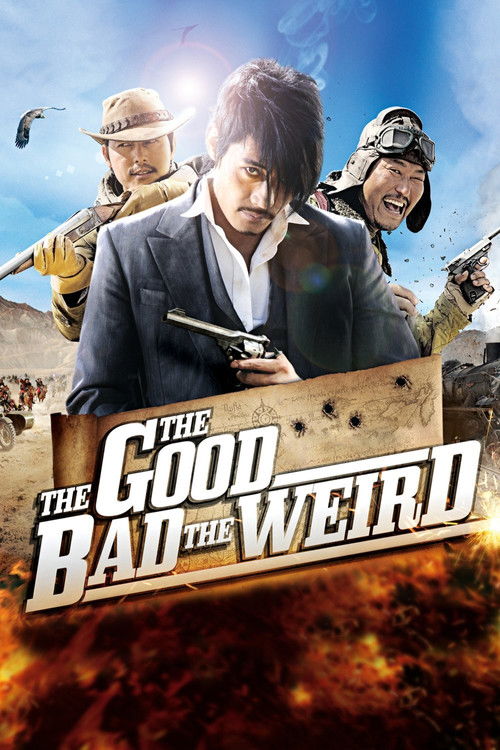
좋은 놈, 나쁜 놈, 이상한 놈
"One map. Three villains. Winner takes all."
Director: Kim Jee-woon
Cast: Song Kang-ho, Lee Byung-hun, Jung Woo-sung, Yoon Je-moon, Ryu Seung-su
The Good, the Bad, the Weird — Movie Quotes
Memorable Quotes
If you chase somethin' to get somethin', somethin' else will come chasing you. Life is about chasing and being chased. There is no escape.
Context
Spoken in Do-won's characteristically unhurried register, it functions as the fatalistic frame around the entire desert chase that dominates the film's second half.
Meaning
The film's central philosophy compressed into three sentences. It reframes the treasure hunt as an existential condition rather than a plot: pursuit is not something you do, it is what living is, and the reward at the end is beside the point.
People must know that they're going to die, and yet they live as though they never will.
Context
Delivered with Lee Byung-hun's chilly detachment, the line establishes the Bad as a philosopher of violence rather than a simple thug.
Meaning
A killer's contempt for ordinary human denial — and, read against his own arc, a piece of unwitting self-diagnosis. Chang-yi lives as if his supremacy were permanent, which is its own version of the delusion he mocks.
They died like dogs. Died in vain. Actually, no one dies in vain. Only those left behind feel empty.
Context
A reflective beat amid the carnage, it foreshadows the personal history that ultimately matters more to him than any map.
Meaning
The most humane thought the film's villain ever has, and it is about survivors, not victims. It quietly tells us that Chang-yi's rage is grief-shaped — an emptiness left by something that happened long before the film began.
Explore More About This Movie
Dive deeper into specific aspects of the movie with our detailed analysis pages