Skip to content
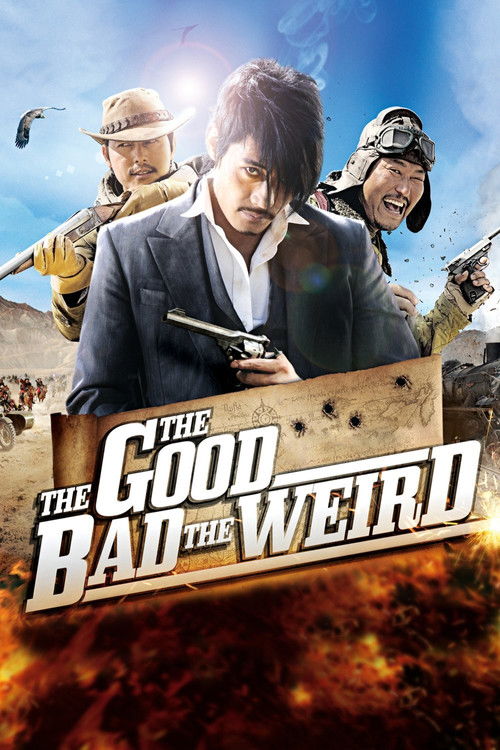
The Good, the Bad, the Weird
A sun-scorched Korean western where greed gallops across the Manchurian dunes: three outlaws, one map, and a horizon of dust, bullets and laughter that keeps outrunning them.
The Good, the Bad, the Weird

좋은 놈, 나쁜 놈, 이상한 놈

"One map. Three villains. Winner takes all."

16 July 2008 South Korea 130 min 7.2 (844)

Director: Kim Jee-woon

Cast: Song Kang-ho, Lee Byung-hun, Jung Woo-sung, Yoon Je-moon, Ryu Seung-su

Action Comedy Adventure Western Greed and the emptiness of the prize Identity, reinvention and the past that follows you Colonial displacement and the stateless frontier Moral labels versus moral reality Genre as play — cinema chasing cinema
Budget: $10,000,000

The Good, the Bad, the Weird — Ending Explained

⚠️ Spoiler Analysis

Full spoilers follow.

The map. The document stolen from the Japanese official in the opening train robbery is believed to lead to a buried Qing dynasty treasure. Its true value is that everyone believes in it: the Japanese Army wants it, Korean independence fighters want it, Manchurian bandits want it, and the Bad is hired to retrieve it. It functions as a classic MacGuffin, and the film ultimately treats it as one.

The personal history. The engine of the plot is not the treasure but the hidden connection between the Weird and the Bad. Park Chang-yi's pursuit of Yoon Tae-goo is revealed to be rooted in a past encounter that humiliated him — the disfigurement he carries and the reputation he guards. The bumbling thief who claims to be nobody is in fact the one man who beat him, and Chang-yi's obsession with primacy makes killing him a matter of identity rather than contract.

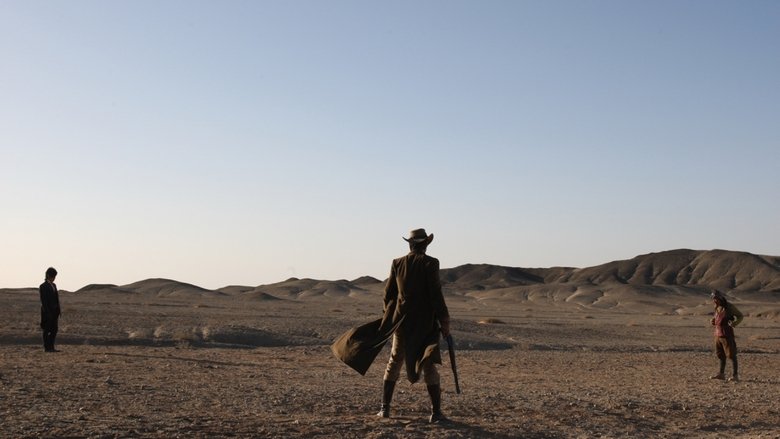
The climax. All three men converge in a three-way standoff staged as a direct homage to the cemetery duel of Leone's The Good, the Bad and the Ugly. The circling tension resolves in near-simultaneous gunfire; all three go down bleeding.

The treasure revealed. Standing over the supposed treasure site, bullet-riddled, the men trigger the film's real twist: the ground bursts open and what erupts is not gold but oil. The "treasure" of the coming century is black liquid, and it is worthless to dying men in a desert. The wind then tears the map from their hands and carries it away across the dunes — the object that cost dozens of lives simply leaves, unclaimed.

The two endings. The international cut (about 129 minutes, and the director's preferred version) ends on that bleak, elegiac note. The Korean cut (about 136 minutes) continues: Tae-goo rises, revealing that he had a thick metal sheet concealed beneath his quilted jacket, and limps over to Chang-yi's body. Desecrating the corpse, he discovers diamonds in the dead man's pocket and giggles with delight — before realizing he is completely surrounded by the Japanese Army. The trickster survives, gets his fortune, and is immediately trapped by the imperial power that has been the film's true horizon all along.

What becomes clear afterward. Retrospectively, the comedy of the Weird's survival is not accident but design — he lives because he is the only one not fighting for status. The Good's early aphorism about chasing and being chased becomes a plot summary. And the title's labels invert: the "Good" was a bounty hunter working for money, the "Bad" was a man nursing an old wound, and the "Weird" — the coward and grave-robber — is the only one who ever wanted merely to live.

Alternative Interpretations

The ending is genuinely different depending on which version you watched. After Cannes, two cuts circulated: a Korean version running about 136 minutes and a shorter international version of about 129 minutes, which is tighter, slightly rescored, and reportedly Kim Jee-woon's own preferred cut. The Korean cut extends past the three-way standoff: Tae-goo gets up, reveals a metal sheet hidden under his quilted jacket, hobbles over to Chang-yi's corpse, finds diamonds in his pocket, giggles with delight — and then realizes he is surrounded by the Japanese Army. Much of the debate about "what the ending means" is really a debate about which ending someone saw.

Nihilist reading. Everyone dies or is doomed, the fortune is not what was promised, and the wind simply removes the map from human hands. The chase consumed three lives and produced nothing; the film is a comedy whose punchline is meaninglessness.

Political-historical reading. The eruption of oil rather than gold recasts the whole story as a prologue to the twentieth century: the resource that empires will shortly go to war over lies beneath the feet of stateless men squabbling over a rumor. The Japanese Army closing in on the survivor makes the point that individual fortune is irrelevant where imperial power decides outcomes.

Comic-survivalist reading. Because Tae-goo has spent the film escaping certain death by absurd means, the Korean coda can be read as the ultimate expression of his character rather than a betrayal of the bleak ending — the trickster survives, briefly triumphant, and the encirclement is just the next impossible situation he will presumably wriggle out of.

Meta reading. The film is about movies. The map is a MacGuffin that openly announces itself as one; the treasure was never the point; the pleasure of chasing genre iconography across a desert is the point, and the ending simply admits it.

Explore More About This Movie

Dive deeper into specific aspects of the movie with our detailed analysis pages

Similar Movies