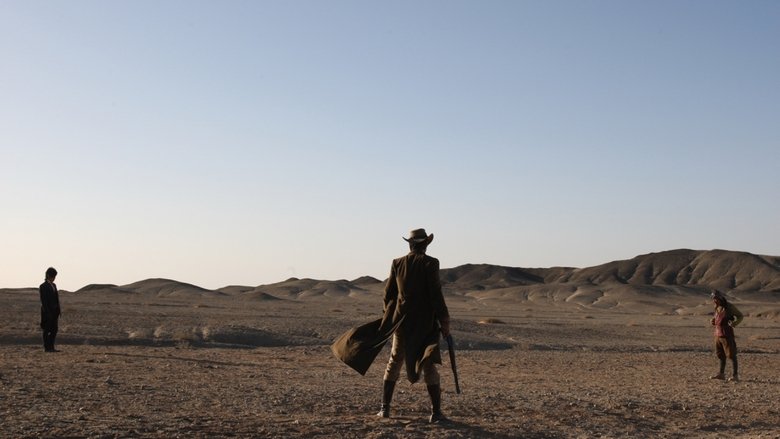
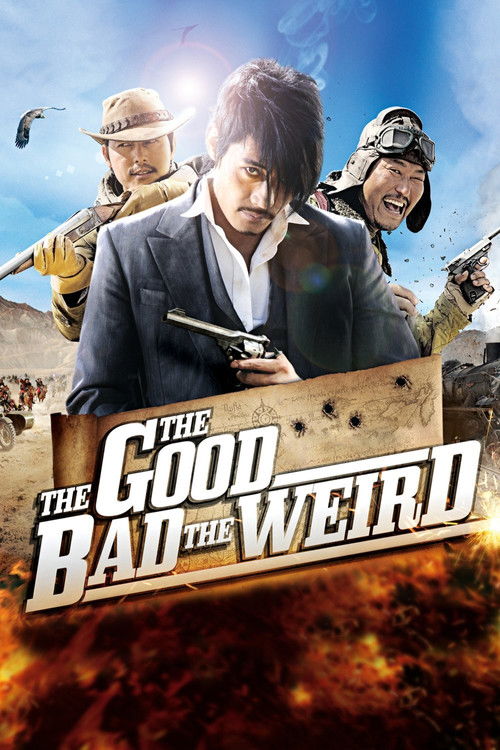
Set in the wind-scoured wastes of Japanese-occupied Manchuria in the late 1930s, Kim Jee-woon's The Good, the Bad, the Weird begins with a train robbery and never really stops moving. A bumbling, endlessly resourceful thief called the Weird lifts a mysterious map from a Japanese official; a razor-sharp hitman called the Bad was hired to take that same map; and a laconic bounty hunter called the Good is on the trail of them both, chasing the price on their heads.
From that collision the film spirals outward into a sprawling chase across deserts, opium dens, ghost markets and bandit camps, with Korean outlaws, Chinese and Manchurian gangs, and the Imperial Japanese Army all converging on the same rumored treasure. Nobody quite knows what the map leads to — a buried Qing fortune, a lost dynasty's riches, something else entirely — and that uncertainty is exactly what keeps everyone riding.
Openly conceived as an homage to Sergio Leone's The Good, the Bad and the Ugly (1966), the film fuses spaghetti-western iconography with Hong Kong-style wire work, Korean gangster comedy and enormous practical stunt work. Shot largely in the deserts of western China near the Gobi on a budget of roughly US$10 million — extraordinarily large for Korean cinema at the time — it premiered out of competition at the 2008 Cannes Film Festival and became a domestic blockbuster.

Comments (0)
No comments yet. Be the first to share your thoughts!