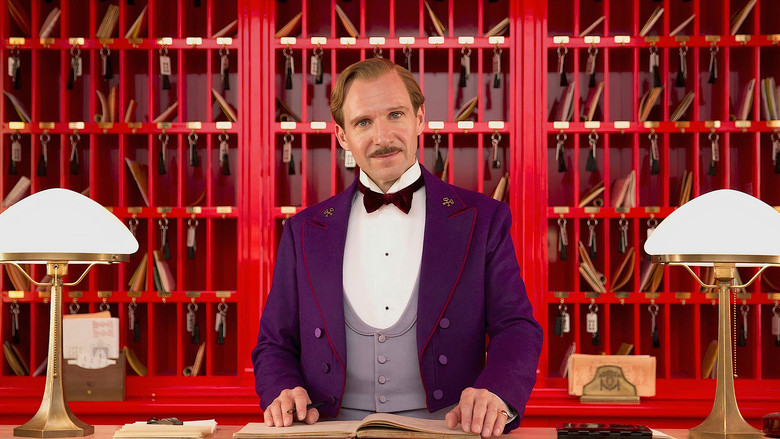
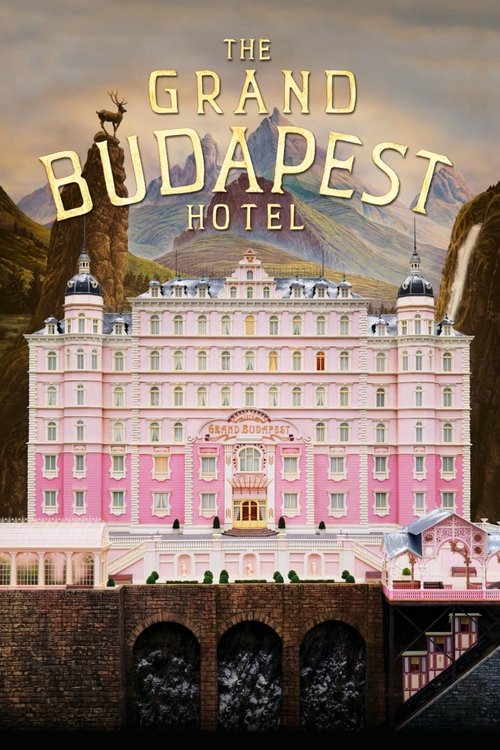
The Grand Budapest Hotel
A whimsical, melancholic caper painted in pastel hues; a bittersweet memory of a lost era of civility, elegantly framed by the looming shadow of war.
The Grand Budapest Hotel

"A murder case of Madam D. with enormous wealth and the most outrageous events surrounding her sudden death!"

26 February 2014 United States of America 100 min ⭐ 8.0 (15,443)
Director: Wes Anderson
Cast: Ralph Fiennes, F. Murray Abraham, Mathieu Amalric, Adrien Brody, Willem Dafoe
Drama Comedy
Nostalgia and the Lost Past Civilization vs. Barbarism Friendship and Loyalty The Power of Storytelling
Budget: $30,000,000
Box Office: $174,600,318

The Grand Budapest Hotel - Ending Explained

⚠️ Spoiler Analysis

The entire narrative is a memory piece, told by an elderly Zero Moustafa, who reveals how he, a penniless lobby boy, came to own the once-magnificent hotel. The central mystery is solved when Gustave and Zero, after a frantic chase, retrieve the "Boy with Apple" painting. Taped to its back is a second, superseding will from Madame D., confessing that she was the secret owner of the Grand Budapest and bequeathing her entire fortune, including the hotel, to Gustave in the event she was murdered. This clears Gustave's name, and Dmitri is forced to flee.

However, this triumphant moment is immediately undercut by tragedy. The film's whimsical tone abruptly shifts as Zero recounts the subsequent events with devastating brevity. A few years later, after Zero and Agatha have married, the war has fully broken out. While traveling on a train, soldiers harass Zero. Gustave intervenes, defending his protégé with the same indignant fury as before, but this time, the soldiers are not swayed. They take him outside and execute him by firing squad. Zero explains that Gustave's entire estate, now vast, was left to him, his sole heir. In an even more heartbreaking reveal, Zero tells the Author that Agatha and their infant son died two years after Gustave from the "Prussian Grippe." The reason Zero keeps the lonely, unprofitable hotel is not because of Gustave, but because it is his last tangible link to his beloved Agatha and the short time they were happy there together.

Alternative Interpretations

A prominent alternative interpretation revolves around the reliability of the narrator. Since the story is filtered through multiple layers—the girl reads the book, written by the author, who is recounting a story told to him decades earlier by an elderly Zero—it's possible the events are heavily romanticized or even fabricated. Zero's version of the 1930s is intensely colorful and whimsical, a stark contrast to the drab reality of the 1960s. This could be interpreted as Zero's nostalgic and grief-stricken mind creating a beautiful, adventurous fantasy around his tragic past. M. Gustave's character, in this reading, might not have been as perfectly eloquent or heroic as remembered; he is an idealized figure in Zero's memory, a symbol of a lost world that perhaps never truly existed in such a perfect form.