The film makes a massive departure from the novel's bleak ending. In the book, the family is broken, Rose of Sharon loses her baby, and the story ends with a surreal scene of breastfeeding a starving man. The film, instead, reorders the sequences so that the Joads find Wheat Patch, a Department of Agriculture camp. This creates a sense of hope that government institutions can actually protect 'the people.' The film ends with Tom leaving to become a labor organizer and the rest of the family driving off into the sunset, with Ma's speech providing a spiritual victory that the book denies. The 'twist' is that despite the loss of Grandpa, Grandma, and their home, the Joads have found something more powerful: a sense of belonging to a class that cannot be erased.
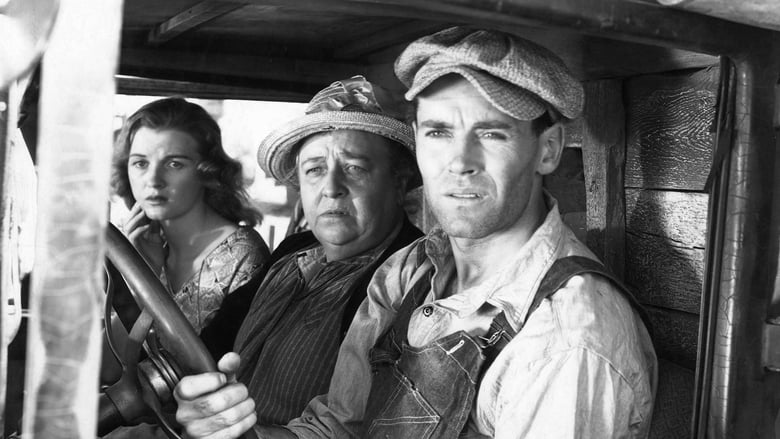

"The Joads step right out of the pages of the novel that has shocked millions!"
Director: John Ford
Cast: Henry Fonda, Jane Darwell, John Carradine, Charley Grapewin, Dorris Bowdon
The Grapes of Wrath — Ending Explained
⚠️ Spoiler Analysis
Alternative Interpretations
While the novel is often seen as a radical call for socialist reform, the film has been interpreted by some critics as politically conservative or 'Jeffersonian.' Critics like Vivian Sobchack argue that by focusing on the 'family unit' rather than the 'family of man,' Ford pivots the story toward traditional American values of kinship and endurance rather than systemic revolution. Conversely, the film's more optimistic ending—placing the Joads in a clean, government-run camp—has been viewed as a pro-New Deal endorsement of federal intervention. Some modern readings even see the film as a religious allegory, with Tom as a Christ-figure and Casy as John the Baptist, preparing the way for a new social gospel.
Explore More About This Movie
Dive deeper into specific aspects of the movie with our detailed analysis pages