"The Great Dictator" is a powerful condemnation of fascism, antisemitism, and Nazism, made at a time when such a direct critique was a significant political risk. The film's core message is a plea for humanity, peace, and democracy in the face of tyranny and hatred. Chaplin uses satire to expose the absurdity and dangers of totalitarianism, stripping away the aura of power to reveal the pathetic and insecure nature of dictators. The film culminates in a direct and impassioned speech where Chaplin, breaking character, addresses the audience directly, advocating for unity, kindness, and the power of the people to create a better world. It's a call to action, urging individuals to resist oppression and fight for a life of freedom and beauty.
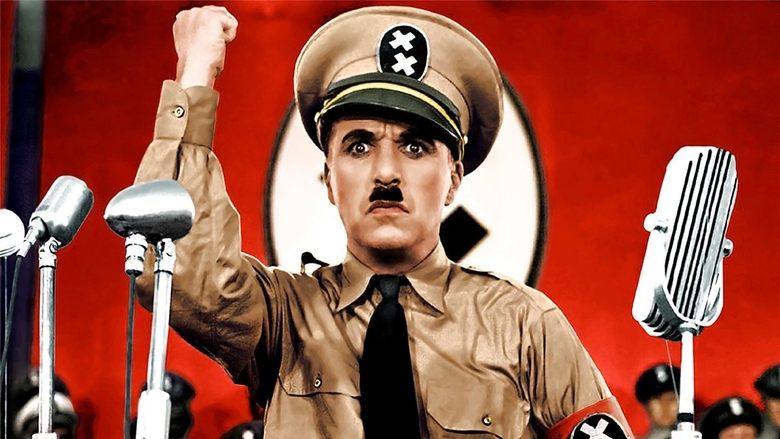
A satirical tragicomedy that wields laughter as a weapon against tyranny, painting a poignant portrait of humanity's struggle for freedom.
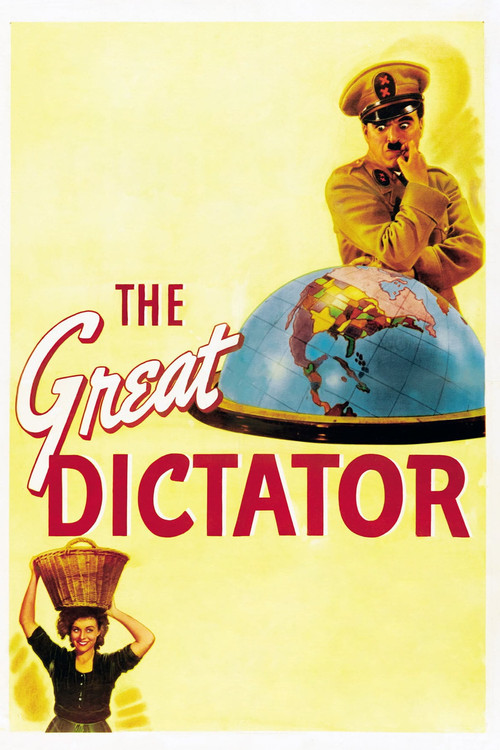
The Great Dictator
"Once again - the whole world laughs!"
15 October 1940
United States of America
125 min
8.3
(3,535)
Director: Charlie Chaplin
Cast: Charlie Chaplin, Paulette Goddard, Jack Oakie, Reginald Gardiner, Henry Daniell
War
Comedy
The Absurdity of Power and Tyranny
Humanity vs. Inhumanity
The Power of the People
Persecution and Resilience
Budget:
$2,000,000
Box Office:
$11,000,000
The Great Dictator — Symbolism & Philosophy
Symbols & Motifs
The Globe Balloon
Meaning:
The globe balloon symbolizes Hynkel's narcissistic and childish desire for world domination. His graceful, almost loving dance with it represents his dream of possessing the world, treating it as a personal plaything. The eventual bursting of the balloon is a powerful visual metaphor for the fragility and ultimate futility of his ambitions.
Context:
In a famous and largely silent sequence, Adenoid Hynkel performs an ethereal ballet with a large, inflatable globe in his office, set to the prelude of Wagner's "Lohengrin." His fantasy is shattered when the balloon pops in his hands.
The Double Cross
Meaning:
The symbol of Hynkel's party, the "double cross," is a thinly veiled and satirical representation of the Nazi swastika. The name itself implies betrayal and deception, reflecting Chaplin's view of the fascist regime's promises and ideology.
Context:
The double cross emblem is prominently displayed throughout the film on uniforms, flags, and buildings in Tomainia, visually establishing the oppressive regime.
Mistaken Identity
Meaning:
The identical appearance of the Jewish barber and the dictator Hynkel is the film's central plot device and a powerful symbol. It highlights the arbitrary nature of power and identity, suggesting that the positions of the oppressor and the oppressed could easily be reversed. It also serves as a commentary on the shared humanity (or potential for inhumanity) that exists in everyone. Charles Chaplin Jr. quoted his father as saying, "he's the madman, I'm the comic. But it could have been the other way around."
Context:
The physical resemblance between the two characters, both played by Chaplin, drives the narrative, leading to the climactic moment where the barber is forced to give a speech in Hynkel's place.
Philosophical Questions
What is the nature of power and how does it corrupt?
The film explores how the pursuit of absolute power dehumanizes individuals. Hynkel is not just evil; he is depicted as a ridiculous, insecure man-child whose cruelty stems from his own inadequacies. His obsession with control is shown to be a pathetic and ultimately futile endeavor, symbolized by his dance with the globe balloon that ultimately bursts. The film posits that true power lies not in domination but in the unity and will of the people.
Can humor be an effective weapon against tyranny?
"The Great Dictator" is built on the premise that ridicule can be a powerful form of resistance. By satirizing Hitler's mannerisms, his ideology, and the pageantry of his regime, Chaplin strips away his mystique and exposes the absurdity at the heart of his power. The film argues that laughter can be an act of defiance, a way to reclaim one's humanity and reject the fear that dictatorships rely upon to maintain control.
What is the responsibility of the artist in times of political crisis?
By making the film against the advice of many and in a climate of political caution, Chaplin makes a definitive statement about the artist's role in society. The film, and especially its final speech, argues that art cannot be neutral in the face of injustice. Chaplin uses his global platform not just to entertain but to advocate for a specific moral and political stance, suggesting that artists have a responsibility to use their voice to speak out against oppression and fight for a more humane world.
Core Meaning
Explore More About This Movie
Dive deeper into specific aspects of the movie with our detailed analysis pages