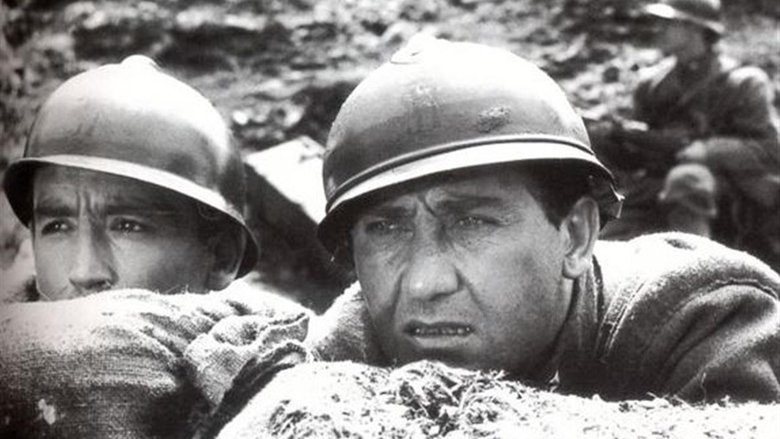
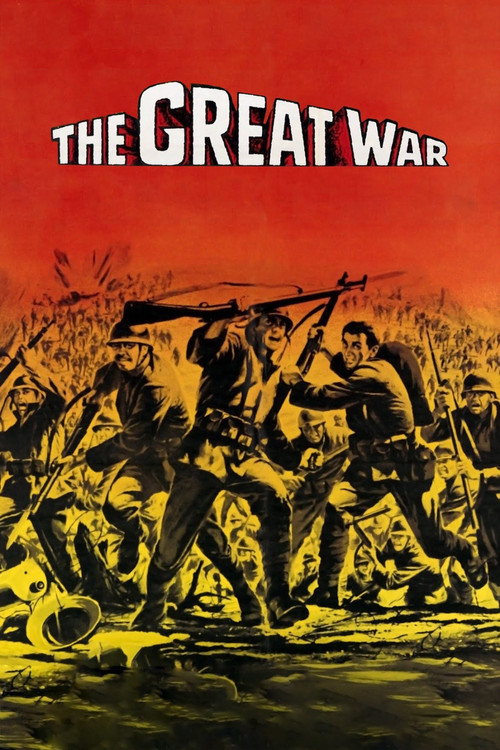
The entire narrative of "The Great War" builds towards its profoundly ironic and tragic conclusion. Throughout the film, Giovanni Busacca and Oreste Jacovacci are established as consummate slackers whose only principle is self-preservation. Their survival is a running gag, so much so that their own officers and comrades expect them to desert at the first opportunity. The key plot turn occurs when the two are sent to deliver a message and, on their way back, are captured by the Austrians after foolishly taking shelter in an enemy-held outpost.
Accused of being spies, they are threatened with immediate execution by a firing squad. True to their nature, they quickly agree to betray their army and reveal the location of a crucial pontoon bridge in exchange for their lives. The twist occurs in the final moments of their interrogation. The arrogant Austrian officer, contemptuous of their cowardice, makes a snide remark: "Liver, they say... They only know liver Venetian style with onions. And soon we will be eating it too." This seemingly minor insult to Italian character enrages Giovanni. His pride stung, he recants his confession, shouting, "I'm telling you bugger all! Got it? Shitface!" He is immediately shot.
A terrified Oreste is dragged forward next. He desperately screams, "I'm a coward, everyone knows it!" in a last-ditch attempt to prove he is not a hero worth killing, but he is executed as well. The final, devastating layer of irony comes moments later, when the Italian army retakes the position. Finding Giovanni and Oreste missing, their captain remarks, "And to think that once again those two slackers got away." Their sacrifice goes completely unnoticed. The hidden meaning is that their transformation from cowards to heroes is entirely personal and ultimately pointless in the grand scheme. They do not die for Italy, for a cause, or for glory; they die because a single, condescending remark made their own survival intolerable. Their heroism is accidental, anonymous, and born not of courage, but of a final, stubborn flicker of human dignity.