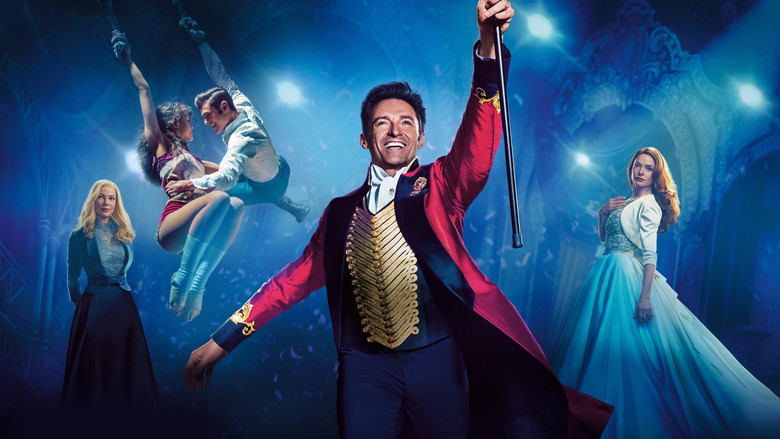
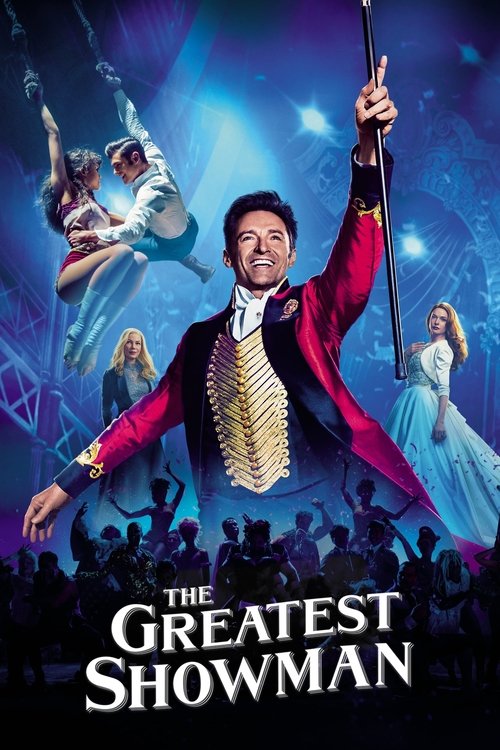
The Greatest Showman
A vibrant musical spectacle bursts with dazzling energy, charting a visionary's ambition as a kaleidoscope of dreams and human connection.
The Greatest Showman

"The impossible comes true."

20 December 2017 United States of America 105 min ⭐ 7.9 (9,785)
Director: Michael Gracey
Cast: Hugh Jackman, Zac Efron, Michelle Williams, Rebecca Ferguson, Zendaya
Drama
Embracing Individuality and Diversity The Pursuit of Dreams and Ambition Love and Family Social Class and Acceptance
Budget: $84,000,000
Box Office: $459,066,134

The Greatest Showman - Ending Explained

⚠️ Spoiler Analysis

The central conflict of "The Greatest Showman" culminates in P.T. Barnum's downfall and subsequent redemption. His obsession with gaining high-society approval leads him to tour with the Swedish singer Jenny Lind, neglecting his circus family. The tour is a success, but Lind develops unreciprocated romantic feelings for Barnum. After he rejects her advance, she quits the tour and kisses him on stage for a photograph, creating a public scandal. This, combined with a fire that destroys his museum, leaves Barnum bankrupt and abandoned by his wife, Charity, who takes their children and leaves.

At his lowest point, Barnum is visited by his troupe of performers. They express their unwavering loyalty, reminding him that he gave them a home and a family when the world rejected them. This act of solidarity inspires Barnum to rebuild. His partner, Phillip Carlyle, who was injured in the fire, offers his share of the profits to help, solidifying their partnership. Barnum realizes his ambition had blinded him to the love and community he already had. To save money, he rebuilds the circus in an open-air tent, creating the iconic circus we know today. In the end, Barnum hands over the reins of the circus to Carlyle so he can focus on his family, having learned that true happiness is not in the roar of the crowd but in the quiet moments with loved ones. The ending reveals that the "greatest show" was not the circus itself, but the life and family he built.

Alternative Interpretations

While the film presents itself as a celebration of humanity and inclusion, an alternative interpretation is that it inadvertently glorifies exploitation. Critics argue that the film glosses over the fact that P.T. Barnum profited from exhibiting people with physical abnormalities, which could be seen as exploitative rather than empowering. The film's narrative frames Barnum as a hero who gives his performers a family, but one could also see him as a shrewd businessman who monetized their otherness.

Another perspective is that the film is a meta-commentary on show business itself. Barnum's constant battle with the critic James Gordon Bennett, and his argument that the joy his show brings to the audience is more important than critical approval, mirrors the film's own reception. It can be seen as a defense of popular entertainment against highbrow criticism, arguing that the emotional impact on the audience is the ultimate measure of success. The film's very existence as a highly fictionalized, feel-good musical about a man known as the "Prince of Humbug" can be interpreted as a modern-day example of the showmanship it portrays.