The Greatest Showman
A vibrant musical spectacle bursts with dazzling energy, charting a visionary's ambition as a kaleidoscope of dreams and human connection.
The Greatest Showman

The Greatest Showman

"The impossible comes true."

20 December 2017 United States of America 105 min ⭐ 7.9 (9,785)
Director: Michael Gracey
Cast: Hugh Jackman, Zac Efron, Michelle Williams, Rebecca Ferguson, Zendaya
Drama
Embracing Individuality and Diversity The Pursuit of Dreams and Ambition Love and Family Social Class and Acceptance
Budget: $84,000,000
Box Office: $459,066,134

Overview

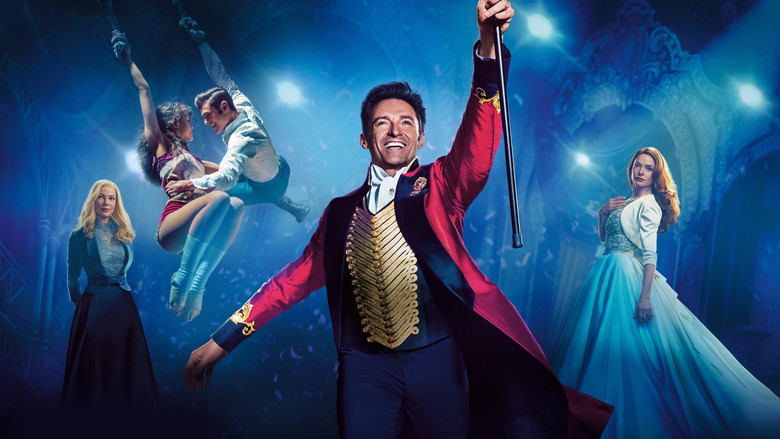
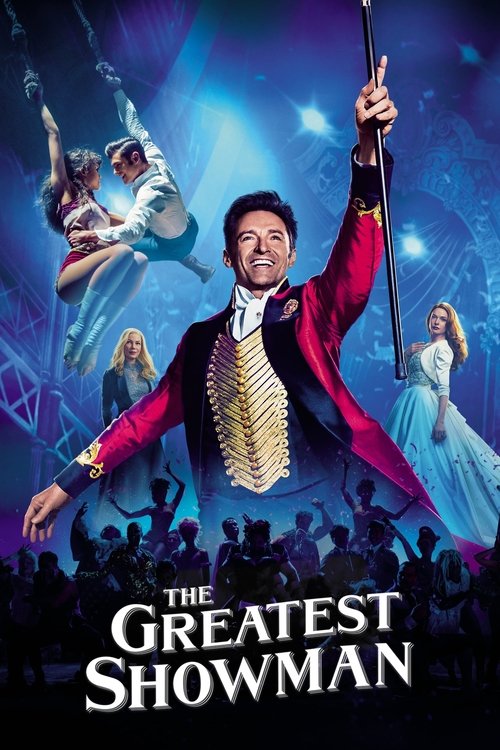
"The Greatest Showman" is a bold and original musical that celebrates the birth of show business and the sense of wonder we feel when dreams come to life. Inspired by the ambition and imagination of P.T. Barnum, the film tells the story of a visionary who rose from nothing to create a mesmerizing spectacle that became a worldwide sensation. The narrative follows P.T. Barnum's journey from a poor, tailor's son to the creator of a circus that champions the unique and the extraordinary.

After losing his clerical job, Barnum, driven by a desire to provide a better life for his wife Charity and their two daughters, decides to gamble on a new form of entertainment. He assembles a diverse troupe of performers with unusual talents and appearances, who are often ostracized by society. With the help of the well-connected playwright Phillip Carlyle, Barnum's show becomes a massive success, though it also attracts controversy and the scorn of high-society critics.

As Barnum's ambition grows, he becomes entangled with the famous Swedish opera singer Jenny Lind, seeking legitimacy and acceptance from the upper class. This pursuit of fame and fortune strains his relationships with his family and his circus troupe, forcing him to confront what is truly important in life before he loses everything he has built.

Core Meaning

"The Greatest Showman" is a cinematic celebration of individuality, acceptance, and the power of dreams. The central message of the film is that one's worth is not determined by societal approval but by the love and acceptance of a few good people. It champions the idea of creating a family from a community of outcasts, finding strength and belonging in shared uniqueness. The director, Michael Gracey, aims to convey that true happiness comes not from fame or fortune, but from embracing who you are and cherishing the relationships with those who see and love you for it. The film also explores the dangers of unchecked ambition and the realization that the "noblest art is that of making others happy."

Thematic DNA

Embracing Individuality and Diversity 35%
The Pursuit of Dreams and Ambition 30%
Love and Family 20%
Social Class and Acceptance 15%

Embracing Individuality and Diversity

This is a central theme, embodied by the circus performers. Barnum gathers individuals who are considered "freaks" by society—a bearded lady, a dwarf, trapeze artists of color—and gives them a stage to be seen and celebrated. The anthem "This Is Me" powerfully articulates this theme of self-acceptance and defiance against prejudice. The film argues that what makes a person different is what makes them special.

The Pursuit of Dreams and Ambition

P.T. Barnum's character is driven by a relentless ambition to rise above his impoverished childhood and provide a wonderful life for his family. His journey from nothing to a world-renowned showman illustrates the power of imagination and perseverance. However, the film also serves as a cautionary tale, showing how ambition, when it becomes an obsession for social validation, can lead one to lose sight of what truly matters.

Love and Family

The film highlights the importance of love and family as the ultimate sources of happiness and support. Barnum's love for his wife, Charity, is a grounding force throughout his tumultuous career. His relationship with his circus troupe also evolves into a familial bond, as they find a sense of belonging with each other. Ultimately, Barnum realizes that his family and his chosen circus family are his greatest treasures.

Social Class and Acceptance

Barnum's desire to be accepted by the upper class is a major motivation. He struggles against the snobbery of high society, which dismisses his circus as a lowbrow "freak show." The forbidden romance between the wealthy Phillip Carlyle and the African-American trapeze artist Anne Wheeler directly confronts the racial and class prejudices of the era. Their duet, "Rewrite the Stars," is a powerful expression of their desire to overcome these societal barriers.

Character Analysis

P.T. Barnum

Hugh Jackman

Archetype: The Visionary/The Antihero
Key Trait: Ambitious

Motivation

His primary motivation is to transcend his impoverished origins and prove his worth to the world, particularly to his wife's upper-class family. He is driven by a desire to provide a magical and exciting life for his family and to be loved by the masses.

Character Arc

P.T. Barnum begins as a poor but ambitious dreamer, determined to create a better life for his family. He achieves immense success by creating his circus but becomes obsessed with gaining acceptance from high society, which leads him to neglect his family and his performers. After his downfall, he realizes that true happiness lies not in public acclaim but in the love of his family and the community he created. He ultimately rediscovers his passion for showmanship on his own terms, prioritizing joy over social status.

Phillip Carlyle

Zac Efron

Archetype: The Ally/The Lover
Key Trait: Charming

Motivation

His motivation is to escape the stifling conformity of his privileged world and find something real and exciting. He is also motivated by his love for Anne Wheeler and his desire to build a life with her, free from prejudice.

Character Arc

Phillip Carlyle is a wealthy, respected playwright who is initially bored with his conventional, upper-class life. He is persuaded by Barnum to join the circus, where he finds excitement and a new sense of purpose. His character arc revolves around him learning to defy the expectations of his high-society background and follow his heart, particularly in his forbidden romance with trapeze artist Anne Wheeler. He evolves from a man confined by societal norms to one who is willing to risk everything for love and a life of genuine passion.

Charity Hallett-Barnum

Michelle Williams

Archetype: The Anchor/The Heart
Key Trait: Loyal

Motivation

Her motivation is simple and pure: she wants a life filled with love and happiness with the man she fell in love with, P.T. Barnum. She is not driven by wealth or status but by the family they have built together.

Character Arc

Charity is Barnum's childhood sweetheart who comes from a wealthy family but chooses a life with him despite her parents' disapproval. She remains Barnum's moral compass and emotional anchor throughout his rise and fall. While she supports his dreams, her arc involves her standing up to him when his ambition threatens to consume their family. She doesn't change fundamentally but her strength and resilience are tested, and she ultimately helps him find his way back to what's truly important.

Anne Wheeler

Zendaya

Archetype: The Outsider/The Lover
Key Trait: Graceful

Motivation

Her initial motivation is to find a place where she and her brother can belong and use their talents. As the story progresses, her motivation becomes intertwined with her love for Phillip and her desire for a world where their love is not a forbidden spectacle.

Character Arc

Anne is a talented and graceful African-American trapeze artist who, along with her brother, joins Barnum's circus. She is guarded and pragmatic due to the racism she faces. Her arc centers on her relationship with Phillip Carlyle and her journey toward believing that she deserves to be loved and seen in a world that tries to keep her in the shadows. She learns to overcome her fears and fight for her right to love and be loved openly.

Jenny Lind

Rebecca Ferguson

Archetype: The Temptress/The Foil
Key Trait: Elegant

Motivation

Her motivation is to be seen as more than just a performer and to find a genuine connection with someone who appreciates her for who she is, not just her voice. She also seeks to protect her own reputation and career.

Character Arc

Jenny Lind is a renowned Swedish opera singer whom Barnum brings to America to gain legitimacy among the upper class. She is portrayed as a glamorous and talented artist who is also lonely and looking for genuine connection. Her arc is short but impactful; she becomes infatuated with Barnum and, upon being rejected, she tries to sabotage him by publicly kissing him, which creates a scandal. She serves as a catalyst for Barnum's downfall and his ultimate realization about what is truly valuable.

Symbols & Motifs

The Circus Tent

Meaning:

The circus tent symbolizes a sanctuary and a home for the performers who have been rejected by society. It represents a space of acceptance, community, and empowerment where they can be themselves without judgment.

Context:

Initially, Barnum's show is in a museum, but after it burns down, he rebuilds it as a traveling tent circus. This transition signifies a new beginning and the consolidation of his troupe as a true family, finding their home under the big top.

The Spotlight

Meaning:

The spotlight is a recurring motif representing fame, recognition, and the courage to be seen. For the performers, stepping into the spotlight is a metaphor for embracing their identities and claiming their place in the world. For Barnum, it represents his craving for public adoration and validation.

Context:

This is most prominent during the performance of "This Is Me," where the performers step out of the shadows and into the spotlight, both literally and figuratively. It's also used in the romantic duet "Rewrite the Stars," where the lighting shifts to highlight the emotional distance and desires of the characters.

The Wishing Machine

Meaning:

The wishing machine, a spinning lamp that Barnum gives his daughter, symbolizes dreams, imagination, and the magical possibilities that fuel Barnum's ambitions. It represents the power of wishing for a better life and the creativity that can make those wishes a reality.

Context:

Barnum brings the wishing machine home for his daughter's birthday after losing his job. As his family makes wishes, it sparks the idea for his museum of curiosities, setting the entire story in motion.

Memorable Quotes

No one ever made a difference by being like everyone else.

— P.T. Barnum

Context:

P.T. Barnum says this to his troupe of performers to encourage them to embrace their differences and not be ashamed of who they are. It's a pivotal moment of inspiration for the group.

Meaning:

This quote encapsulates the film's central theme of celebrating individuality and uniqueness. It serves as Barnum's justification for his unconventional show and becomes a guiding principle for the entire troupe.

You don't need everyone to love you, Phin. Just a few good people.

— Charity Barnum

Context:

This is said during a moment when P.T. Barnum is consumed with winning over the approval of high society and is feeling the sting of a negative review. Charity tries to ground him in what's real and important.

Meaning:

Charity speaks this profound truth to her husband, reminding him that the validation of the masses is fleeting and meaningless compared to the genuine love of family and friends. It's a core message of the film.

I am brave, I am bruised, I am who I'm meant to be, this is me.

— Lettie Lutz and the Circus Troupe

Context:

This is sung after Barnum shuns his troupe from a high-society event. Led by Lettie Lutz, they march to the event and perform this song as an act of defiance and pride, refusing to be hidden away.

Meaning:

These lyrics from the film's anthem, "This Is Me," are a powerful declaration of self-acceptance and resilience. The performers claim their identities, acknowledging their pain and struggles but refusing to be defined by them.

The noblest art is that of making others happy.

— P.T. Barnum

Context:

This quote is displayed as text on the screen in the film's closing moments, summarizing the evolution of Barnum's character and the legacy he chooses to embrace.

Meaning:

This quote, which appears at the end of the film, signifies Barnum's ultimate realization about his purpose. After chasing fame and fortune, he understands that his greatest achievement is bringing joy to people's lives.

Comfort, the enemy of progress.

— P.T. Barnum

Context:

Barnum says this to Phillip Carlyle as he is trying to convince the young playwright to leave his comfortable but unfulfilling life and join the circus.

Meaning:

This line reflects Barnum's entrepreneurial spirit and his belief that one must take risks and step outside of their comfort zone to achieve great things. It's a mantra that drives him to constantly innovate and push boundaries.

Philosophical Questions

What is the true meaning of success and happiness?

The film explores this question through P.T. Barnum's journey. He initially defines success as wealth and societal acceptance, but as he achieves these, he finds himself unfulfilled and risks losing his family. The film posits that true happiness and success are not found in external validation but in the love of family, the joy of creation, and the community we build. It challenges the idea that ambition and worldly success are the ultimate goals, suggesting a more fulfilling path lies in human connection and making others happy.

Is it morally acceptable to profit from the 'otherness' of individuals?

"The Greatest Showman" presents a romanticized view of Barnum's "freak show," framing it as a celebration of diversity. However, it raises the underlying ethical question of whether it is right to turn people's physical differences into a spectacle for profit. The film suggests that Barnum gave his performers a home and a sense of pride, but it avoids the more complex and problematic aspects of this dynamic, leaving the audience to ponder the fine line between empowerment and exploitation.

Does the end justify the means when it comes to entertainment?

P.T. Barnum is often accused of being a purveyor of "humbug" and deception. The film portrays his conflict with a critic who dismisses his show as lacking artistry. Barnum's defense is that his show makes people happy. This raises the question of whether the joy and wonder experienced by the audience can justify a lack of authenticity or artistic merit. The film seems to side with Barnum, suggesting that the power of entertainment lies in its ability to transport and delight, regardless of its critical reception.

Alternative Interpretations

While the film presents itself as a celebration of humanity and inclusion, an alternative interpretation is that it inadvertently glorifies exploitation. Critics argue that the film glosses over the fact that P.T. Barnum profited from exhibiting people with physical abnormalities, which could be seen as exploitative rather than empowering. The film's narrative frames Barnum as a hero who gives his performers a family, but one could also see him as a shrewd businessman who monetized their otherness.

Another perspective is that the film is a meta-commentary on show business itself. Barnum's constant battle with the critic James Gordon Bennett, and his argument that the joy his show brings to the audience is more important than critical approval, mirrors the film's own reception. It can be seen as a defense of popular entertainment against highbrow criticism, arguing that the emotional impact on the audience is the ultimate measure of success. The film's very existence as a highly fictionalized, feel-good musical about a man known as the "Prince of Humbug" can be interpreted as a modern-day example of the showmanship it portrays.

Cultural Impact

"The Greatest Showman" became a cultural phenomenon upon its release, not because of critical acclaim, but due to its overwhelming popularity with audiences worldwide. Critics were divided, with many panning the film for its historical inaccuracies and for presenting a sanitized version of P.T. Barnum's life, ignoring the more exploitative aspects of his career. However, audiences embraced the film's uplifting message, catchy pop-infused soundtrack, and spectacular visuals.

The soundtrack, by Benj Pasek and Justin Paul, was a massive success, topping charts globally and becoming the best-selling album of 2018 in the United States. The anthem "This Is Me" won a Golden Globe for Best Original Song and was nominated for an Academy Award, becoming an inspirational anthem for marginalized communities and individuals celebrating self-acceptance. The film's themes of diversity, inclusion, and empowerment resonated deeply with a contemporary audience, making it more of a cultural touchstone than a historically accurate biopic. Its success demonstrated a strong public appetite for original, feel-good movie musicals, and it has inspired a stage musical adaptation.

Audience Reception

The audience reception for "The Greatest Showman" was overwhelmingly positive, standing in stark contrast to its mixed critical reviews. Viewers praised the film for its high-energy musical numbers, stunning visuals, and heartfelt, inspirational message. The performances of the cast, particularly Hugh Jackman, were widely lauded. The soundtrack was a massive hit with audiences, who found the songs to be catchy, emotionally resonant, and uplifting. Many viewers connected deeply with the themes of self-acceptance and found the song "This Is Me" to be a powerful anthem of empowerment. The main points of criticism from the audience were minimal but sometimes echoed the critics' concerns about the historical inaccuracies and the glossing over of the darker aspects of P.T. Barnum's life. Overall, the audience verdict was that "The Greatest Showman" is a joyous and entertaining spectacle that leaves viewers feeling uplifted and inspired.

Interesting Facts

  • The film took over seven years to make, largely because studios were hesitant to finance an original musical.
  • Zendaya and Zac Efron performed their own aerial stunts for the musical number "Rewrite the Stars."
  • Actress Rebecca Ferguson, who plays the renowned singer Jenny Lind, did not sing her character's powerful ballad, "Never Enough." The vocals were provided by Loren Allred, a contestant from "The Voice."
  • Hugh Jackman had to get 80 stitches on his nose for skin cancer removal just before the final rehearsal to get the movie greenlit. He was under doctor's orders not to sing, but did so anyway and tore his stitches.
  • The song "This Is Me" was written by Benj Pasek and Justin Paul in just a few hours during a flight, two days before the pitch meeting that helped get the film made.
  • The film was the directorial debut for Michael Gracey.
  • Many of the costumes worn by the circus performers were borrowed from the actual Ringling Bros. and Barnum & Bailey Circus.
  • The character of Phillip Carlyle, played by Zac Efron, and his romance with Anne Wheeler are entirely fictional.
  • The real P.T. Barnum didn't start his circus until he was 60 years old.

⚠️ Spoiler Analysis

Click to reveal detailed analysis with spoilers

Frequently Asked Questions

Explore More About This Movie

Dive deeper into specific aspects of the movie with our detailed analysis pages

Comments (0)

Leave a comment

No comments yet. Be the first to share your thoughts!