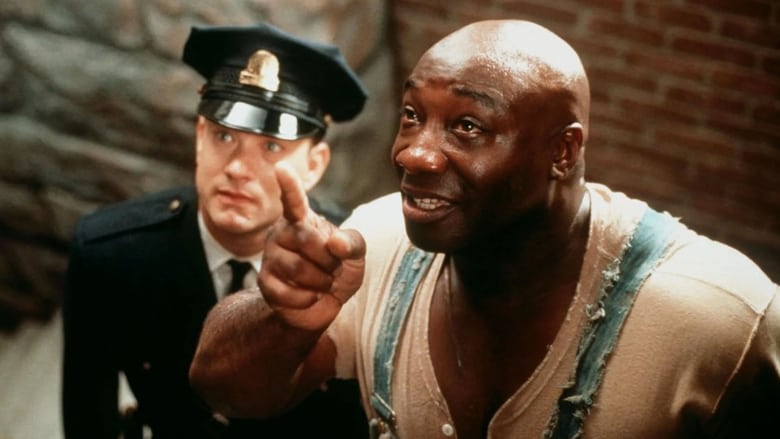
The Green Mile
A haunting prison drama steeped in Southern Gothic atmosphere, where a flicker of divine light illuminates the darkest corridor of human cruelty and injustice.
The Green Mile
The Green Mile

"Paul Edgecomb didn't believe in miracles. Until the day he met one."

10 December 1999 United States of America 189 min ⭐ 8.5 (18,404)
Director: Frank Darabont
Cast: Tom Hanks, David Morse, Bonnie Hunt, Michael Clarke Duncan, James Cromwell
Drama Crime Fantasy
Injustice and Capital Punishment Miracles, Faith, and the Supernatural Compassion vs. Cruelty Race and Prejudice
Budget: $60,000,000
Box Office: $286,801,374

The Green Mile - Ending Explained

⚠️ Spoiler Analysis

The central twist of "The Green Mile" is that John Coffey is not only innocent but a divine, miraculous being with the power to heal. He was found with the dead girls because he was trying, and failing, to 'take back' their deaths. The true killer is revealed to be another inmate on the Mile, William "Wild Bill" Wharton. This is discovered when John grabs Paul and transmits a vision to him, showing Wharton committing the crime.

The film's climax is the execution of the innocent John Coffey. Despite knowing the truth, Paul and the guards are powerless to stop it. John accepts his fate, as his empathetic abilities cause him too much pain in a cruel world. Before he is executed, John transfers a part of his life force and energy to Paul. In a moment of karmic justice, John had previously used the sickness he absorbed from the warden's wife to infect the sadistic guard, Percy Wetmore. This energy causes Percy to shoot and kill "Wild Bill" before lapsing into a permanent catatonic state, thus avenging the girls and neutralizing two of the story's villains in one act.

The ending's final reveal comes in the framing story, where the elderly Paul shows his friend Elaine that the mouse, Mr. Jingles, is still alive after more than 60 years. Paul explains that John's touch granted them both unnaturally long life. He views this not as a gift, but as his punishment: to live on and on, watching everyone he has ever loved die, as penance for executing one of God's true miracles. The final shot is of Paul, alone, contemplating how much longer his own 'green mile' will be.

Alternative Interpretations

John Coffey as a Christ Figure: The most prominent interpretation is that John Coffey is a direct allegory for Jesus Christ. His initials (J.C.), miraculous healing powers, gentle nature, persecution by authorities despite his innocence, and ultimate sacrifice for the sins of others all strongly support this reading. The execution itself, witnessed by his sorrowful 'disciples' (the guards), is framed as a crucifixion. His final words about how love is used to kill reflects a divine sorrow for the state of the world.

A Critique of the 'Magical Negro' Trope: Some critics view the film through a more cynical lens, arguing that John Coffey's character falls into the problematic 'Magical Negro' trope. This trope describes a Black character who seems to exist solely to aid the white protagonist with their spiritual wisdom or supernatural powers, lacking their own inner life or development. In this interpretation, Coffey's purpose is to heal Paul's infection and absolve him of his guilt, sacrificing himself in the process, which can be seen as reinforcing outdated racial dynamics.

Paul's Long Life as a Curse: While his extended lifespan is a 'miracle,' it's more accurately interpreted as a form of divine punishment or penance. For allowing God's miracle to be destroyed, Paul is condemned to wander the Earth, watching everyone he loves die. His 'gift' is the curse of eternal loneliness and remembrance of his failure, making him a 'Wandering Jew' figure, forever carrying the weight of his actions on the Green Mile.