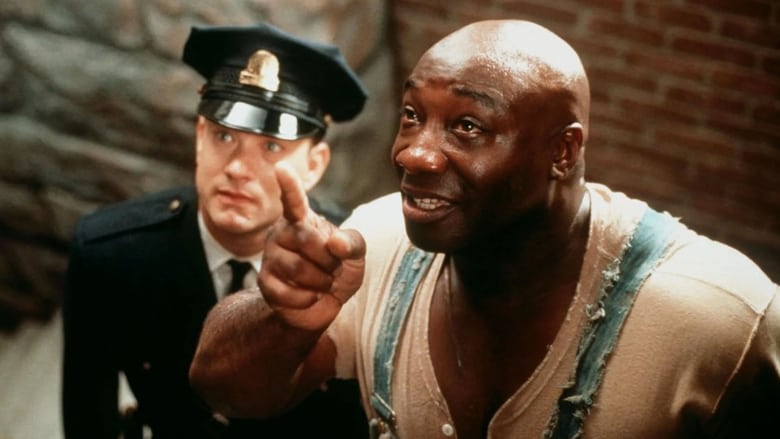

"Paul Edgecomb didn't believe in miracles. Until the day he met one."
Director: Frank Darabont
Cast: Tom Hanks, David Morse, Bonnie Hunt, Michael Clarke Duncan, James Cromwell
The Green Mile — Movie Quotes
Memorable Quotes
He killed them with their love. That's how it is every day, all over the world.
Context
Spoken to Paul Edgecomb in the execution chamber. Paul has just seen a vision, transmitted by John, of how "Wild Bill" Wharton was the real killer. John's words are his final, heartbreaking commentary on the state of humanity that has made him wish for death.
Meaning
These are John's final words before his execution, explaining that the true murderer, Wharton, used the girls' love for each other against them to lure them to their deaths. The quote expands this specific evil into a universal truth, reflecting John's painful awareness of how love and goodness are constantly corrupted and destroyed by hatred in the world.
I'm tired, boss. Tired of being on the road, lonely as a sparrow in the rain. I'm tired of never having me a buddy to be with, to tell me where we's going to, coming from, or why. Mostly, I'm tired of people being ugly to each other. I'm tired of all the pain I feel and hear in the world every day. There's too much of it. It's like pieces of glass in my head, all the time.
Context
John says this to Paul when Paul offers to let him escape. Paul cannot comprehend why an innocent man with miraculous powers would accept death, and this quote reveals the immense personal suffering that accompanies John's gift.
Meaning
This is John's explanation for why he is willing to be executed despite his innocence. It's not a confession of guilt but an expression of profound existential weariness. His supernatural empathy is a curse that forces him to constantly feel the collective pain and cruelty of humanity, making life an unbearable burden.
You can't hide what's in your heart.
Context
John says this to Paul early in the film, after Percy Wetmore has been particularly cruel. It's one of the first indications that John has a perception that goes beyond the ordinary, and it establishes the film's theme of inner goodness versus inner evil.
Meaning
This line speaks to John's ability to see the true nature of people. He is not fooled by outward appearances or positions of authority. He can perceive the goodness in Paul and the malice in Percy, sensing the fundamental character of a person.
Please, boss, don't put that thing over my face. Don't put me in the dark. I's afraid of the dark.
Context
John makes this request in the execution chamber, just before he is put to death. It echoes an earlier request to Paul to leave a light on in his cell. The guards honor his request, forcing them to watch the light go out of the eyes of a man they know is innocent.
Meaning
This request highlights the ultimate, tragic irony of John's fate. Despite his immense power and spiritual significance, he retains a childlike innocence and a simple, human fear. It underscores his vulnerability and makes his execution all the more heartbreaking for the guards and the audience.
Explore More About This Movie
Dive deeper into specific aspects of the movie with our detailed analysis pages