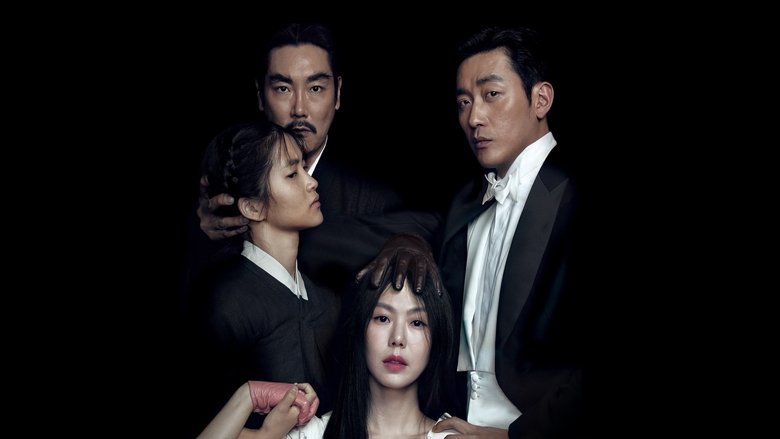
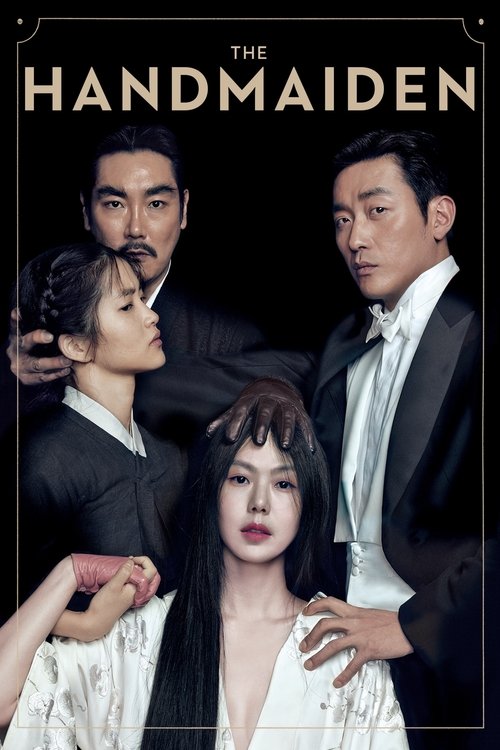
아가씨
"Never did they expect to get into a controversial relationship..."
The Handmaiden - Symbolism & Philosophy
Symbols & Motifs
Gloves
The gloves worn by Lady Hideko symbolize her emotional restraint, her shielded true self, and the social conventions that bind her. They represent a barrier between her and the world, and between her and her own desires.
Hideko is almost always seen wearing gloves, which Sook-hee removes on several occasions, notably during moments of intimacy. The act of removing the gloves signifies Hideko letting her guard down and revealing her vulnerability and true feelings to Sook-hee. When she is with the men who control her, the gloves are on, but with Sook-hee, she is bare-handed, symbolizing her authentic self being revealed.
The Library and Erotic Books
The library and its collection of rare, pornographic books symbolize the corrupting influence of the patriarchy and the objectification of women. It is the source of Hideko's trauma and the physical manifestation of her uncle's perverse control over her.
Uncle Kouzuki's library is the dark heart of the estate. Hideko was forced from a young age to perform readings of these books for an audience of lecherous men. The destruction of the library by Sook-hee and Hideko in the film's third act is a powerful, cathartic moment of rebellion, representing their liberation from male oppression and the reclaiming of their own narratives.
The Snake
The snake, which adorns the entrance to the library and appears in other decorative elements, is a phallic symbol representing Uncle Kouzuki's predatory and venomous nature, as well as the toxic masculinity that permeates the estate.
The most prominent snake is a sculpture at the library's entrance, guarding the source of Hideko's abuse. Its destruction by Sook-hee signifies a direct challenge to Kouzuki's power and the beginning of the dismantling of his oppressive world.
The Cherry Blossom Tree
The cherry blossom tree in the courtyard symbolizes both Hideko's aunt's tragic fate and Hideko's own suffocating existence. It represents a beautiful facade that hides a dark and morbid reality.
Hideko reveals to Sook-hee that her aunt, who also tried to escape, hanged herself from the cherry tree. This imbues the tree with a sense of death and despair. Hideko's own suicide attempt later in the film mirrors her aunt's fate, tying her suffering directly to this symbol of deceptive beauty.
Philosophical Questions
Can true liberation be achieved through deception?
The film delves into the ethics of its characters' actions. Sook-hee and Hideko build their path to freedom on a foundation of intricate lies, manipulation, and betrayal directed at their oppressors. This raises the question of whether the ends justify the means. The film seems to argue that in a corrupt and oppressive system, the tools of the oppressor must be turned against them. Their deception is portrayed not as a moral failing but as a necessary and intelligent strategy for survival and liberation, suggesting that authenticity can be found and preserved even when surrounded by duplicity.
What is the relationship between storytelling, power, and identity?
"The Handmaiden" is fundamentally about the power of narrative. Uncle Kouzuki wields power by forcing Hideko to perform pornographic stories, controlling her identity through them. The film's three-part structure, which retells events from different perspectives, highlights how a story can be manipulated to control the truth. Sook-hee and Hideko's ultimate victory comes from seizing control of the narrative, crafting their own story of escape and turning the Count and Kouzuki into tragic figures in a tale of their own making. This suggests that personal freedom is intrinsically linked to the ability to control and tell one's own story.
Does love have the power to transcend social and political constructs?
The central romance blossoms across rigid divides of class, nationality, and colonial hierarchy. Sook-hee is a poor, Korean pickpocket, while Hideko is a wealthy, Japanese heiress. Their love story suggests that genuine human connection can overcome the artificial barriers imposed by society. By finding solidarity in their shared gendered oppression, they form a bond that is stronger than the forces of colonialism and patriarchy, posing their love as a revolutionary act that defies the established world order.
Core Meaning
At its heart, "The Handmaiden" is a powerful exploration of liberation from patriarchal oppression. Director Park Chan-wook uses the intricate plot of deception and shifting allegiances to comment on how women can reclaim their agency, sexuality, and identity from the control of manipulative and abusive men. The film critiques the male gaze and the exploitation of female sexuality by contrasting the perverse, voyeuristic desires of the male characters with the genuine, empowering love story between Sook-hee and Hideko. By setting the story in colonial-era Korea, it also touches upon themes of national and cultural identity, and the subversion of power dynamics on multiple levels. Ultimately, the film champions the idea that solidarity and love between women can be a revolutionary force, capable of dismantling even the most elaborate cages, both literal and psychological.