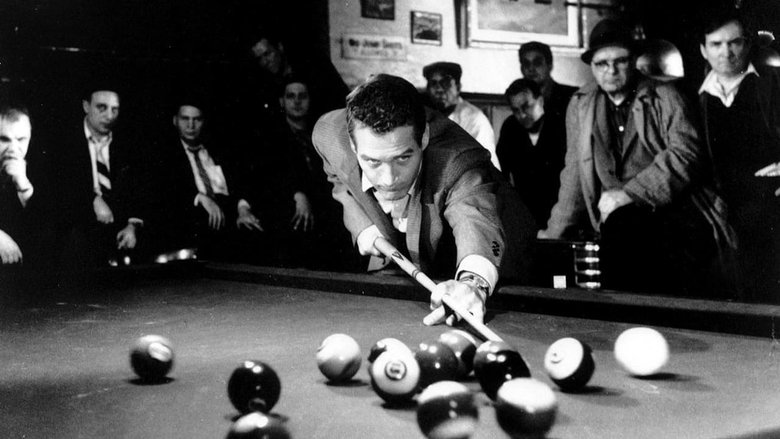
The film's turning point is the suicide of Sarah Packard. After Eddie takes her to the Kentucky Derby and neglects her to hustle a millionaire, she succumbs to despair and Bert's predation. Her death shocks Eddie into realizing the hollowness of his ambition. He returns to play Minnesota Fats, but this time he plays with a cold, detached fury—he has acquired the "character" he lacked, but at a terrible price. He beats Fats decisively. When Bert demands his share, Eddie refuses to pay, telling Bert that if he tries to enforce it, he'll kill him. Bert, recognizing he has lost his hold over Eddie, lets him go but warns him never to play big-time pool again. Eddie walks away, a winner at the table, but banned from the game he loves, carrying the heavy burden of his self-discovery.
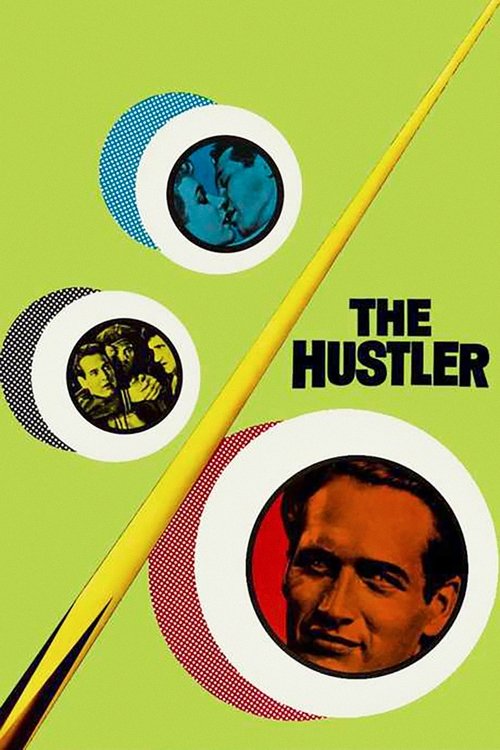
"They called him Fast Eddie. He was a winner. He was a loser. He was a hustler."
Director: Robert Rossen
Cast: Paul Newman, Jackie Gleason, Piper Laurie, George C. Scott, Myron McCormick
The Hustler — Ending Explained
⚠️ Spoiler Analysis
Alternative Interpretations
The Hollow Victory: Many critics view the ending not as a triumph but as a tragedy. Eddie wins the game, but he is "blackballed" and has lost the only person who loved him. The victory is purely symbolic, an act of defiance rather than success.
Political Allegory: Director Robert Rossen was a victim of the HUAC blacklists. Some analyze the film as a metaphor for the McCarthy era, with Bert Gordon representing the committee that forces people to "sell out" their friends (character) for a career. Eddie's refusal to pay Bert at the end is Rossen's cinematic reclaiming of his own dignity.
Queer Theory: Some interpretations look at the homosocial environment of the pool hall and the intense, almost romantic rivalry between men, with women (Sarah) being pushed to the margins or destroyed by this masculine obsession.
Explore More About This Movie
Dive deeper into specific aspects of the movie with our detailed analysis pages